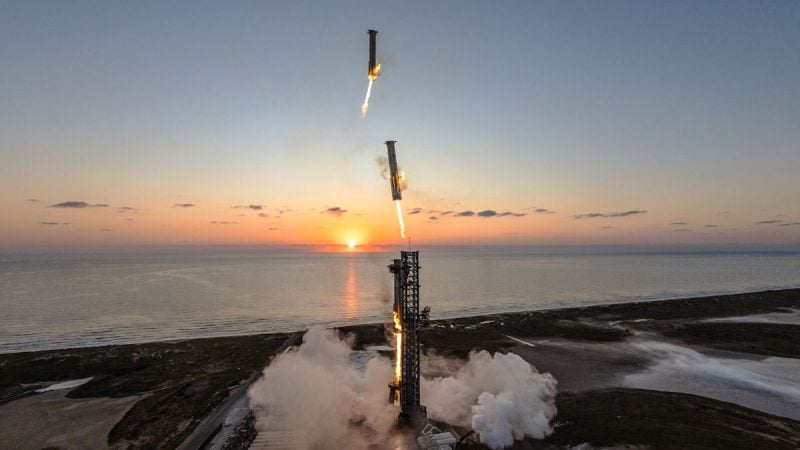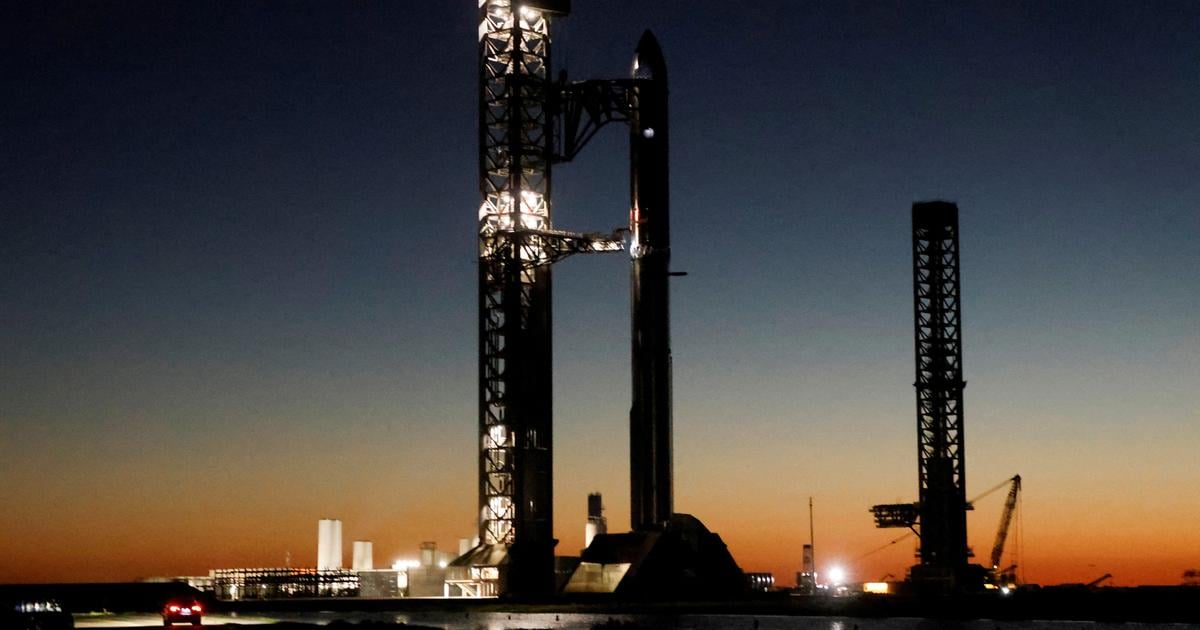
SpaceX scrubbed its planned booster recovery on Friday after a technical glitch sent the Super Heavy propulsion unit down into the Gulf of Mexico during the 15th test flight of its Starship mega-rocket.
The towering 124-meter rocket lifted off at 16:47 local time from the Starbase launch facility in southern Texas, following a launch window opening at 17:45 ET. Shortly after liftoff and stage separation, the Super Heavy booster encountered a technical glitch, prompting engineers to abandon plans to catch the immense lower stage with the launch tower’s mechanical arms.
The company had previously recovered the Super Heavy booster on three separate occasions by returning it to the launch pad, where outstretched metal arms secure it. However, management maintained a strict protocol to abort the maneuver if pre-flight and in-flight checks did not show all indicators functioning normally.
Elon Musk described the double-capture strategy during the company’s third-quarter earnings call. Kathleen Curlee, a space analyst at Georgetown University, said that millions of moving parts must all function correctly for such a recovery to succeed.

While the booster finished its flight in the Gulf waters, the upper-stage Starship spacecraft successfully reached Earth orbit. The spacecraft carried 26 Starlink V3 satellites, with each unit designed to add one terabit per second of capacity to the constellation network. Three of the deployed satellites carry onboard cameras intended to scan the vehicle’s heat shield and transmit images back to operators on the ground.
The mission marks a successful deployment of the upper-stage vessel into orbit, following a milestone flight in September where the spacecraft reached orbit despite several engines shutting down during flight.
To prepare for these flights, the company incorporated further improvements, including redesigned heat shield tiles to prevent plasma leaks and a curved geometry on specific tiles designed to enhance thermal resistance. NASA has contributed about $3.2 billion to the development of Starship since selecting it in 2021 as a lunar lander for the Artemis program, while SpaceX has invested at least $15 billion of its own funds into the project.

Engineers turned their focus toward the upper stage, which is slated to complete approximately 14 orbits around the Earth before returning for a planned recovery attempt in Texas. Mission controllers must confirm that all systems required for atmospheric re-entry, the landing burn, and tower approach remain in proper condition before giving the final go-ahead for the maneuver.
Kate Tice, a SpaceX manager, emphasized during the live broadcast that flight controllers would proceed with the upper-stage catch only if le vaisseau passe avec succès tous les contrôles. The upper stage is scheduled to return to the launch site roughly 22 hours after liftoff.
Musk has outlined ambitions to reach a weekly launch cadence for the vehicle by the first half of 2027, alongside plans to initiate launches from a new platform in Florida before the end of 2026. Sector analysts and engineers suggest that achieving the target of returning astronauts to the Moon by 2028 will likely face schedule delays due to the numerous major test milestones that remain ahead.