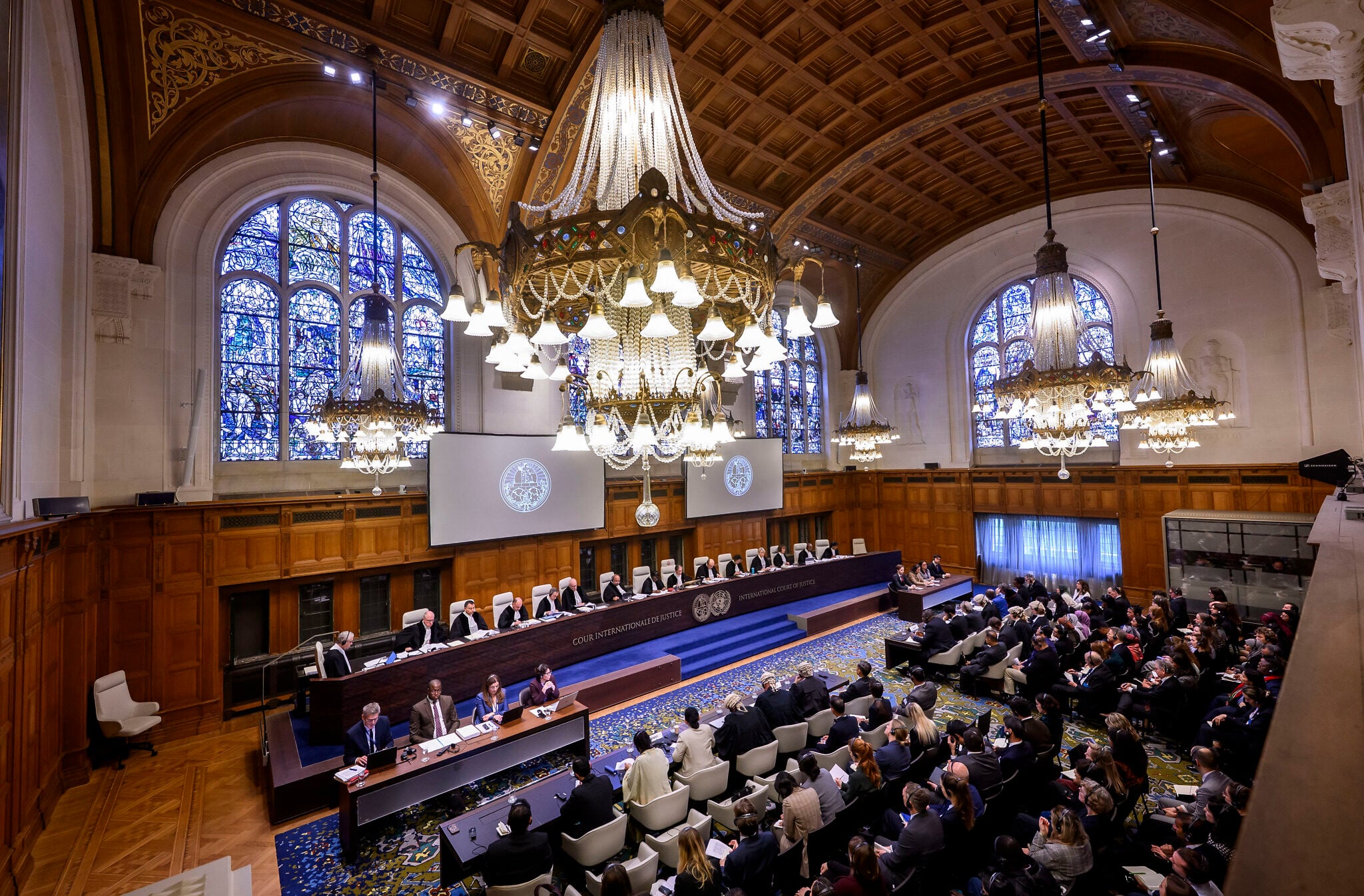
The United Nations’ highest court ruled on Thursday that Myanmar committed genocide against its Rohingya minority in 2017.
The International Court of Justice held a state responsible for the crime for the first time in its 80-year history. The landmark judgment was delivered in The Hague after a case filed by Gambia in 2019.
The scale and nature of military operations in Rakhine State met the legal definition of genocide under the 1948 convention. Presiding judge Iwasawa Yuji said that the court found an intention to destroy the population. He said that “the only reasonable inference that can explain Myanmar’s actions” was an intent to destroy the Rohingya in northern Rakhine state.
ICJ Finds Myanmar Violated Genocide Convention
The court found that Myanmar violated three clauses of the 1948 Genocide Convention during what authorities termed clearance operations in 2017. Security forces killed about 10,000 Rohingya during the campaign, evidence presented to the court indicated.
The @CIJ_ICJ has found #Myanmar responsible for genocide against the #Rohingya, in the case of The Gambia v. Myanmar. It is the first time in the court's history that a State has been held responsible under the Genocide Convention. https://t.co/QckKqbmo36 pic.twitter.com/E3JuQFZvyH
Statements made by Min Aung Hlaing while he served as armed forces chief were cited in the judgment. The court considers that the Senior General’s messages, as reported, were capable of fueling hatred against the Rohingya, the ruling said.
Janina Dill, Chair in Global Security at the Blavatnik School of Government of the University of Oxford, explained the evidentiary standard applied by the court. “Genocidal intent can be inferred from a pattern of conduct…” she said. Counterinsurgency goals do not negate intent, she added.
“The Myanmar military tried to convince the world that we had lied,” said 58-year-old Monajat Alam, from Rathedaung Township. “Today, the truth has been recognized.” As the ICJ delivered its landmark genocide ruling, thousands of Rohingya in refugee camps in Bangladesh awaited…
Thousands of Rohingya refugees gathered at camps in Cox’s Bazar, Bangladesh, to watch the proceedings on giant screens. Many broke down in tears as the decision was announced. Others held up signs thanking Gambia and chanted messages of resilience.
Amanullah, a 61-year-old refugee, brought his young grandchildren to witness the historic moment. “These children were born in the camps of Cox’s Bazar. I tried to make the children understand that they are not Bengalis, but Rohingya,” he said.
MULTIMEDIA: View photos and videos of the reading of the #ICJ Judgment in the case concerning Application of the Convention on the Prevention and Punishment of the Crime of Genocide (The #Gambia v. #Myanmar: 11 States intervening).https://t.co/oRTwbZIESg pic.twitter.com/y4LqB5ORfv
Khalilur Rahman and former high representative on the Rohingya issue, addressed the crowd at the camps. He told them that “19 November, 2026, was the day the road home began for you.” Rahman urged Myanmar to implement the judgment immediately. He called on international partners to maintain humanitarian funding, and he said that Bangladesh “cannot be expected to shoulder” the cost alone.
Global Responses and Diplomatic Calls
Governments and international organizations offered varied responses to the ruling. The United States State Department said that Washington was examining the judgment while emphasizing the importance of preventing atrocities.
LEARN MORE: The full text of the #ICJ Judgment in the case concerning Application of the Convention on the Prevention and Punishment of the Crime of Genocide (The #Gambia v. #Myanmar: 11 States intervening).https://t.co/IEAfHOc2Te pic.twitter.com/Ny8sCWLU9P
The European Union described the decision as a landmark. It said that compliance with ICJ decisions is not optional under international law.
United Nations Secretary-General António Guterres called the ruling a demonstration of international justice. Foreign Secretary Ed Miliband announced the expulsion of Myanmar’s defense attaché in the United Kingdom. He called urgently for a UN security council session to discuss the judgment.

Myanmar Government Rejects the Ruling
Myanmar’s government formally dismissed the judgment as unfair. Khine Soe, spokeswoman for President Min Aung Hlaing, pointed out that the decision was reached through a nine-to-six vote among the 15 judges rather than a unanimous consensus.
“Not all 15 judges agreed with the decision,” Khine Soe told reporters in Naypyitaw. “It was not a decision made unanimously. I would say that it was unfair,” she said. The government had made every effort to address questions raised in court, she said, and officials would take time to study the 300-page legal documents carefully.
Implications for International Jurisprudence
Legal experts and international observers said that the judgment could carry weight for other active cases before the court. These include South Africa’s genocide allegations against Israel over its war in Gaza.
The International Court of Justice, established in June 1945 by the UN Charter and successor to the Permanent Court of International Justice, began work in April 1946. It is the only principal UN organ not located in New York, seated in the Peace Palace in The Hague, Netherlands.
The court’s 15 judges are elected by the UN General Assembly and Security Council for nine-year terms, with no two judges sharing the same nationality. Since its first case in 1947, it has entertained 201 cases as of September 2025, and its judgments are binding but lack a formal enforcement mechanism, relying on the UN Security Council.
The ICJ deals with state responsibility rather than individual criminal guilt. The court ordered Myanmar to investigate those involved, pay reparations, and help the safe return of the displaced population.
Earlier coverage: ICJ to Rule on Myanmar Genocide Claim, The Gambia Says