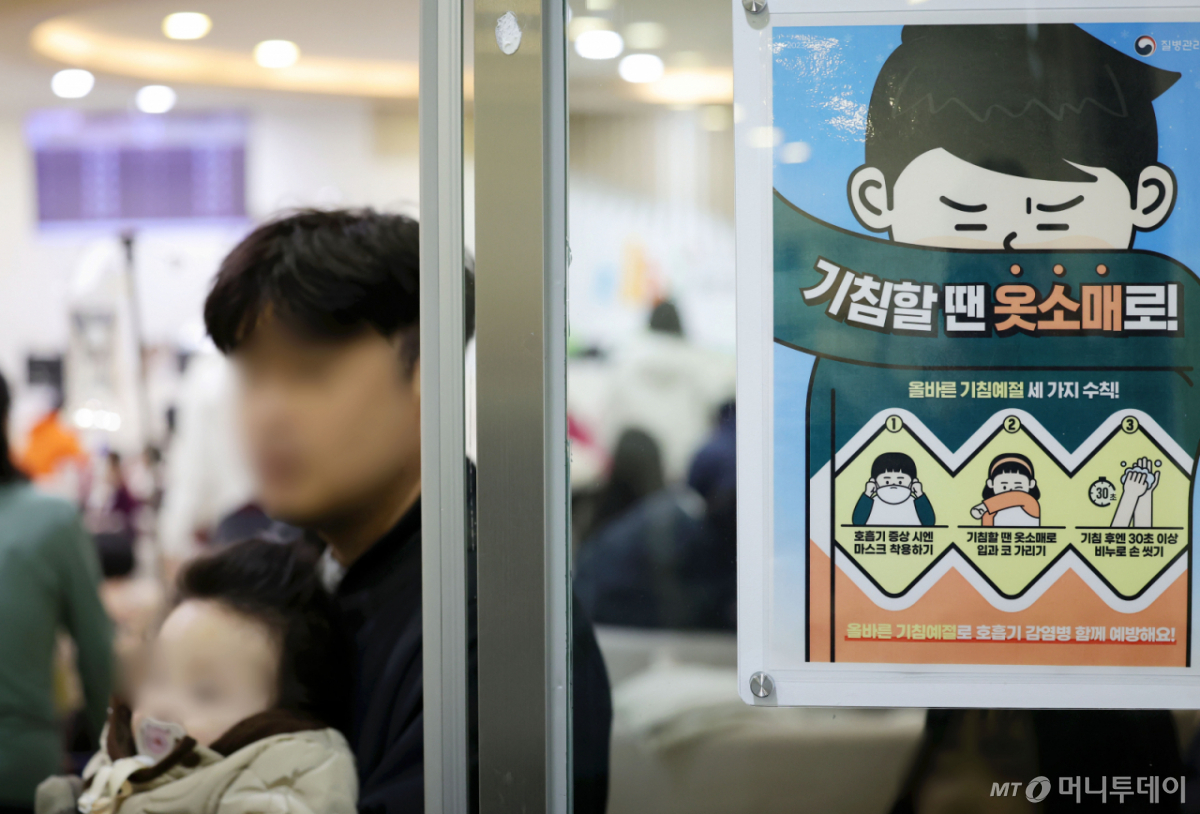
South Korea's influenza hospitalizations jumped 1.5-fold to 926 inpatients in the 46th week, KDCA sentinel hospital data shows.
South Korea’s influenza epidemic is accelerating sharply, with outpatient illness rates climbing for four consecutive weeks and hospital admissions for severe cases jumping above previous seasonal peaks.
The outbreak has driven pediatric and school-age infection rates to high levels while concentrating severe illness among older adults. Public health authorities have urged high-risk groups to complete their vaccinations immediately as hospitalizations near the thousand-patient mark.
Outpatient Flu Rate Climbs for Fourth Straight Week
Surveillance data compiled by the Korea Disease Control and Prevention Agency shows that the fraction of patients visiting outpatient clinics with flu-like symptoms reached 37.0 per 1,000 outpatients during the 46th week of the year, covering November 8 through November 14.
That rate marks a continuous climb over a four-week span, rising from 17.7 cases per 1,000 outpatients in the 42nd week to 19.2 in the 43rd, 22.8 in the 44th, and 28.9 in the 45th week.
Infection rates vary widely across age brackets. School-age children and adolescents bear the heaviest burden.
Children aged 7 to 12 recorded 98.9 suspected cases per 1,000 outpatients, followed by teenagers aged 13 to 18 at 64.5, and young children aged 1 to 6 at 46.6.
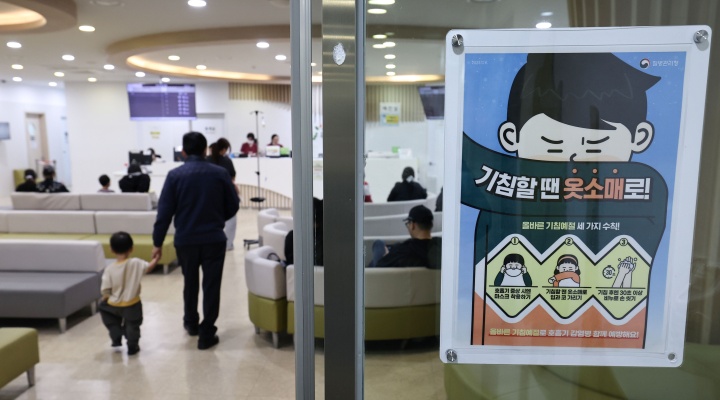
Hospital Admissions Surge with Seniors Hit Hardest
Sentinel hospital data from 223 institutions nationwide recorded 926 influenza inpatients during the 46th week, representing a 1.5-fold increase over the 639 admissions reported the previous week.
The inpatient total stands at twice the 490 hospitalizations recorded during the same week last year. Older adults account for the vast majority of those severe hospital admissions. Patients aged 65 and older make up 65.4%—or 606 patients—of the total hospital caseload.
That volume among seniors exceeds the peak level of 329 admissions recorded during the 48th week of the previous flu season.
Sentinel sites reported 44 influenza-positive death reports during the 46th week, doubling the 24 deaths logged a week earlier.
Health officials said that these mortality figures track patients who tested positive for influenza within 30 days of death at sentinel hospitals, meaning the count includes people whose primary cause of death may have been another condition.
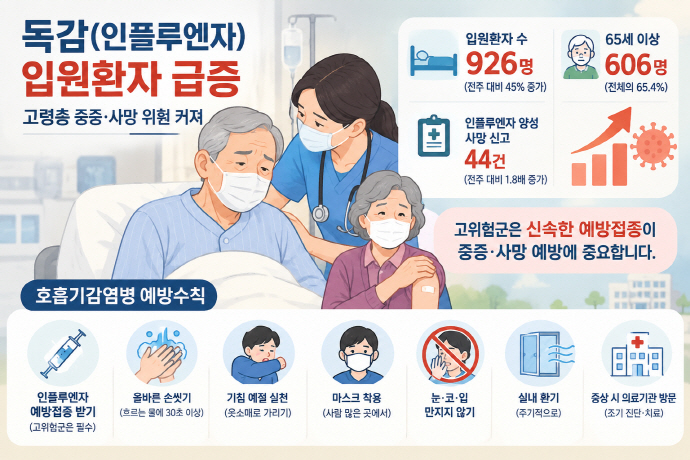
Dominant H1N1 Strain Matches Current Vaccine
Laboratory analysis of respiratory specimens from outpatient clinics shows an influenza virus positivity rate of 33.1% during the 46th week, up from 24.2% in the 42nd week. The circulating strain has been identified as A(H1N1)pdm09.
Authorities confirmed that this circulating strain matches the composition of the current season’s vaccine and displays no mutations affecting antiviral drug resistance.
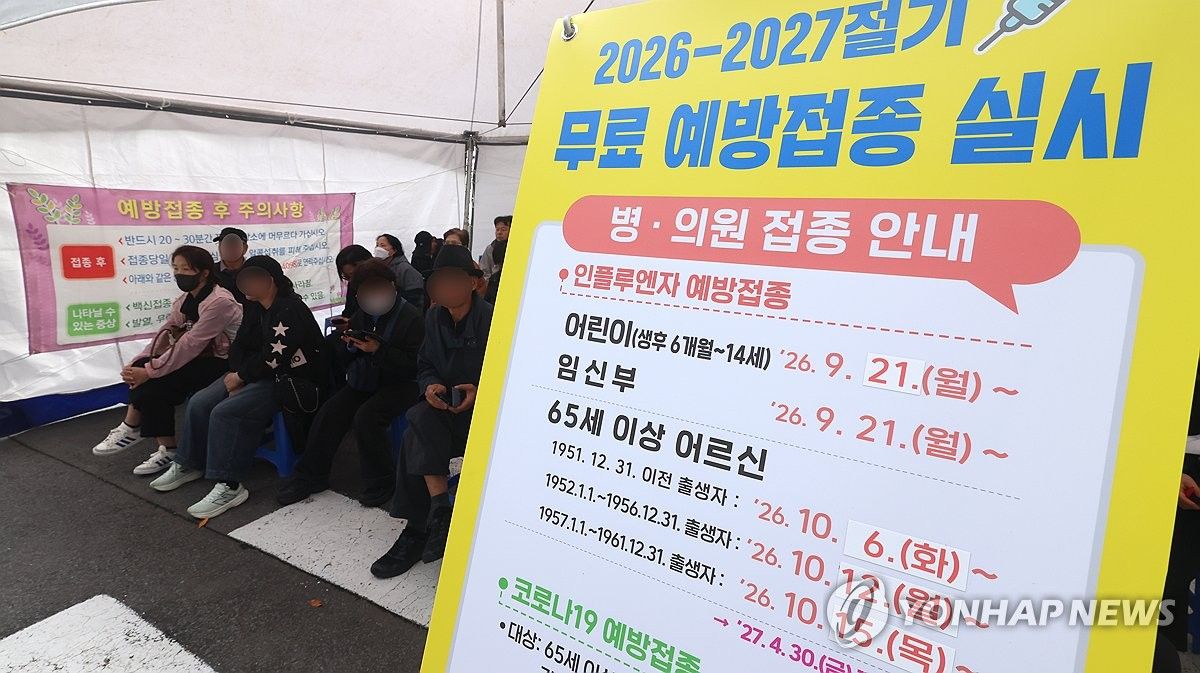
The government’s national immunization program offers free vaccinations to adults aged 65 and older, pregnant women, and children from six months through 14 years of age. As of 6 p.m. on November 19, about 8.57 million seniors had received shots, achieving a 74.8% vaccination rate for that group. 2.96 million children had been vaccinated, reaching a 59.8% rate.
Public health data indicates that vaccination lowers the risk of severe illness and death, effectively cutting the danger of serious complications for older individuals by up to one-fifth.
Health Chief Urges Vaccination as Severe Cases Rise
The sharp rise in hospital admissions and deaths prompted a direct public appeal from the leadership of the public health agency.
“Currently, influenza inpatients are approaching 1,000, and with increases in admissions and positive death reports among those aged 65 and older, the occurrence of severe cases is exceptionally high compared to previous years,” “Since vaccination can prevent progression to severe illness and death, I earnestly urge seniors aged 65 and older, children, and pregnant women who have not yet been vaccinated to swiftly complete their inoculations.”
Lim Seung-kwan, Commissioner of the Korea Disease Control and Prevention Agency
Translation: “Currently, influenza inpatients are approaching 1,000, and with increases in admissions and positive death reports among those aged 65 and older, the occurrence of severe cases is exceptionally high compared to previous years,” said Lim Seung-kwan, Commissioner of the Korea Disease Control and Prevention Agency, adding, “Since vaccination can prevent progression to severe illness and death, I earnestly urge seniors aged 65 and older, children, and pregnant women who have not yet been vaccinated to swiftly complete their inoculations.”
Eligible residents can receive free shots regardless of their registered address by visiting local public health centers or contracted private medical clinics listed on the immunization assistance portal.
The Korea Disease Control and Prevention Agency traces its roots to the Central Health Centre established on July 14, 1949. It was reorganized into the Korea Centers for Disease Control and Prevention on December 18, 2003, following the SARS outbreak, and elevated to its current agency status with expanded autonomy and a 42% staff increase on September 12, 2020, after the COVID-19 pandemic.
The agency now operates the National Infectious Disease Research Institute and regional disease control centers that support the surveillance and laboratory networks cited in this report.
Health officials also reminded people to follow standard hygiene protocols, including washing hands with soap under running water for at least 30 seconds, covering coughs with sleeves, wearing masks in crowded indoor spaces, and ventilating rooms regularly. “Individuals experiencing fevers, coughs, or sore throats are advised to visit a medical clinic promptly for early diagnosis and treatment,” officials said.