The Standing Desk Mirage
“The certainty of that evidence ranges from low to moderate, so this is a clear signal that the case for these interventions is weaker than many people assume,” lead author Dr. Poonam Mehta said in a news release.
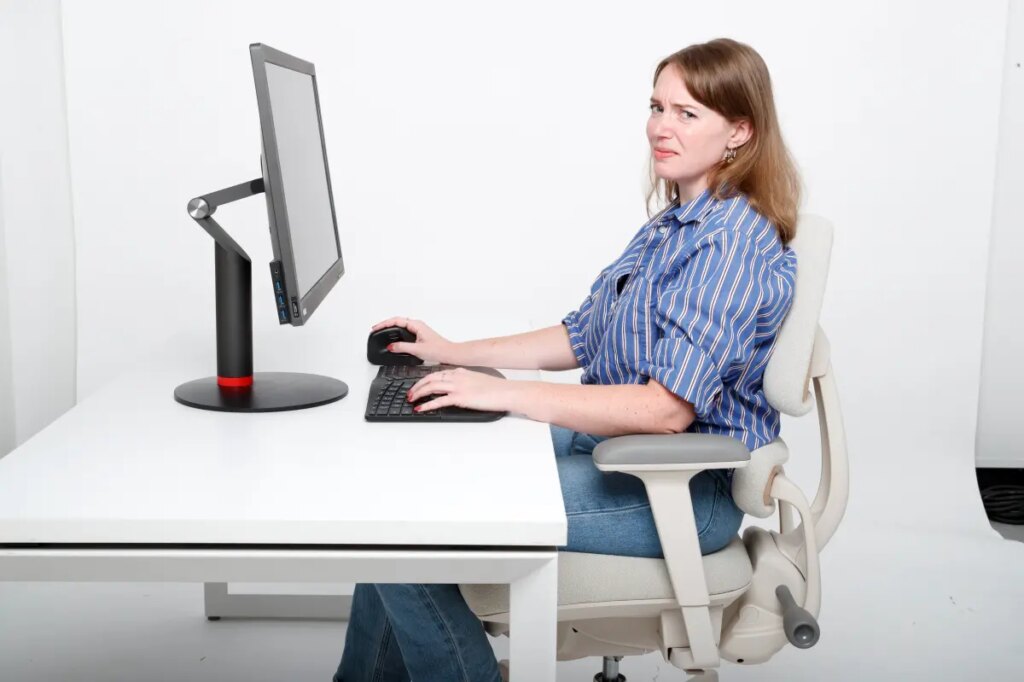
Time to clear off that standing desk. New research reveals that ergonomic office upgrades—ranging from specialized chairs and standing desks to custom keyboards—do virtually nothing to help workers suffering from repetitive stress injuries, nypost.com reported.
What the Research Actually Found
Researchers hailing from the University of Technology Sydney took a hard look at 20 separate trials involving more than 2,400 individuals dealing with work-related complaints centered in the arms, neck, and shoulders. When compared against no treatment at all or standard medical advice, discussion, and counseling, ergonomic-friendly office interventions showed little to no measurable impact. They failed to move the needle on pain levels, overall functionality, quality of life, or the rate at which employees took sick leave.
The review also cast doubt on the supremacy of expensive gear compared to basic human movement. Posture-correcting exercises proved more effective at treating pain and discomfort than ergonomic office setups alone, although the study noted that combining the two could offer short-term relief.
A Multi-Billion-Dollar Market Meets Skepticism
The stakes for corporate budgets are immense. Ergonomic office furniture represents a staggering $16.5 billion market according to data from Mordor Intelligence, and analysts project that valuation to swell to nearly $23 billion by 2031, nypost.com reported. For years, office designers and posture experts have warned that poor desk configurations inevitably lead to chronic conditions like tech neck and poor posture.
“The long-term cost of poor ergonomics far exceeds the upfront cost of proper design,” board-certified ergonomist and Global Vice President of Humanscale Consulting Jonathan Puleio previously told The Post.
Yet this new analysis directly challenges that narrative, prompting a hard look at whether office revamps are worth the heavy price tag.
Where the Evidence Holds Caveats
While the broader findings pour cold water on blanket office overhauls, the research did uncover a few narrow exceptions. Ergonomic setups may still offer modest benefits for workers dealing with specific maladies, such as rotator cuff injuries in the shoulder caused by repeated lifting.
One study highlighted within the review indicated that ergonomic treatment might reduce functional disability better than standard mobilization, strength, and endurance training exercises. At the same time, however, other studies examining workers suffering from carpal tunnel syndrome brought on by frequent mouse-clicking found that ergonomic keyboards and computer mice failed to reduce wrist pain.
While some participant feedback suggested that office updates could improve general quality of life, the research team maintained low confidence in those specific conclusions due to wildly mixed results across the trials. As workplaces weigh whether to continue refreshing office layouts with expensive gadgets, the study’s authors suggest the financial calculus needs a serious update.
“Our findings suggest that, on current evidence, these measures alone shouldn’t be expected to reduce pain or sick leave in the short term,” Mehta said. “Employers may want to weigh that against the cost.”