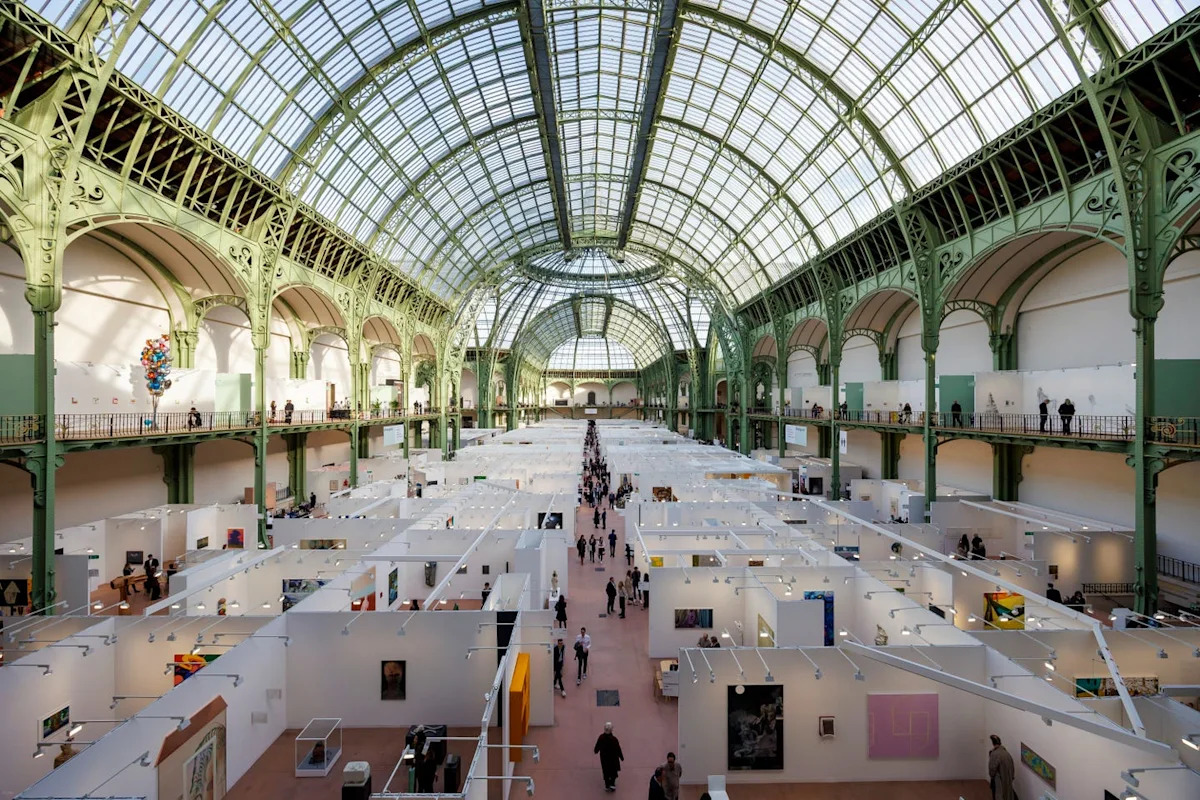
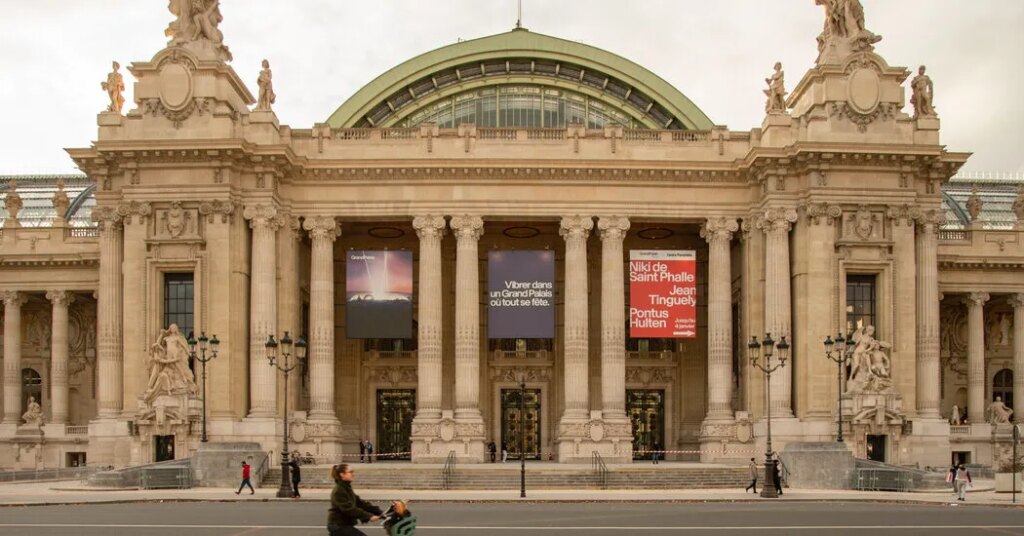
Art Basel Paris opened its doors to VIP guests at the Grand Palais on Tuesday, pushing forward under heavy security and anti-ram barriers following a weekend of widespread protests, looting, and curfews across the French capital.
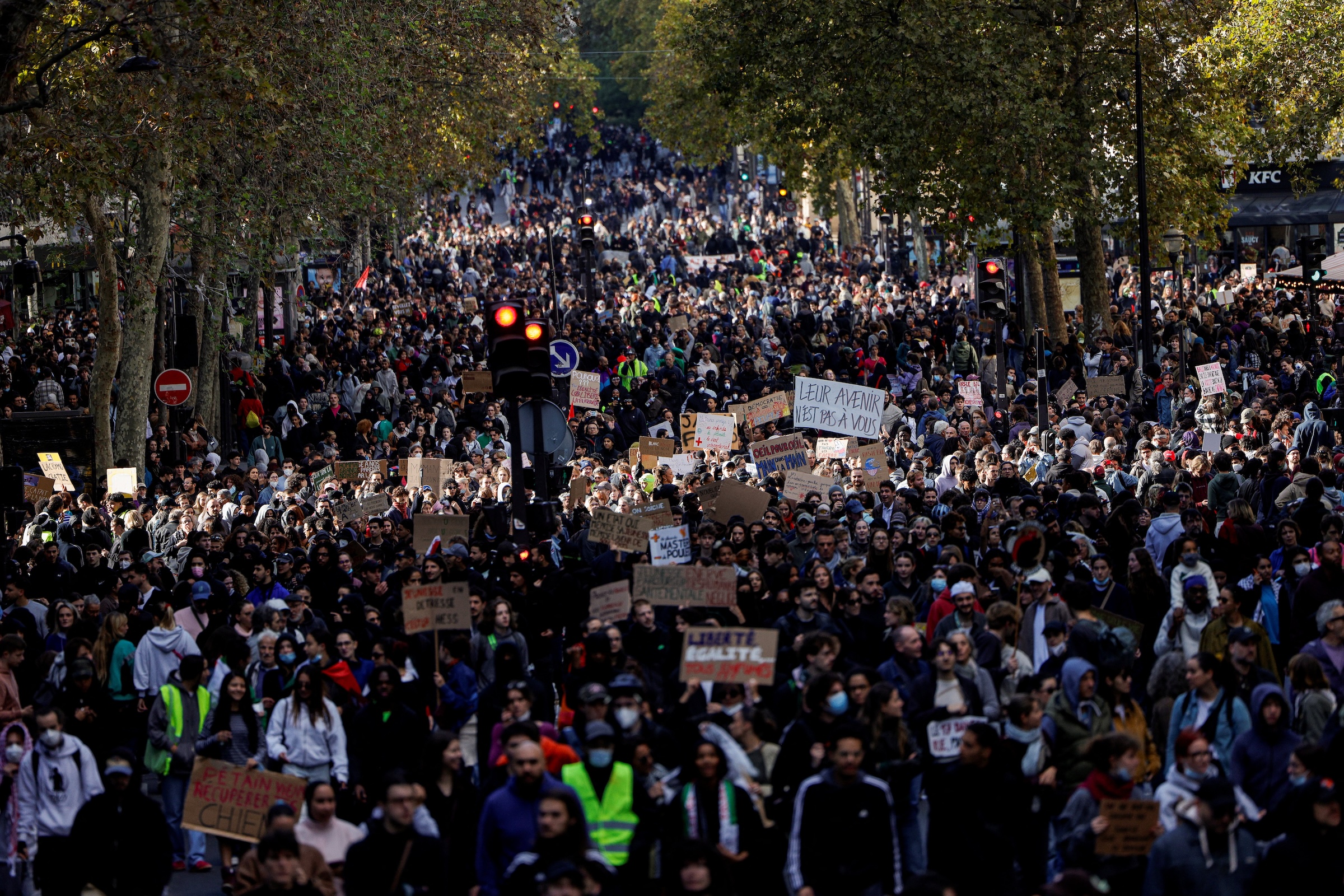
The annual gathering of the art world arrived this week against an extraordinary backdrop. Just days before the Avant-Première preview, France reeled from nationwide demonstrations that drew more than 500,000 people. What began in September as student protests over overcrowded classrooms, broken facilities, and staff shortages expanded into a broader movement against fuel prices and the rising cost of living, drawing in unions and Yellow Vest supporters. By Saturday, the marches devolved into clashes with police, property damage, and thousands of arrests across the country, prompting Prime Minister Sébastien Lecornu to impose nighttime curfews in parts of Paris and other cities.
Security Measures at the Grand Palais and the Decision to Open
Organizers moved swiftly over the weekend to reassure jittery collectors. On Sunday, Art Basel leadership sent an email to VIP guests detailing comprehensive safety measures put in place alongside a private security company and the Paris police. The Grand Palais now sits surrounded by anti-ram barriers designed to block unauthorized vehicles, backed by security personnel patrolling the perimeter around the clock.
Fair director Karim Crippa invoked the city’s historic motto—Fluctuat nec mergitur, meaning tossed by the waves but never sunk—to signal the show’s determination to press ahead. A fair spokesperson also confirmed that the fair is proceeding as planned and final preparations are underway.
Not all cultural institutions shared that resilience. The Ministry for Europe and Foreign Affairs postponed the exhibition Passages. Pas sages on October 15 after organizers deemed the climate inappropriate. A Guerlain-sponsored opening on the Champs-Élysées was canceled as a precaution, alongside a VIP opening for Stan Douglas at the Jeu de Paume. At the École des Beaux-Arts, students blocked entry to call off the opening of a Gina Pane exhibition, while students also blockaded the entrance to the Louvre on Monday.
Collector Turnout and High-Value Sales at the Avant-Première Preview
International collectors spent the days leading up to the preview checking their phones for travel safety updates. Yet Tuesday’s private viewing drew a healthy turnout of wealthy buyers into the Belle Époque halls of the Grand Palais.
The pictures of the riots were so scary. My collector friends asked me if it was safe to come on this trip. I had to say ‘yes’ to at least three of them.
Saloni Doshi, Indian contemporary art collector based in Mumbai
The fair features 211 international dealers, each allotted six plus one invitations for elite clients. Exhibitors brought premier inventories to capture the attention of prominent American collectors such as Jon Shirley, Kim Richter, Komal Shah, Don and Mera Rubell, Pamela Joyner, Marguerite Hoffman, and Glenn Fuhrman, who were all spotted browsing the aisles.
While last year saw two individual paintings sell for more than $20 million each, galleries aimed higher this season. Pace Di Donna Schrader Galleries of New York brought Amedeo Modigliani’s 1917 nude painting, Nu Étendu (Lolotte)
, with a price tag exceeding $100 million.
Exhibitors pushed back against outside perceptions of the civil unrest. New York exhibitor Fergus McCaffrey noted that the media have blown this out of all proportion and asserted that headlines declaring France in flames were entirely misleading. He confirmed that his key American clients arrived as expected.
Differing Perspectives Among Observers in Paris
Observers on the ground experienced the weekend in contrasting ways. New York art adviser Candace Worth reported hearing tear gas detonate near her hotel over the weekend, noting that Saturday wasn’t fun
while observing that the preview felt less frenetic than the 2025 gathering.
Other art professionals urged visitors to look beyond the disruptions and consider the roots of the student demonstrations. James Michael Shaeffer, a director at Galerie Chantal Crousel, pointed out that protests centered on legitimate grievances such as working toilets, smaller class sizes, and support for disabled students.
Meanwhile, American collector and commentator Jeff Magid voiced support for the demonstrations from Paris, comparing the disruption of daily life to the societal impact of art. The exhibition schedule runs through October 25, leaving open questions about whether emergency curfews will expand as further weekend protests loom.