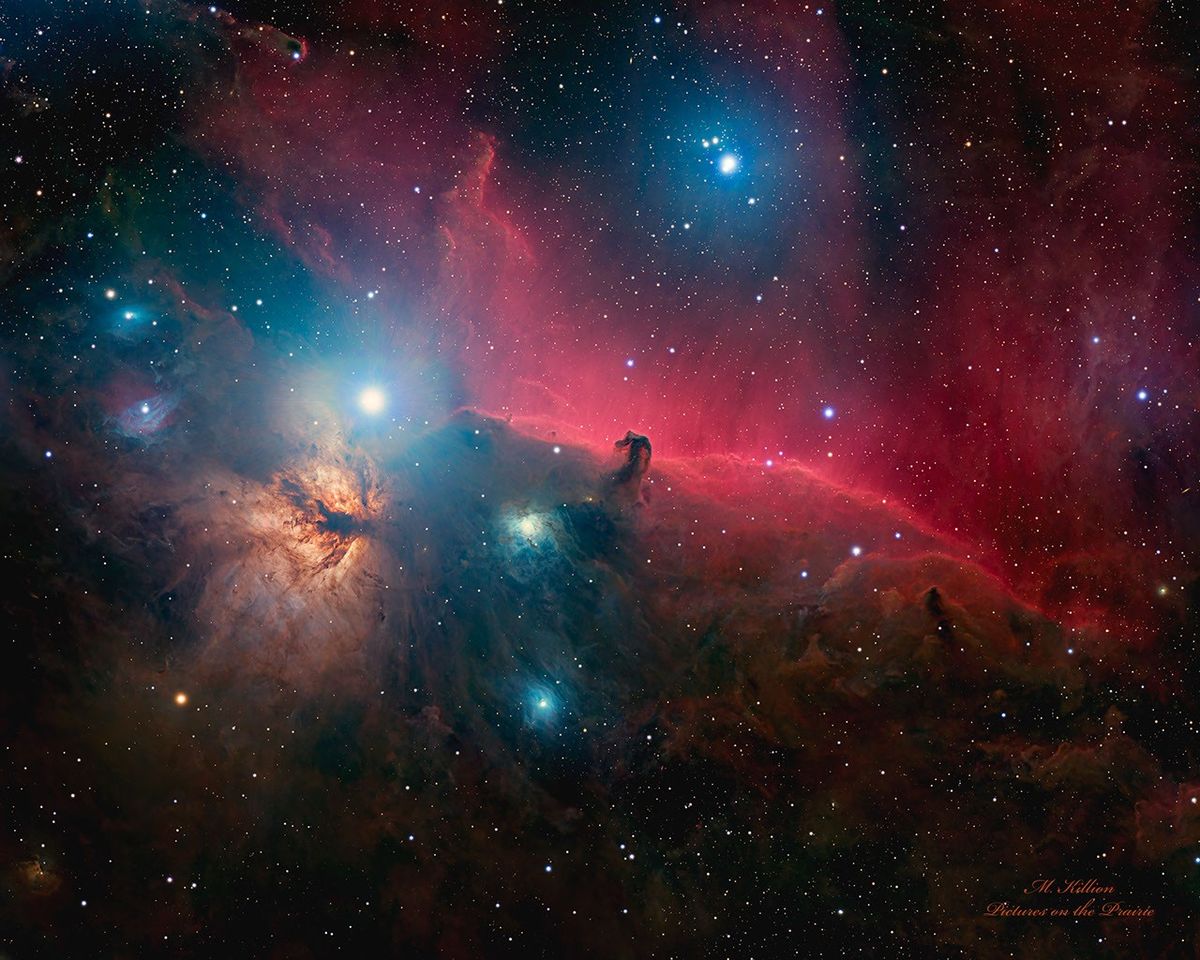
Astronomers revealed a stunning new astronomy picture of the day featuring the Horsehead and Flame nebulae, titled in English The Horsehead and Flame Nebulas, captured in data collected over nearly six hours at the Utah Desert Remote Observatories and published on Thursday.
The Horsehead and Flame Nebulas Captured From Utah
The featured photograph showcases two of the night sky’s most recognizable cosmic structures alongside vibrant surrounding gas and dust. At the center of the frame sits the Horsehead Nebula, a dark cloud measuring roughly five light-years tall and located approximately 1,500 light-years from Earth. professional astronomers said this famous silhouette of a horse’s head is made of dense dust and gas that obscures the intense red glow behind it.
That background crimson illumination comes from hydrogen gas ionized by energetic radiation emitted from the bright star Sigma Orionis positioned near the top. Just to the left of the Horsehead stands the Flame Nebula, displaying an orange glow accented by dark filaments. The composition also highlights the blue reflection nebula NGC 2023, an active stellar nursery where new stars are actively forming.
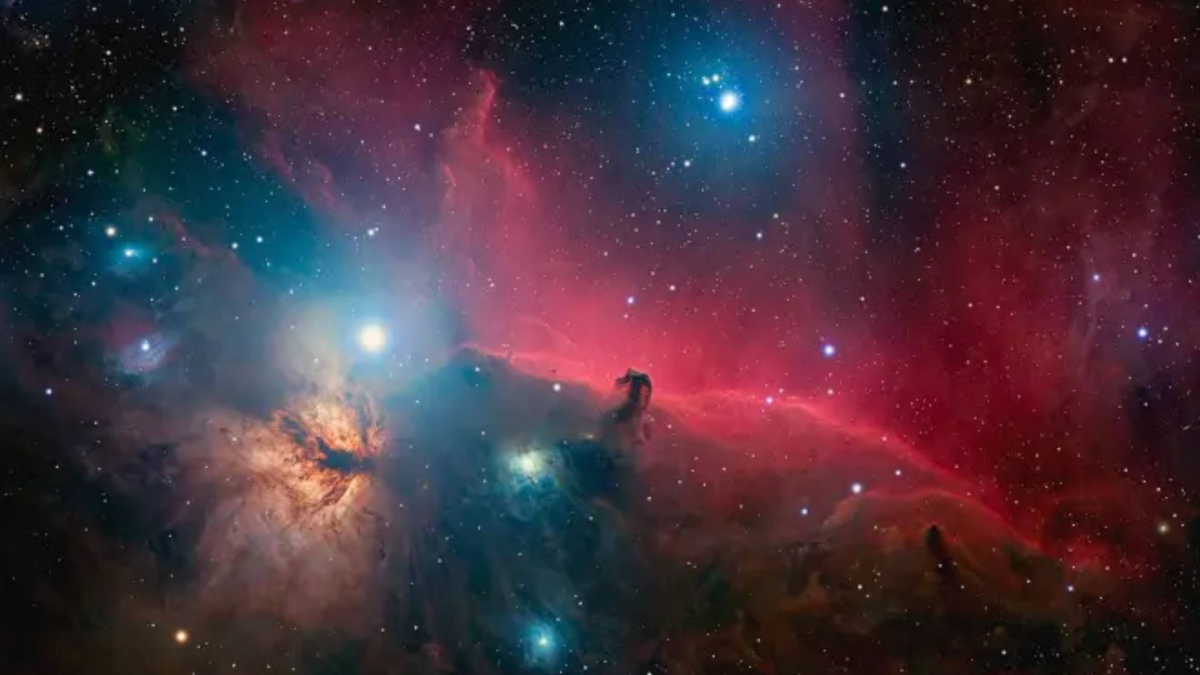
Dominating the left side of the center is the brightest star in the field, blue Alnitak. Also known as the Girdle, Alnitak is a triple star system recognized as the easternmost star forming Orion’s Belt. While the resulting composite resembles a fine painting, the underlying data required precise technical coordination.
Utah Desert Remote Observatories sits on private land along the southeastern edge of the Great Basin Desert, about 130 miles northeast of Las Vegas. The site offers Bortle 2 skies and weather that supports imaging roughly 80 percent of nights, yielding around 2,000 available imaging hours per year. Reliable power and fiber optic internet serve roll-off observatories with capacity for dozens of complete telescope systems.
Each day, the Astronomy Picture of the Day project presents a different photograph of the universe alongside a brief explanation written by a professional astronomer. Editorial work for the publication is handled by authors and editors including Cecilia Chirenti, Robert Nemiroff, Jerry Bonnell, and Keighley Rockcliffe, with Dana Bolles serving as the NASA Official.