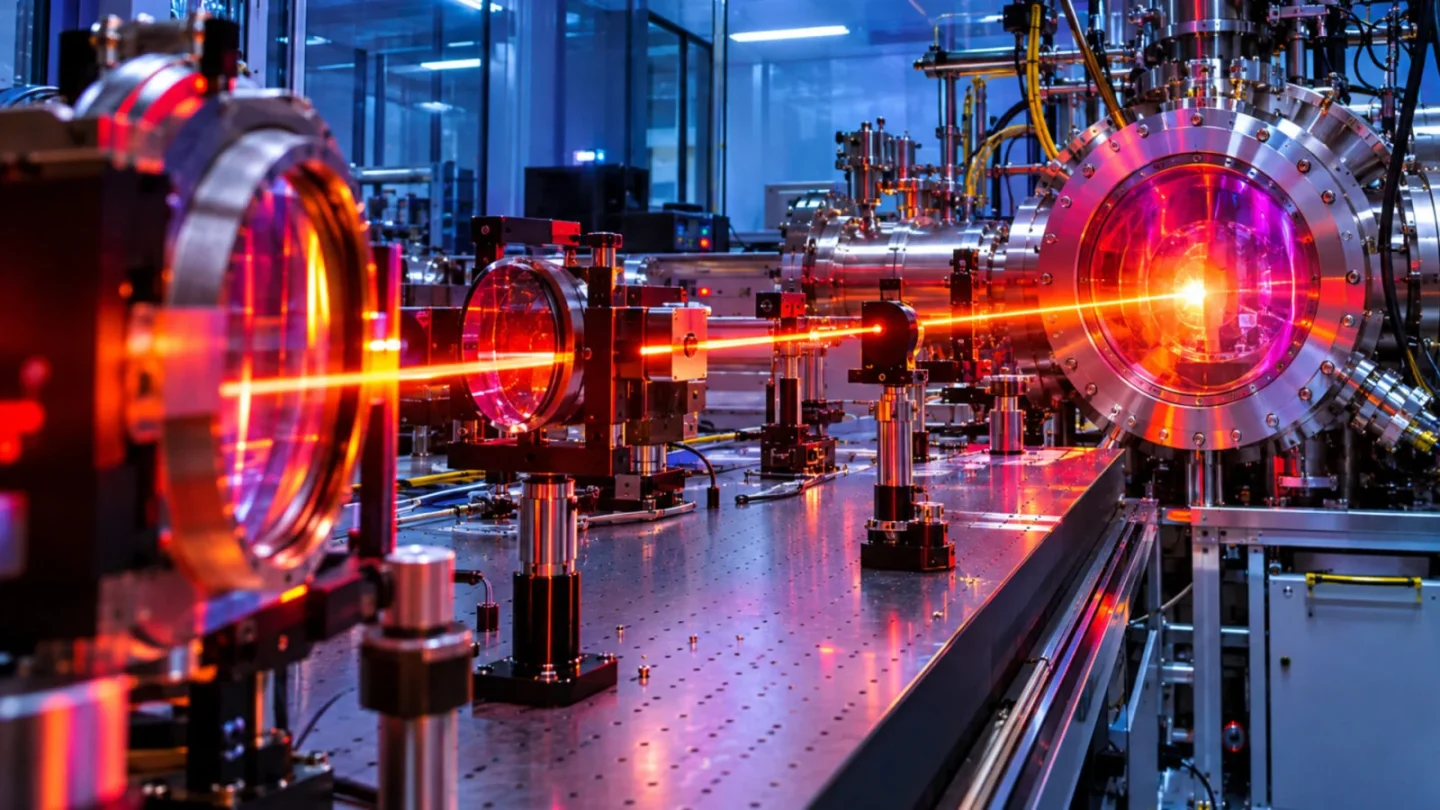
The ELI-NP facility in Măgurele, Romania, has reached a power output of 10 petawatts, a milestone that briefly eclipses the combined electrical output of all the world’s power plants.
This achievement, confirmed by the facility on November 16, 2026, involves the successful acceleration of electrons through the first modules of the site’s accelerator. This result moves the Extreme Light Infrastructure – Nuclear Physics (ELI-NP) project forward. The project aims to leverage these ultra-intense pulses for advancements in medicine and nuclear waste management.
Engineering the 10-Petawatt Pulse
The system was constructed by the French industrial group Thales, which delivered 450 tonnes of equipment to the Romanian site starting in late 2016. The laser architecture utilizes two 10-petawatt arms capable of producing pulses lasting 25 femtoseconds—each a millionth of a billionth of a second—concentrated into a beam 50 centimeters in diameter.
Reflecting on the technical progression of the project, Gérard Mourou noted the scale of the improvement:
“10 PW represents a tenfold leap compared to the power level demonstrated at the start of the project”
Gérard Mourou
While the power output is immense, the duration of each pulse is so short that the total energy released remains limited. The facility has demonstrated high operational capacity, recording 274 pulses at 10 petawatts in a single day on November 1, 2024.
Pulses Could Improve Particle Accelerators and Cancer Treatments
Researchers intend to use these pulses to develop more efficient particle accelerators. Mourou says these tools could lower costs and increase accessibility for cancer treatments. Additional applications include shortening the radioactive lifespan of nuclear waste and potentially clearing orbital debris.
Thales has described the site as “the largest investment ever made in scientific research in Romania”. The infrastructure is part of a broader European initiative with sister sites located in the Czech Republic and Hungary.
Infrastructure Development at Măgurele
The Măgurele site has faced logistical challenges, particularly regarding its gamma-beam equipment. Early contracts for that system were terminated, leading to legal disputes and the bankruptcy of one contractor. However, progress resumed in 2026 following a February meeting in Bucharest. The facility is currently integrating its linear accelerator modules, with the first successful electron acceleration reported in mid-November.