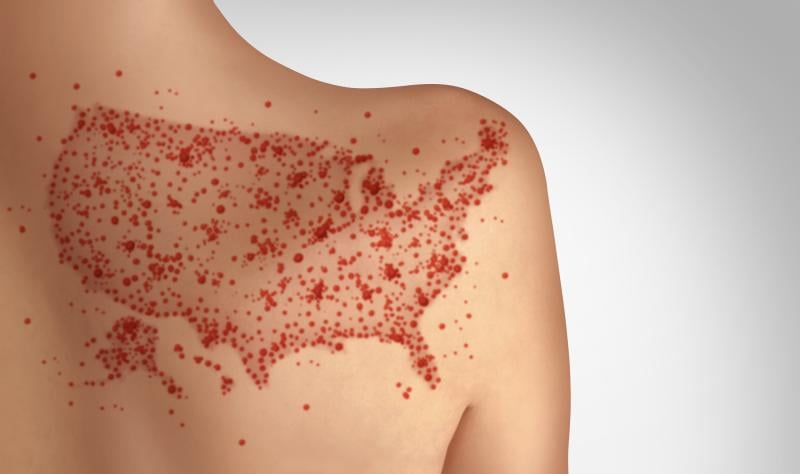
The United States has lost its measles elimination status, ending a public health triumph secured 26 years ago.
The designation, which signifies the interruption of endemic transmission, was revoked following a review by the Pan American Health Organization (PAHO) as outbreaks continue to spread across the country.
The PAHO commission reached the determination after recording more than 5,100 confirmed measles cases nationwide in 2026 as of early November. Officials have said that it is conceivable the total number could surpass 7,000 before the end of the year. This represents the country’s worst outbreak in more than three decades, a significant reversal from the status maintained since 2000, when the U.S. successfully interrupted endemic transmission.
According to Jon Andrus, a global health professor at George Washington University and the chair of the PAHO commission, the loss of status is a sobering development after years of public health efforts.
A country loses this status when the virus is continuously transmitted for at least 12 months. To reclaim the designation, the U.S. must demonstrate interrupted endemic transmission for at least 36 months, a process experts warn could take years.
It’s a loss of stature. It’s a loss of achievement.
Jennifer Nuzzo, director of the Pandemic Center at Brown University and a professor of epidemiology
The resurgence has created a mounting financial burden on state and federal governments. Researchers at Johns Hopkins University developed a tool to track the economic impact of these outbreaks, estimating a total cost of nearly $83 million for the 2026 outbreaks. For example, when researchers analyzed a 2025 outbreak in New Mexico, they found the total cost reached $5.4 million, or $53,522 for every person infected.
In New York, 48 cases reported in 2025 carried an estimated $1.1 million in costs, including nearly $749,000 in public health responses, $333,000 in productivity losses, and $24,500 in direct medical expenses. Economists note that these costs quickly outweigh the investment required for preventative vaccination, as the ripple effect of an outbreak impacts not only those infected but also the broader community and healthcare infrastructure.
Governor Shapiro's unseemly rush to Lancaster County to convene a national press conference and his giddy delight in announcing two measles deaths was a morose commentary on the contemporary political dialogue. The performance was a replay of the Democrats' COVID playbook:… https://t.co/LvZf3br1dB
— Post by @SecKennedy on X
To reach herd immunity against measles, 95% of a community must be vaccinated; however, national coverage among kindergarteners has decreased from 95.2% during the 2019–20 school year to 92.4% in the 2025–2026 school year. In some regions, such as Catron County, New Mexico, and Adams and Custer counties in Idaho, kindergarten vaccination rates have fallen below 50%.
The measles, mumps, and rubella (MMR) vaccine is highly effective, with two doses providing 97% protection against infection. The CDC has historically published articles to track data during measles outbreaks, emphasizing the importance of on-time vaccination.
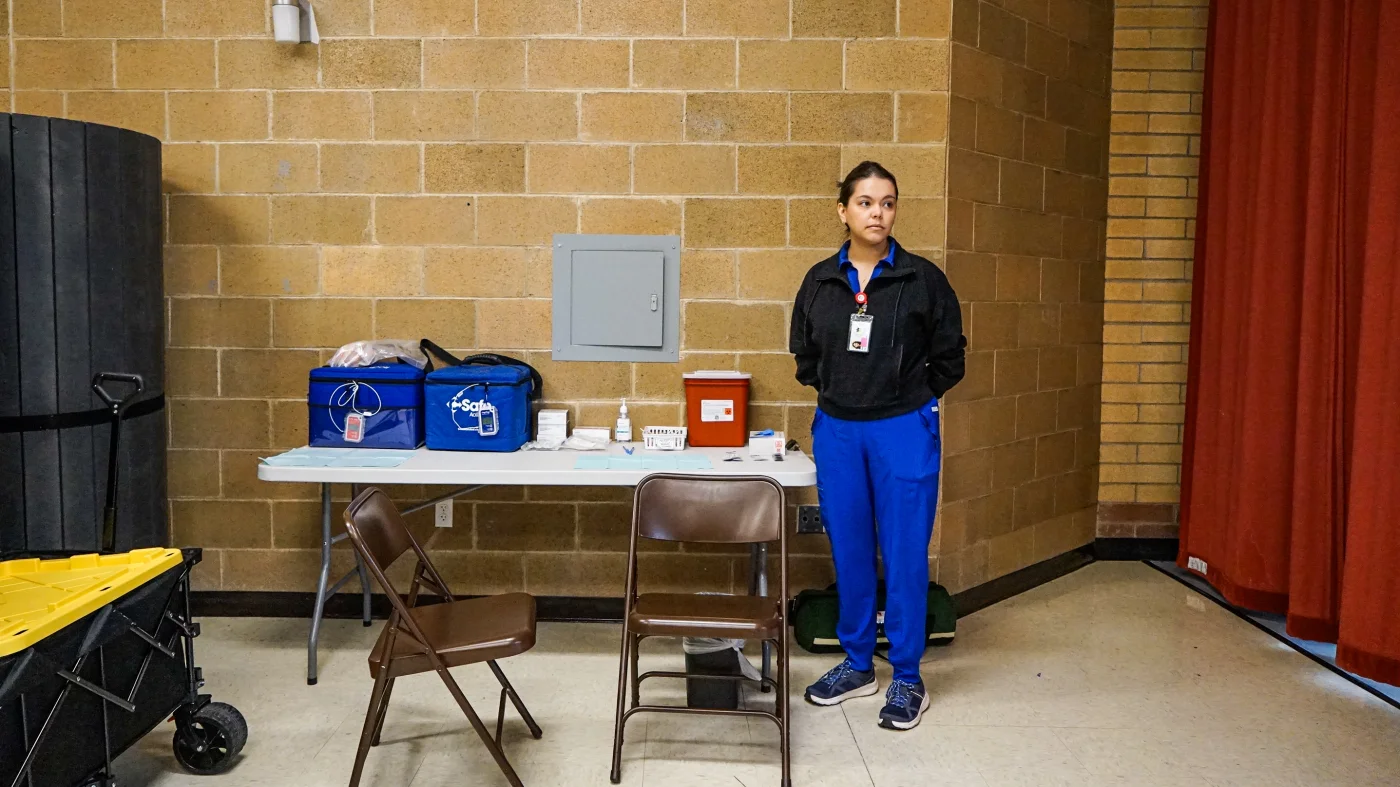
In contrast, current challenges include the difficulty of protecting infants, who are generally not eligible for the vaccine until they are one year old. Experts, such as Paul Offit, director of the Vaccine Education Center at Children’s Hospital of Philadelphia, say the current situation harms public health.
Measles is an airborne illness that can linger in a room for up to two hours after an infected person has left. Because of this, public health officials emphasize that the virus can spread easily in public spaces.
The U. S. has officially lost its status as a country where #measles is eliminated 😔https://t.co/MHMEwYuEU5 via @KFFHealthNews with #MeaslesCollaborative Executive Director @InfectiousPS
— Post by @NFIDVaccines on X
Beyond the immediate symptoms, patients can experience immune suppression, making them more susceptible to other diseases. Severe complications can include brain swelling, which may result in intellectual disabilities or deafness, occurring in roughly 1 in 1,000 unvaccinated children. Between 1 and 3 in every 1,000 infected children die from the disease.
Earlier coverage: US Faces Loss of Measles Elimination Status Amid Case Surge
More on New Mexico
The U. S. lost its measles elimination status because Sec. Kennedy is playing deadly games with public health. Vaccines are a safe and effective tool to prevent illness and deaths, but Trump’s admin chooses to put lives at risk by undercutting science and spreading misinformation.…
— Post by @BettyMcCollum04 on X
#DYK: In 1993, the Clinton administration established the Vaccines for Children program, expanding access to lifesaving vaccines for children across the country. The @NYTimes looks back at the decades of public health work that led to measles elimination in the U. S.:…
— Post by @ClintonFdn on X
“.. It’s a symbolic loss,” Jennifer Nuzzo, director of Brown University’s Pandemic Center, said in CIDRAP News. “It’s a loss of standing. It’s a loss of stature. It’s a loss of achievement.”@Forbes https://t.co/7Wt7v8eDHC pic.twitter.com/tvjRceOVEx
— Post by @carlquintanilla on X