Earth will reunite its scattered landmasses into a single supercontinent known as Pangea Proxima in roughly 250 million years, according to geological projections.
Continents drift across the globe driven by forces deep within the Earth mantle. While the original Pangaea broke apart roughly 200 million years ago, the tectonic plates continue their slow journey toward a future reassembly.
Christopher Scotese proposed the concept in 1982 under the name Pangea Ultima. He later preferred the designation Pangea Proxima.
Simulations developed within the PALEOMAP project indicate that the Atlantic Ocean will vanish as the Americas push toward Africa and Eurasia. The Indian Ocean will transform into an inland sea.
Cuba will merge with the United States. Greenland will attach directly to Canada, and the Korean Peninsula will find itself squeezed between China and Japan.
France will occupy a distinct position inside this merged landmass. The disappearance of the Mediterranean Sea will close the distance to North Africa while the country pushes northward toward the Arctic.
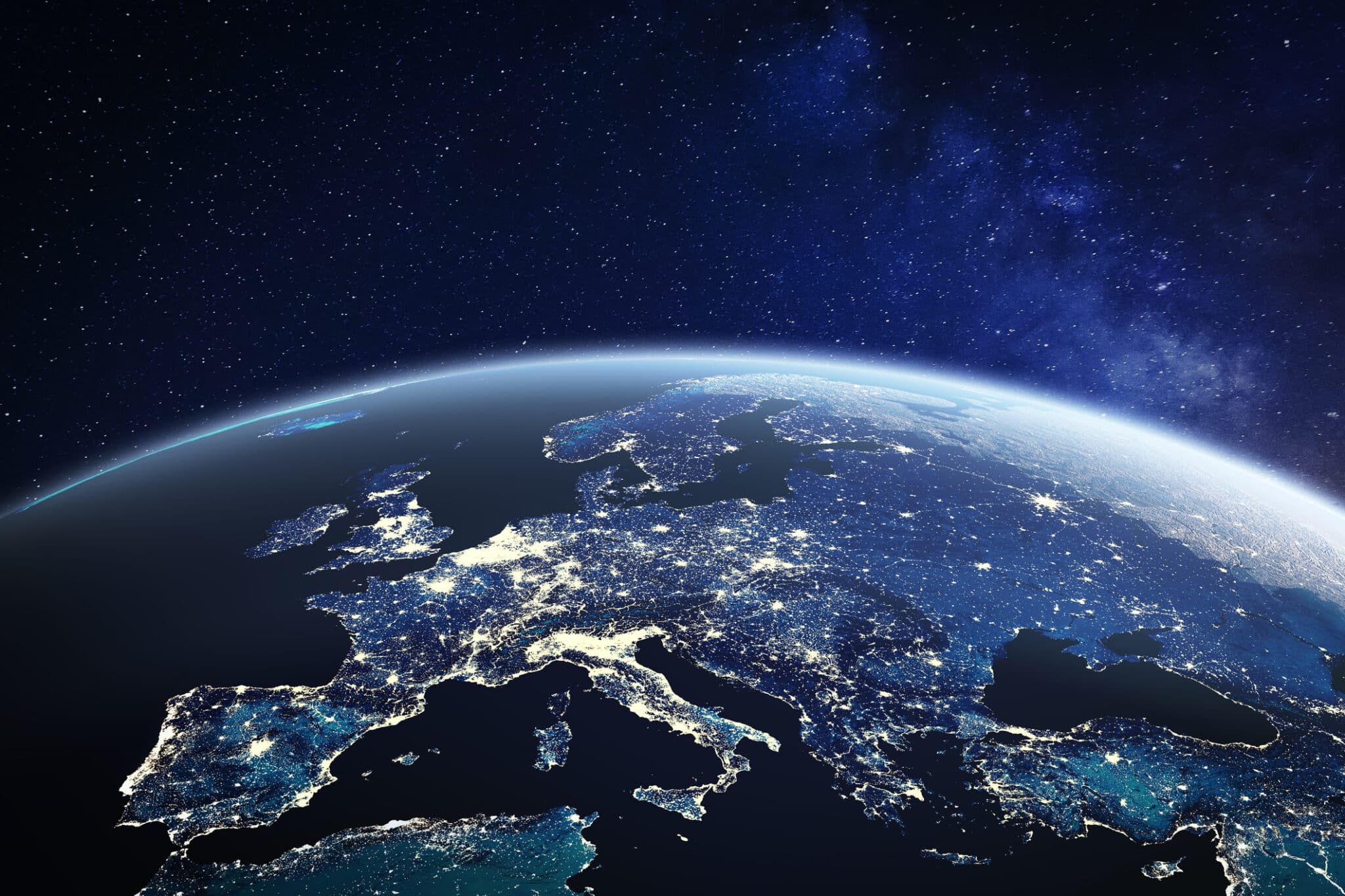
French borders could touch Spain, Portugal, and Italy alongside Morocco, Algeria, and Tunisia. Volcanic activity and a Sun 2.5 percent brighter than today will drive temperatures above 40°C across most of the supercontinent, triggering a mass extinction of mammals.
France will remain among the few landmasses offering stable water resources.
An American geologist launched the mapping initiative to chart the planet over the course of the past billion years. That work generated predictive models.
In this future configuration, France will shift from its current location in Western Europe to a position further north. The country’s borders, which presently include neighbors such as Belgium, Germany, and Spain, will be redrawn as the Mediterranean Sea disappears. These new boundaries will likely connect the nation to Morocco, Algeria, and Tunisia.
Researchers detailed the scenario inside a 2018 presentation spanning 35 pages. Scientific literature published in the journal Nature said that the environmental alterations stem from atmospheric carbon dioxide increases linked to volcanic output.