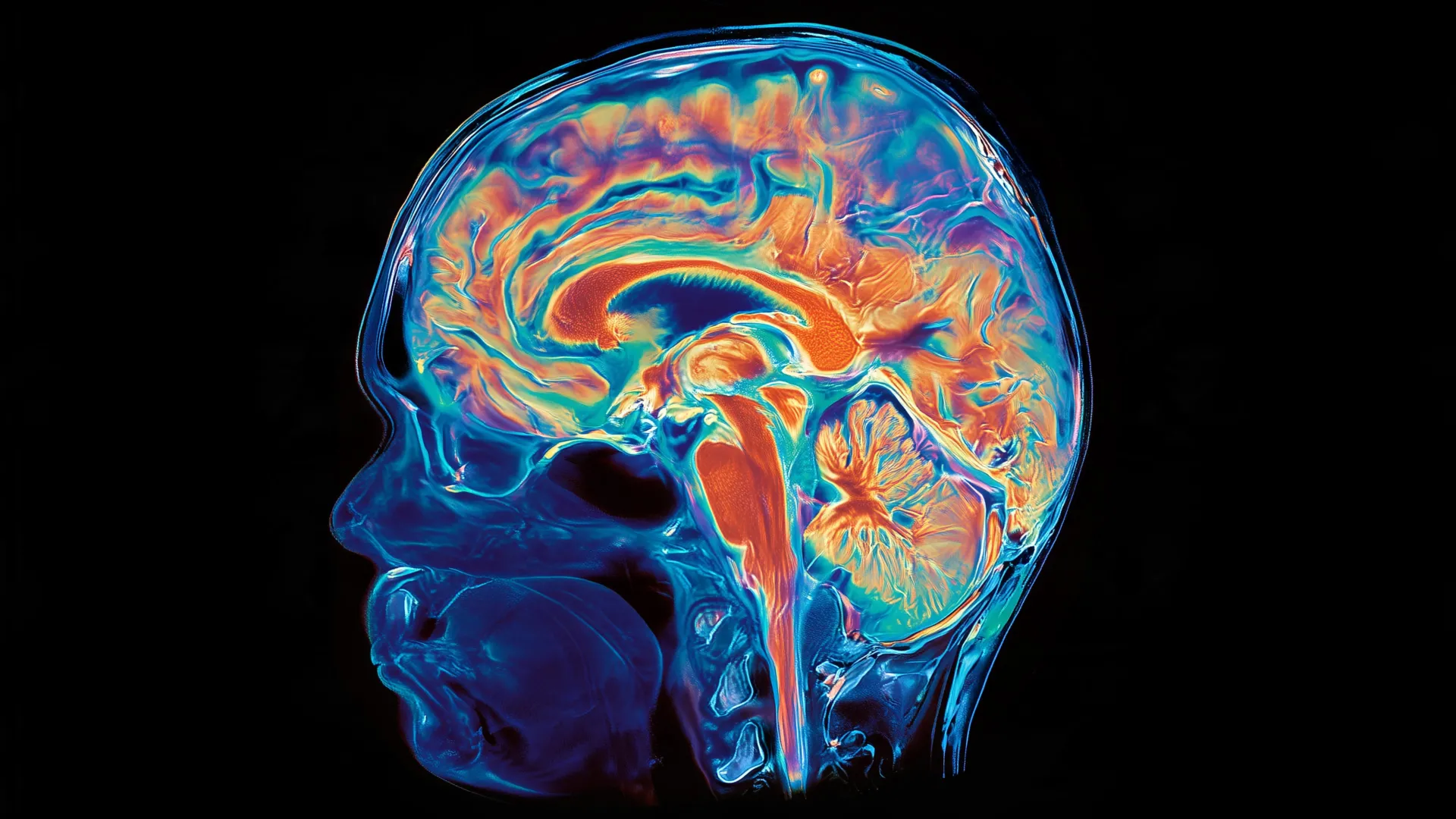
Researchers at the University of Iowa examined functional MRI scans from 48 autistic adults and 90 non-autistic adults.
The imaging data had been collected at Indiana University and Caltech while participants watched six movie clips ranging from five to 20 minutes in length. The selections covered animation, action, romantic comedies, and Hitchcockian thrillers.
Scientists trained a computer model to associate specific features of the clips—such as sights, sounds, and emotional valence—with activity across different brain networks.
When the researchers compared group averages, the computational model predicted brain activity with similar success for both groups. Auditory and language networks yielded the highest prediction accuracy across all participants.
The model’s predictions varied by about the same amount within a given person in either group.
Comparing individual viewers revealed a contrast. Brain activity among autistic adults varied considerably more from person to person than it did among non-autistic participants, and this divergence appeared across nearly every brain system examined. The largest gaps surfaced in networks dedicated to processing social cues.
The computational model allowed us to look for robust brain responses to many different aspects of the complex, dynamic contexts in the movies.
Dorit Kliemann, researcher at the University of Iowa
The findings indicate that conventional approaches relying primarily on group averages can obscure meaningful differences among individuals. Recognizing that autistic brains exhibit greater heterogeneity than previously assumed may alter how future neuroimaging studies are designed and interpreted.
We were surprised by the similarity of group averages. The results suggest that we need to focus on understanding the details of individual brain responses. How and why do they differ?
James Traer, researcher at the University of Iowa
The research team was funded by the National Institute of Mental Health and the Iowa Initiative for Artificial Intelligence. Investigators plan to examine further how, where, and when differences in brain activity correspond to individual variations in behaviors associated with autism spectrum disorder.
Identifying ASD subgroups may help us build a more precise understanding of the condition and help develop ways to provide individually tailored support.
Dorit Kliemann, researcher at the University of Iowa
ScienceDaily reported that brain scans captured while people watched movies demonstrated that autistic and non-autistic participants process identical scenes in a similar fashion on average.
The study bore the title “Heterogeneous Encoding Patterns of Dynamic Audiovisual Social Stimuli in Autism Spectrum Disorder.”
SciTechDaily said that the authors applied encoding models in a novel way to multiple datasets.
Dorit Kliemann said that determining these subgroups can assist in constructing a more accurate comprehension of the condition.
The research team was funded by the National Institute of Mental Health, the lead federal agency for mental disorders research within the National Institutes of Health, supporting the project through its extramural grants program. NIMH’s strategic plan explicitly prioritizes developing interventions that incorporate the diverse needs and circumstances of people with mental illnesses, a directive that aligns with the study’s focus on individual variability over group averages.
The Society for Neuroscience serves as the world’s largest organization of scientists and physicians dedicated to studying the brain and nervous system.