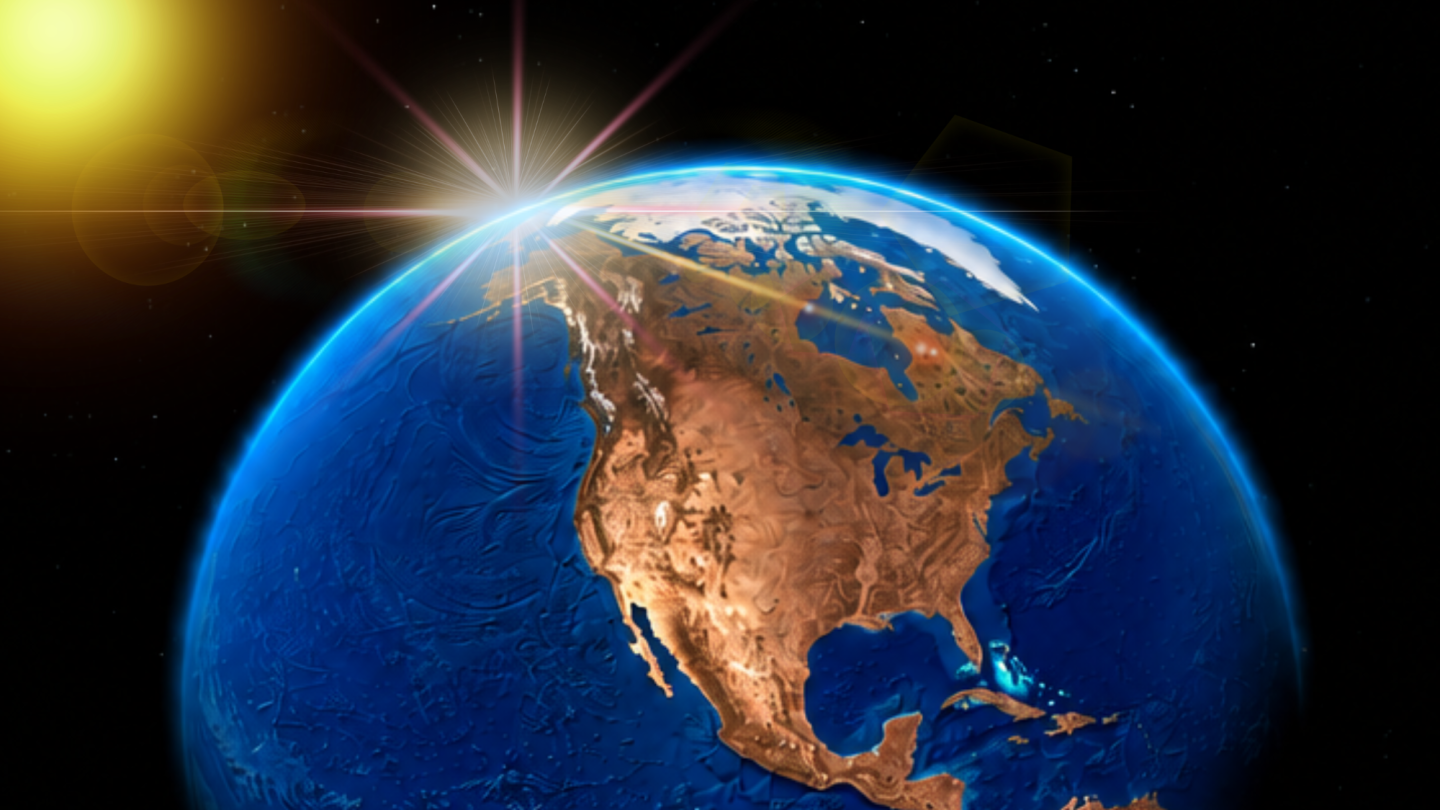
University of Washington researchers built a virtual Earth that deliberately lacks life to help astronomers determine whether atmospheric gases detected on distant worlds truly signal living organisms or arise purely from geological processes.
The research appeared on September 18, 2026, in The Planetary Science Journal under the title A Whole-planet Model of the Earth without Life for Terrestrial Exoplanet Studies.
The University of Washington announced the findings on November 2, detailing how the model tracks geochemical evolution without biological influence.
Lead author Samantha Gilbert-Janizek completed the work as a doctoral student at the University of Washington and is now a postdoctoral fellow at the University of California, Riverside. She built upon an earlier model developed by Rory Barnes that simulated a planet’s core, mantle, and crust.
After more than a decade of work by many scientists, Dr. Gilbert-Janizek has finally completed a model of the Earth that simultaneously reproduces properties of Earth’s core, mantle, surface and atmosphere. That calibration gives us confidence that future simulations of exoplanets will be accurate.
Rory Barnes, University of Washington
The simulation runs from the birth of Earth 4.5 billion years ago to 500 million years into the future. It models the exchange of heat and chemicals between the core, mantle, crust, surface, and atmosphere.
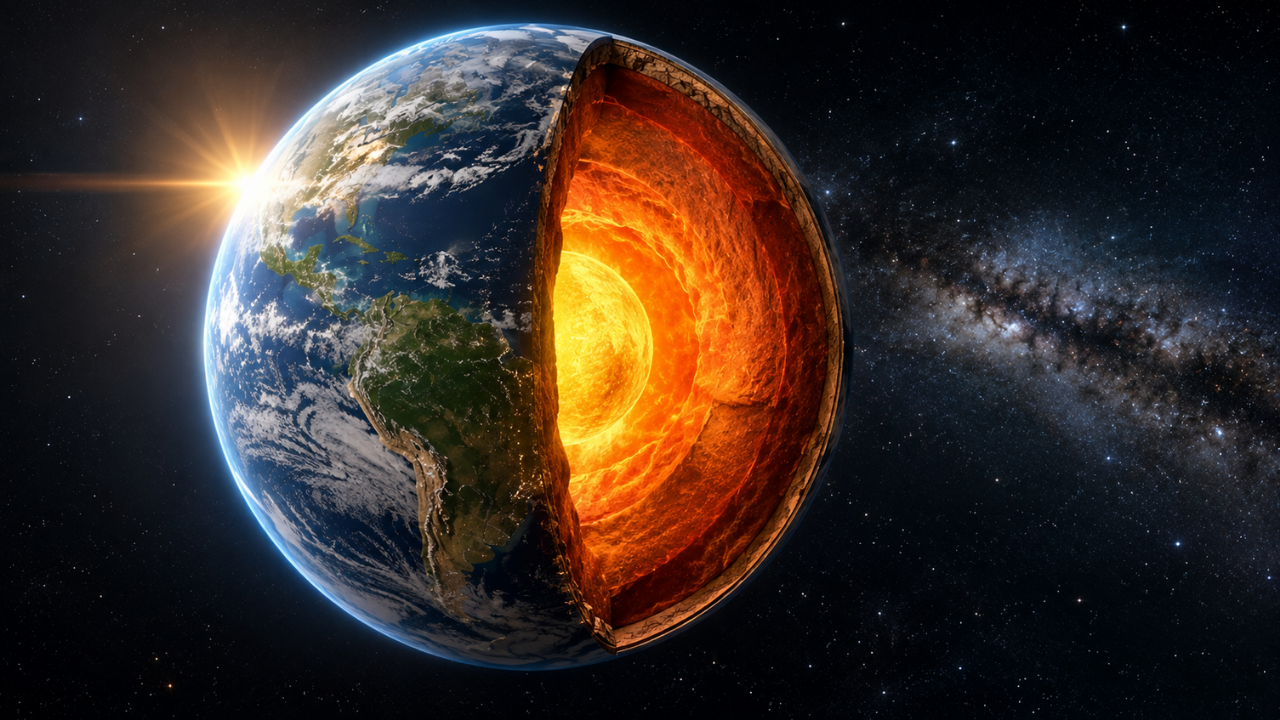
To validate its accuracy, the team tested the lifeless simulation against 19 observational target values set for pre-industrial Earth.
Seventeen of the 19 benchmarks matched within the margin of error. Variables tracked in the model include atmospheric carbon dioxide and water vapor, surface temperature and albedo, ocean mass, upper-mantle temperature, and mantle heat flow.
Astronomers have cataloged more than 6,000 exoplanets beyond our solar system. Researchers face the challenge of distinguishing between habitable worlds and actually inhabited ones.
Gases such as oxygen and methane can be produced by biological activity. They can also stem from UV photochemistry, volcanic activity, or serpentinization reactions between rocks and water.
Researchers generate synthetic reflected-light spectra spanning 0.2 to 2.0 micrometers by feeding the model’s geochemical states into radiative transfer codes. Comparing these abiotic spectra to actual telescope observations provides a rigorous null hypothesis for astrobiologists.
When we interpret observations of an exoplanet’s atmosphere, this tool will help us determine the probability that what we observe indicates life on the surface.
Samantha Gilbert-Janizek, University of California, Riverside
Researchers can input bulk planetary properties into the computer simulation. This step shows whether the resulting atmosphere matches telescopic data collected by the James Webb Space Telescope, upcoming ground-based telescopes, or NASA’s planned Habitable Worlds Observatory.
The planet’s atmospheric composition can likely be explained without life if the lifeless simulation matches the observation. The world earns priority for follow-up study if the observations deviate.
Realizing the ambitious goals of a telescope like the Habitable Worlds Observatory requires decades of work across many generations of scientists. I’m so grateful to join this lineage and one day pass the torch to the next generation so that we can continue chipping away at this question of whether or not we are alone in the universe.
Samantha Gilbert-Janizek, Lead Author