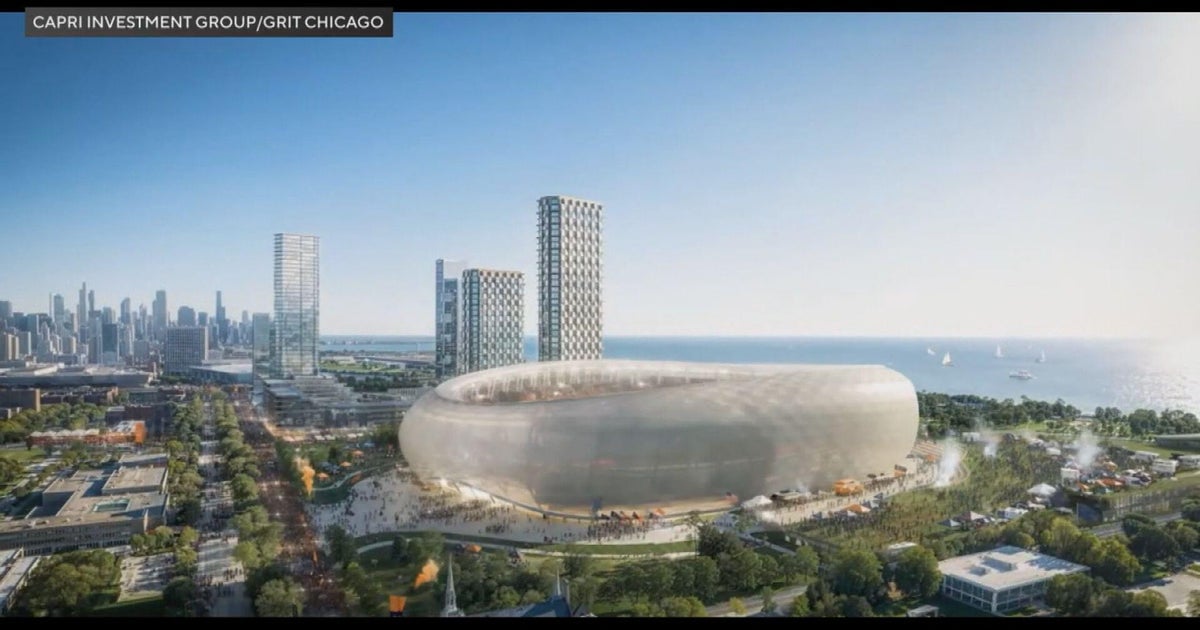
A group of Chicago developers pitched a $10 billion proposal for a domed Chicago Bears stadium and entertainment district at the former Michael Reese Hospital site, according to CBS News.
The plan, called Bronzeville Lakefront, was unveiled by Capri Investment Group and GRIT Chicago with backing from 4th Ward Ald. Lamont Robinson, as reported by the Chicago Sun-Times.
Developers Pitch Bronzeville Lakefront Stadium Plan
The vision spans 100 acres, nearly doubling the size of the original Bronzeville Lakefront development by incorporating the nearby Prairie Shores apartment complex and using air rights over the McCormick Place truck marshaling yard, according to CBS News and the Chicago Sun-Times.
Developers on Thursday unveiled a $10 billion proposal for a large-scale development district in Bronzeville that would include a domed stadium for the Bears. https://t.co/hBwAx1Ip1A
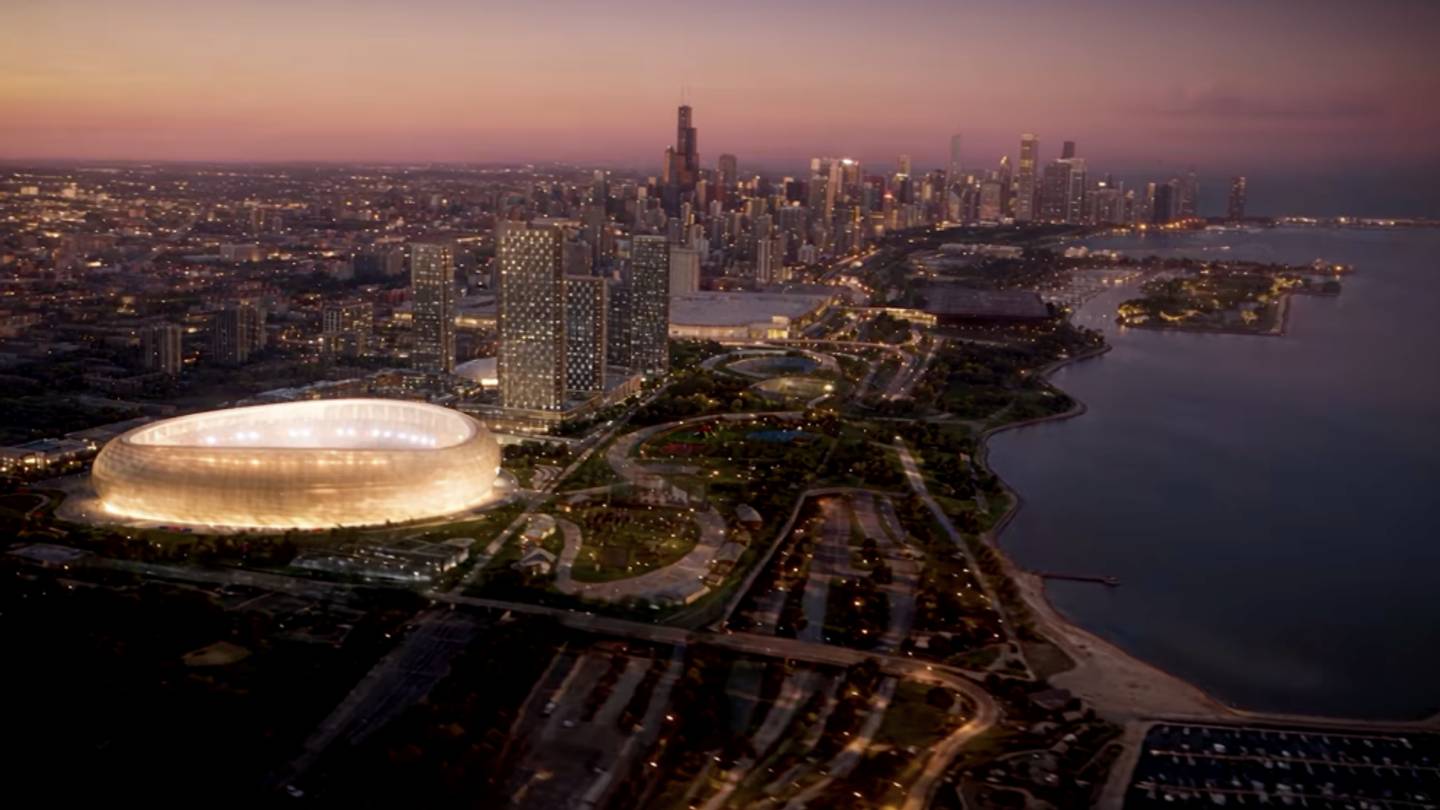
At its center would sit a 1.8-million-square-foot domed stadium holding 75,000 spectators. It is flanked by commercial spaces, 400,000 square feet of new offices, a 28-acre park featuring a land bridge over DuSable Lake Shore Drive, and an expanded McCormick Place connection.
Developers project the complex would generate 60,000 jobs and $14 billion in regional economic benefits, according to CBS News.
There's another new proposal in the Bears' stadium saga, this one relating to Bronzeville, as @leilarahimi and @LouCanellis discussed. pic.twitter.com/60gisAYCTV
Capri Investment Group founder Quintin E. Primo, III said at a news conference, “Therefore there should be no reasons why the Bears and the NFL should not seriously consider Bronzeville as the best site for their new home,” as reported by CBS News.
Developers Address Past Site Concerns
The Bears previously dismissed the Michael Reese location—which closed in 2008 and was once acquired by the city for an unbuilt Olympic Village—because they considered it too narrow and raised safety concerns regarding active rail lines, according to the Chicago Sun-Times.
Any emerging, attention-grabbing Bears stadium proposals should face this question first … Is the Bears organization actually invested or engaged at all in said proposal? If not … 🤔 Question 2: Can the Bears, with patience thinning and other league owners seeking clarity,…
However, developers said that preliminary designs demonstrate the stadium would require 30 to 40 acres, including a 300-foot security perimeter for a Super Bowl, without encroaching on active railroad operations, according to CBS News.
Addressing impacts on existing residents, Ald. Robinson said, telling the Chicago Sun-Times, “I want to be very clear that before you can remove, tear down Prairie Shores, you have to put the units up first. You need to have 1,000 units up before you can take one unit down or have one family displaced.”
Stadium Proposal Faces Political Hurdles
The proposal arrives as the Illinois legislature prepares to convene for a veto session to consider stadium legislation, while the Bears have maintained a focus on potential sites in Arlington Heights and Hammond, Indiana, according to CBS News and Sports Illustrated.
Mayor Brandon Johnson stated in a release that “Developers know that all ideas will be vetted thoroughly and advancing their ideas will require community engagement and support,” as reported by CBS News.
Ald. Robinson said that if the Bears ultimately decline the location, the plan will still serve to present the lakefront site for other interested parties.
Neither Mayor Brandon Johnson nor the developers directly confirmed whether meetings had taken place with the team or the mayor’s office regarding the new plan.
.@LaurenceWHolmes explains why he's "so tired" of independent contractor types and developers attaching themselves to the Bears' stadium pursuit when they aren't actually a player in the game. As one of his many reasons, Holmes adds, "I find it to be unfair to the Bears." pic.twitter.com/tKf6rZwi3y
Earlier coverage: Developers Unveil $10 Billion Bronzeville Lakefront Stadium Plan
When it comes to the #Bears stadium, keep your eye on the ball. These shiny city stadium proposals are fun, but House Bill 958 is what matters right now. The first week of December is the week to circle. There's been continued progress this week, working through the language. Of… pic.twitter.com/93qK4xvkWa
More on Chicago Bears
The Extra Point with @HaughPayton is next! What do you make of the latest #Bears stadium proposal at the Michael Reese location? pic.twitter.com/gPrj9uHrt8