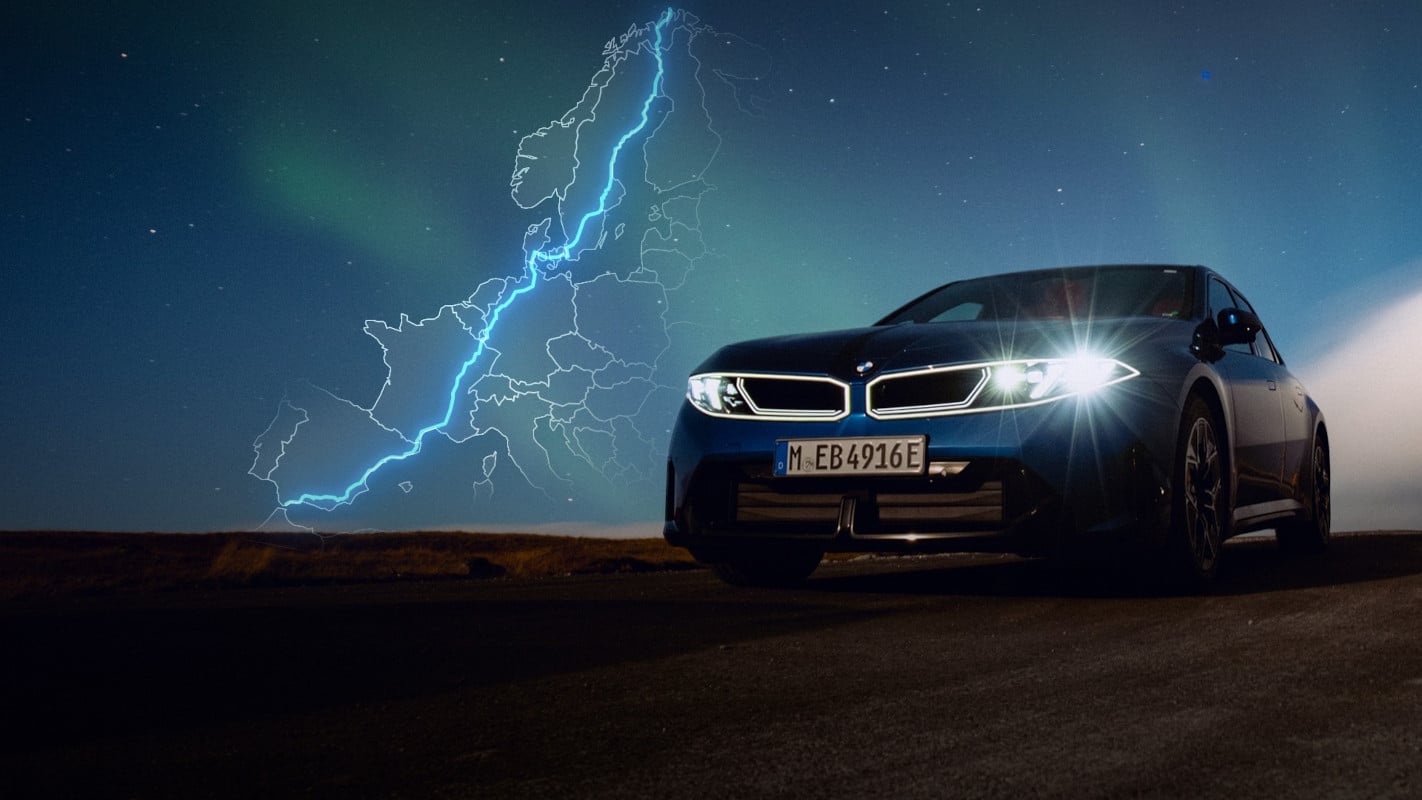
An electric vehicle crossed Europe from the Arctic Circle to the Mediterranean in two hours, 46 minutes and 0 seconds of charging time. It shattered a 2017 record by more than seven hours.
The journey spanned 5,886.7 kilometers along the Paneuropeana route. It started at Nordkapp in Norway and concluded at Tarifa in Spain.
Rafael de Mestre initiated the Paneuropeana competition.
The route started at North Cape, a promontory on the Norwegian island of Magerøya. The island is located 2,100 kilometers south of the North Pole. Tarifa sits in the Spanish province of Cadiz within the Andalusia region as the southernmost land point of Europe.
The vehicle recorded an average energy consumption of 12.5 kWh per 100 kilometers. It travelled at an average speed of 79.7 kilometers per hour.
The driving time totaled three days, two hours, and 41 minutes. The team drove 1,007 kilometers from the plant in Debrecen, Hungary, to the Munich plant in Germany on a single charge of energy.
The record was set using a BMW i3 50 xDrive featuring dual electric motors. The motors deliver an output of 469 horsepower and 645 Nm of torque.
The car accelerates from zero to 100 kilometers per hour in 4.7 seconds. Its top speed is limited to 200 km/h.
The setup yields an official WLTP range of 912 kilometers on a single charge.
The vehicle featured sixth-generation BMW eDrive technology with an 800-volt architecture.

Public DC fast-charging stations supplied an average charging power of 275 kW. They peaked at 400 kW.
Energy for 423 kilometers was added in 10 minutes.
The nearly 6,000-kilometer pan-European journey is impressive proof that our new Neue Klasse-based BMW i3 is fully suitable for everyday use. With a total charging time of just 2 hours and 46 minutes, we beat the previous record, set in 2017, by more than seven hours.
Mike Reichelt, head of Neue Klasse, BMW compact and midsize classes
The previous record on the same route, established in 2017, involved more than seven hours of charging.
Charging stops used public stations chosen dynamically based on consumption, infrastructure evolution, weather, and traffic.