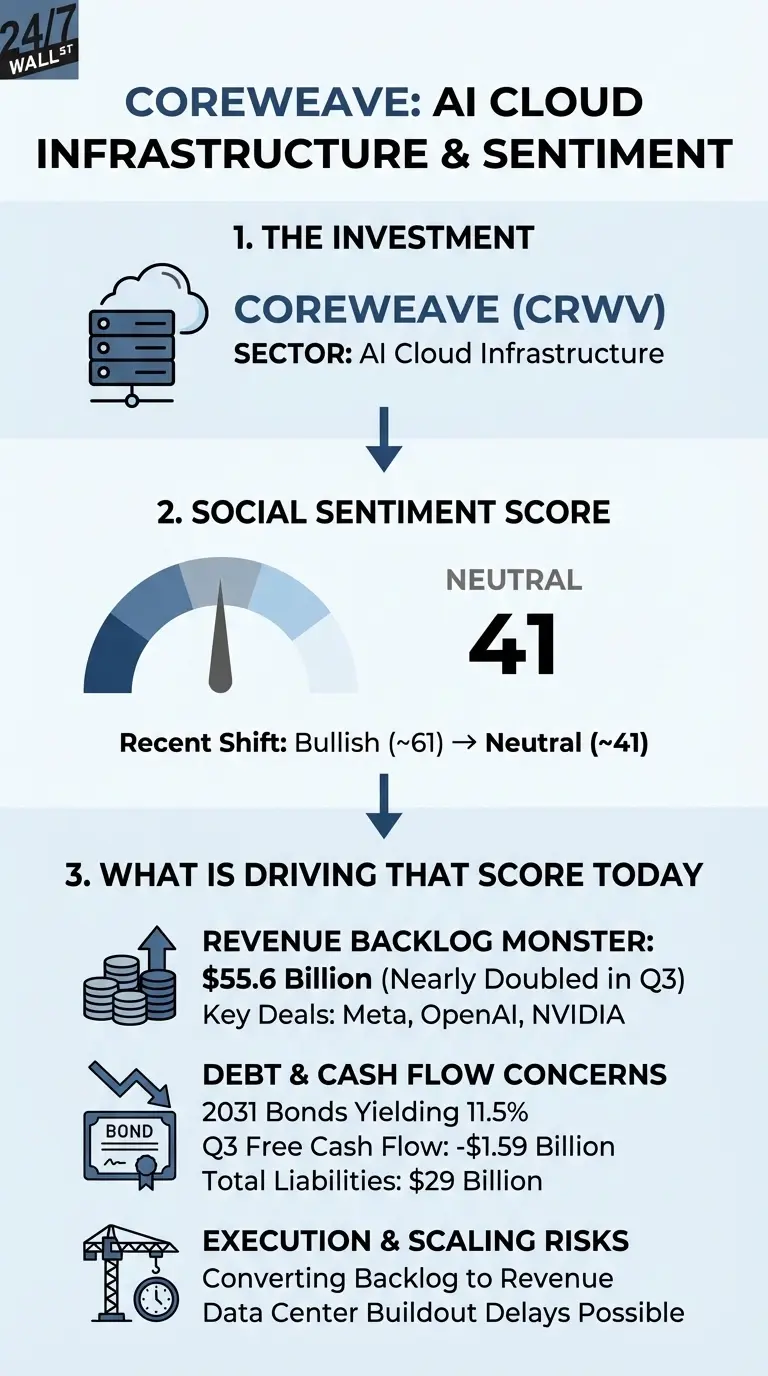
CoreWeave owed more than $35 billion by the second quarter as its bonds slipped into distressed territory.
Chamath Palihapitiya highlighted the distressed debt and questioned whether the artificial intelligence buildout constitutes a private credit bubble. Since Tuesday’s close that week, CoreWeave shares dropped more than 20 percent, triggering collateral damage for other artificial intelligence companies in the market.
As of its second quarter earnings, CoreWeave owed more than $35 billion. The company pioneered using graphics processing units as collateral for loans. Its primary business centers on selling compute, an operation that currently loses money—the company lost more than a billion dollars in the first half of the year.
CoreWeave Seeks Investment Grade Ratings to Borrow from Insurers
Amid financial pressures, Brannin McBee, one of the company’s cofounders, told the Financial Times that CoreWeave wants its debt to achieve investment-grade status rather than junk. Securing investment-grade ratings would allow the company to borrow from insurers, whose capital he described as unlimited.
👀 https://t.co/z5HgwQU8UQ pic.twitter.com/VdpxrpKNx7
Brannin McBee, cofounder of CoreWeave.
While CoreWeave secured its first investment-grade chip loan earlier in the year, the public desire to tap into insurer funds alarmed investors. Market participants fear that an already massive debtor will borrow even more.
https://t.co/5R14gOelzZ
The problem is not that credit profiles have changed in the last year, it’s that we’ve got another year and a half of supply coming,
John Yovanovic, co-head of leveraged finance at MetLife Investment Management, told Bloomberg.
John Yovanovic, co-head of leveraged finance at MetLife Investment Management.
Major Customers Provide Billions in Performance Obligations
Despite mounting debt concerns, CoreWeave retains $103.7 billion in remaining performance obligations from customers as of the second quarter. Approximately 40 percent of that money is due in 2028, and customers cannot cancel these agreements except under very limited circumstances. Microsoft, OpenAI, and a third major customer—likely Nvidia, though CoreWeave does not formally disclose its identity—generated nearly three-quarters of the company’s second-quarter revenue.
The anxiety surrounding CoreWeave’s financial structure has spread to other neoclouds and market participants. Oracle shares fell almost 10 percent during the same timeframe, accompanied by a sell-off in Oracle bonds.