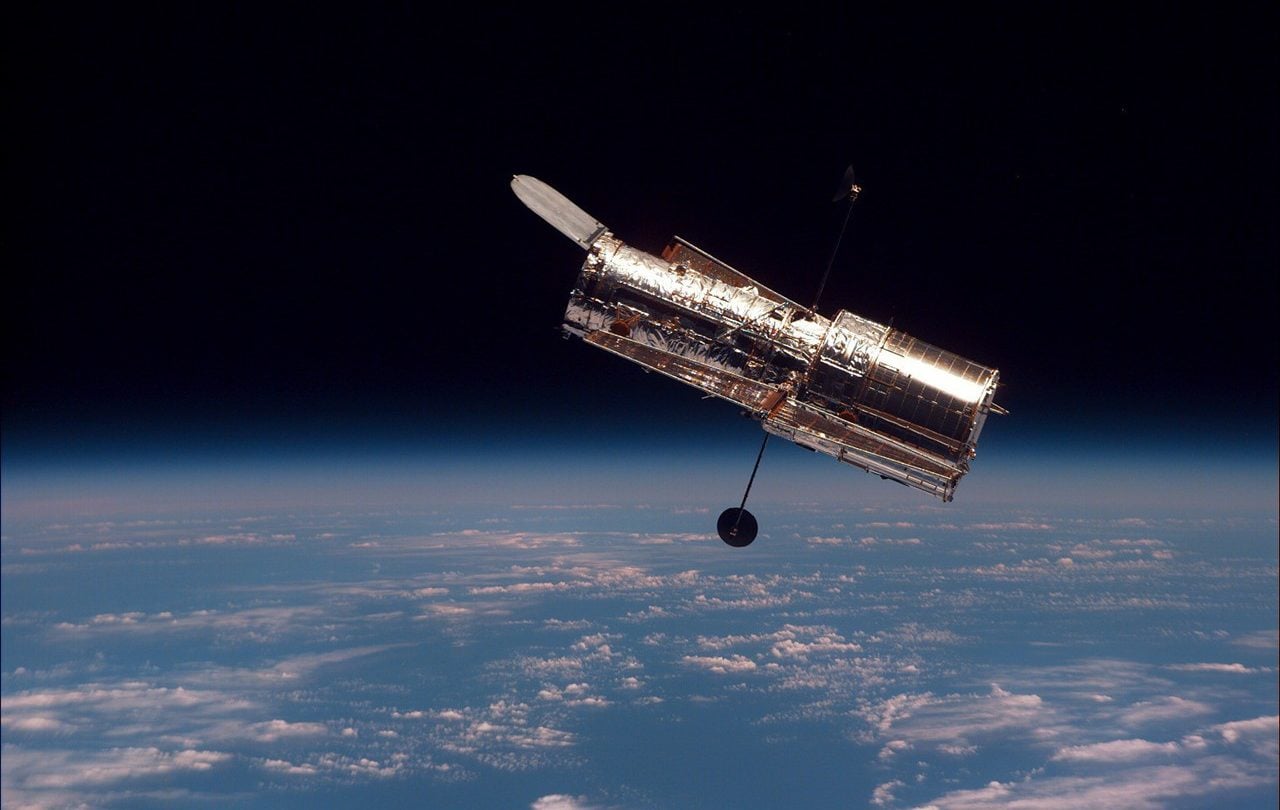
NASA issued a Request for Information on October 29, 2026, inviting commercial companies to propose missions to boost, service, or safely deorbit the Hubble Space Telescope. While no contract has been awarded, the agency aims to extend the observatory’s scientific life before its projected atmospheric reentry in the early 2030s.
Commercial Proposals for Hubble’s Future
After years of operating without a dedicated propulsion system, the Hubble Space Telescope is slowly losing altitude due to atmospheric drag. NASA’s latest Request for Information seeks industry concepts that could keep the 36-year-old observatory productive. Interested companies have until November 30, 2026, to submit ideas for one or more of three primary mission types: capturing and boosting the telescope to an orbit of at least 373 miles (600 km), performing on-orbit servicing to enhance its capabilities, or executing a controlled reentry to ensure safe disposal.
This solicitation changes agency strategy. Previous proposals, including a 2022 plan by Jared Isaacman to use a SpaceX vehicle for a reboost, were previously viewed as conceptual or rejected.
Commercial industry has advanced rapidly in recent years, introducing new options for in-space satellite capture and servicing. Northrop Grumman launched an advanced robotic servicing satellite this year in partnership with DARPA, while smaller players like Astroscale and Starfish Space currently hold contracts with the Space Force and NASA for servicing and refueling demonstrations. Northrop Grumman’s Mission Extension Vehicle demonstrates that on-orbit servicing to extend spacecraft lifetimes is technically viable.
NASA Sets 2032 Rescue Mission Deadline
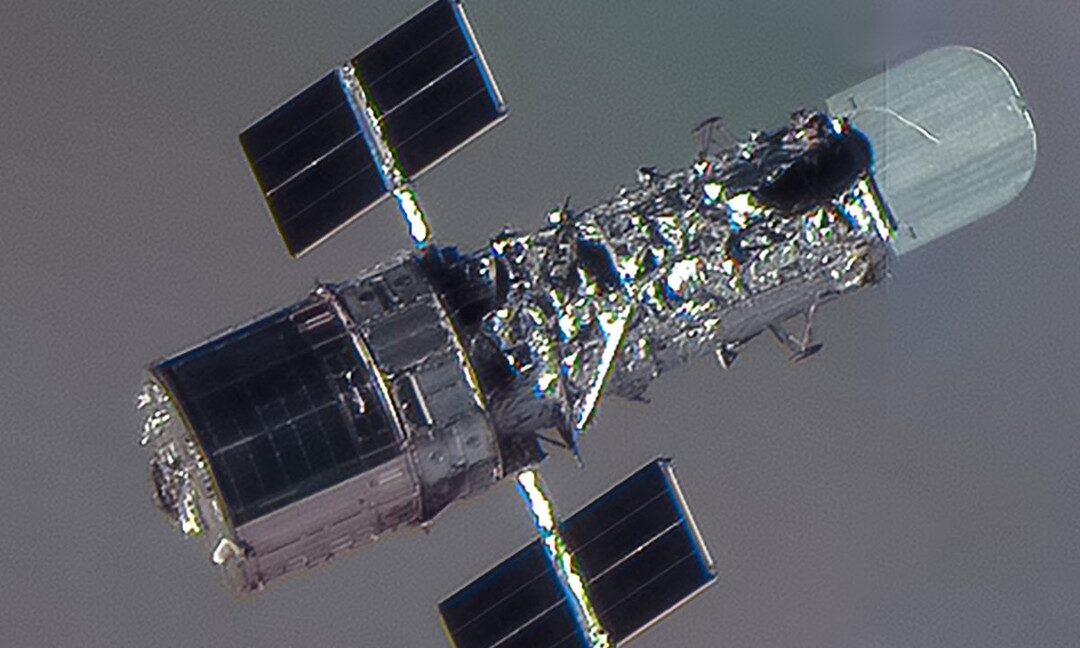
Current orbital dynamics indicate that Hubble will likely reenter Earth’s atmosphere between 2033 and 2034. Because the telescope lacks its own engine, this descent is currently uncontrolled. Analysis performed in July 2026 predicted a 10 percent chance of reentry by September 2032, a figure that rises to 50 percent by December 2033. Consequently, NASA has specified that any proposed rescue mission must be ready to launch by 2032.
The mission requirements are significant. Any partner would be responsible for providing the launch vehicle, the servicing spacecraft, and operational oversight. NASA officials have noted that while the soft-capture mechanism installed during the final shuttle mission in 2009 could facilitate docking, the technical challenges of servicing a massive, aging observatory remain substantial. According to former astronaut John Grunsfeld, who worked on the telescope during mission STS-125, the facility previously faced cumulative budgetary reductions described as death by a thousand cuts.
Scientific Demand and Potential Costs
Despite the presence of the James Webb Space Telescope and the Nancy Roman Space Telescope, demand for Hubble data remains high. NASA reports a 7:1 oversubscription for the telescope’s time, and the agency does not expect a dedicated successor, the Habitable Worlds Observatory, to be operational until the 2040s.
Financial parameters for a potential mission are currently undefined. While NASA recently awarded $30 million to Katalyst Space Technologies for a mission to the Swift observatory, the agency has signaled that a Hubble rescue would be a more complex and likely more expensive endeavor. For now, the request is purely exploratory; there is no formal budget or commitment to purchase a mission.
| Milestone | Details |
|---|---|
| Last Orbit Reboost | 2002 (Space Shuttle Columbia) |
| Current Altitude | Approx. 292 miles (470 km) |
| Target Altitude | At least 373 miles (600 km) |
| Projected Reentry | 2033–2034 (uncontrolled) |
Whether this inquiry will progress to a formal Request for Proposals depends on the feasibility and cost of the concepts submitted by the November 30 deadline. As Nicky Fox, associate administrator of NASA’s Science Mission Directorate, stated, the agency is eager to explore the breadth of possibilities
while balancing the preservation of a national icon
against the constraints of current orbital mechanics.