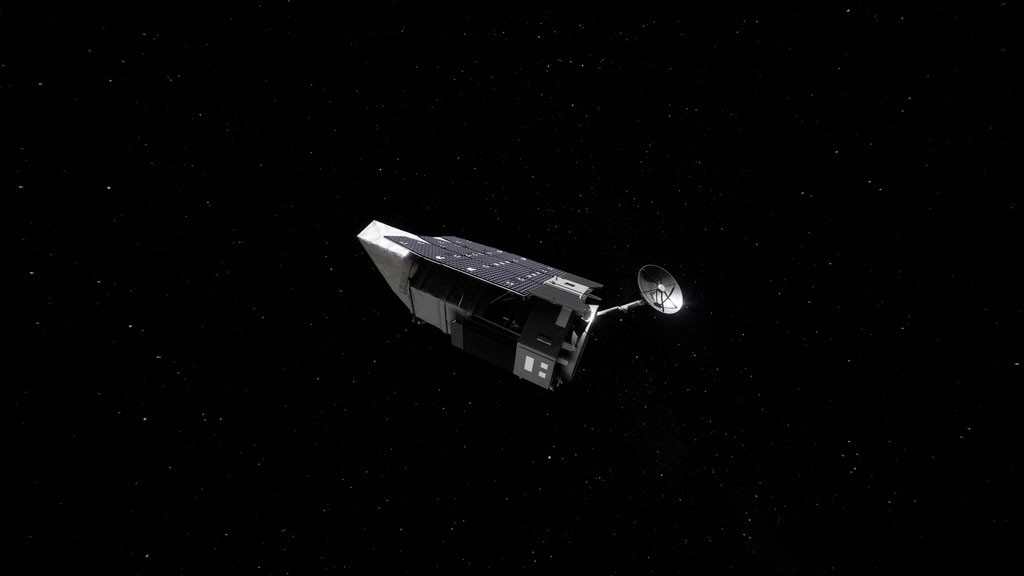
Astronomer Haojing Yan is leading an international team of 130 researchers from 62 institutions on a 386-hour NASA observation project using the Nancy Grace Roman Space Telescope to explore the early universe.
Haojing Yan Leads 130 Researchers in Roman eXtreme Deep Field Survey
NASA has granted 386 hours of observation time to a massive initiative known as the Roman eXtreme Deep Field (RXDF). Led by Haojing Yan, a professor of physics and astronomy at the University of Missouri, the collaboration unites 130 scientists across 62 institutions, including NASA, the California Institute of Technology, Princeton University, and Harvard University. The proposed scientific framework for the project is detailed in a study shared on the arXiv preprint server.
The initiative aims to construct one of the deepest and broadest surveys of the early universe ever attempted. Researchers intend to inspect thousands of distant galaxies, hunt for ancient stellar explosions, and examine the genesis of rapidly growing supermassive black holes. The overarching objective is to reconstruct the conditions that sculpted the cosmos during its earliest stages, potentially reaching back toward the universe’s first 100 million years.
DYK that you’re moving at about 67,000 miles per hour right now?! Earth is carrying you on its orbit around the Sun. When Roman launched, it inherited that motion and will undergo a series of maneuvers before its final orbital insertion at L2. https://t.co/abyyOQyKzV pic.twitter.com/wo8eWj4PYx
Among the mission’s most fascinating goals are supermassive black holes that seemingly expanded at an exceptional rate during the universe’s earliest days. Researchers still find it difficult to clarify how certain black holes attained massive proportions within a relatively brief timeframe following the Big Bang. By comparing thousands of galaxies, the RXDF team hopes to establish whether surprising discoveries reflect unusual individual systems or previously unrecognized patterns in early galaxy evolution.
Wide Field Instrument Targets Cosmic Dawn and Supermassive Black Holes
The spacecraft was put together at the Johnson Space Center in Houston, Texas, prior to lifting off into space on August 30 at NASA’s Kennedy Space Center in Florida.
Calibrating Roman Instruments and Preparing for the Data Deluge
As the mission team prepares for its sweeping surveys, engineers have completed a marathon of checkout activities to fine-tune the observatory’s optics. Because investigating dark matter and dark energy stands among the project’s core objectives and relies entirely on this capability, witnessing its successful operation brings both great excitement and immense relief!
Ever since the Wide Field Instrument was turned on in September, the Roman group has subjected it to a sequence of evaluations to test its parts both separately and collectively. Maxime Rizzo, a Wide Field Instrument systems engineer at NASA Goddard, noted that calibrating an instrument is comparable to tuning a guitar or piano before a concert, explaining that you adjust everything until it is set correctly and then leave the settings alone for consistent performance.
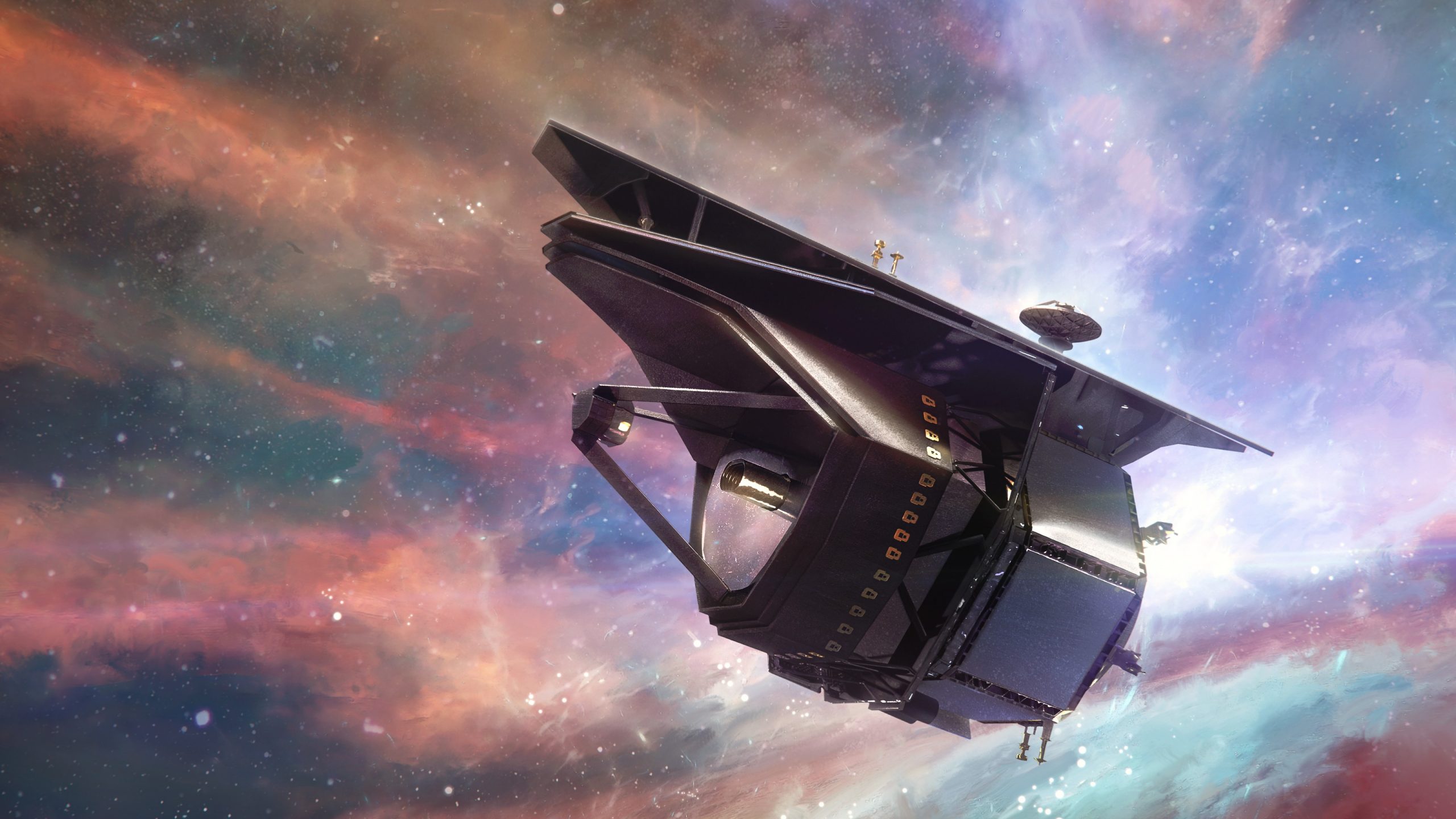
Optical alignment required microscopic precision. Scaling that height up to the Empire State Building would result in a change slightly less than stacking a single U.S. penny on top of the tower’s tip. Now, the Wide Field Instrument’s performance is nearly 30% better than the team predicted, with optics deviating from absolute perfection by about 90 nanometers RMS, which is around 1,000 times thinner than a human hair.
Once operational, the observatory is expected to dump 1.4 terabytes of data onto the internet every day with a clear message for astronomers and citizen scientists alike to have at it. Because the telescope makes data available to the entire world within 48 hours, researchers are planning to conduct science differently. To handle this massive volume, UC Berkeley associate professor of astronomy Jessica Lu alongside David Weinberg from Ohio State University formed a growing group of nearly one thousand scientists that has convened consistently over the past year and a half to figure out the best methods for searching through the daily flood for novel breakthroughs. Altogether, about 20 scientists across the Berkeley campus and Berkeley Lab are part of the Roman Science Collaboration, which includes a total of 900 astronomers interested in working collectively to secure high-impact discoveries from the survey data.
The Nancy Grace Roman Space Telescope has been named one of TIME's Best Inventions of 2026. Roman continues its journey in space to its final orbit, completing critical milestones along the way. We expect first images by early 2027.https://t.co/oy9o44u0cU pic.twitter.com/wA0RunmsBz