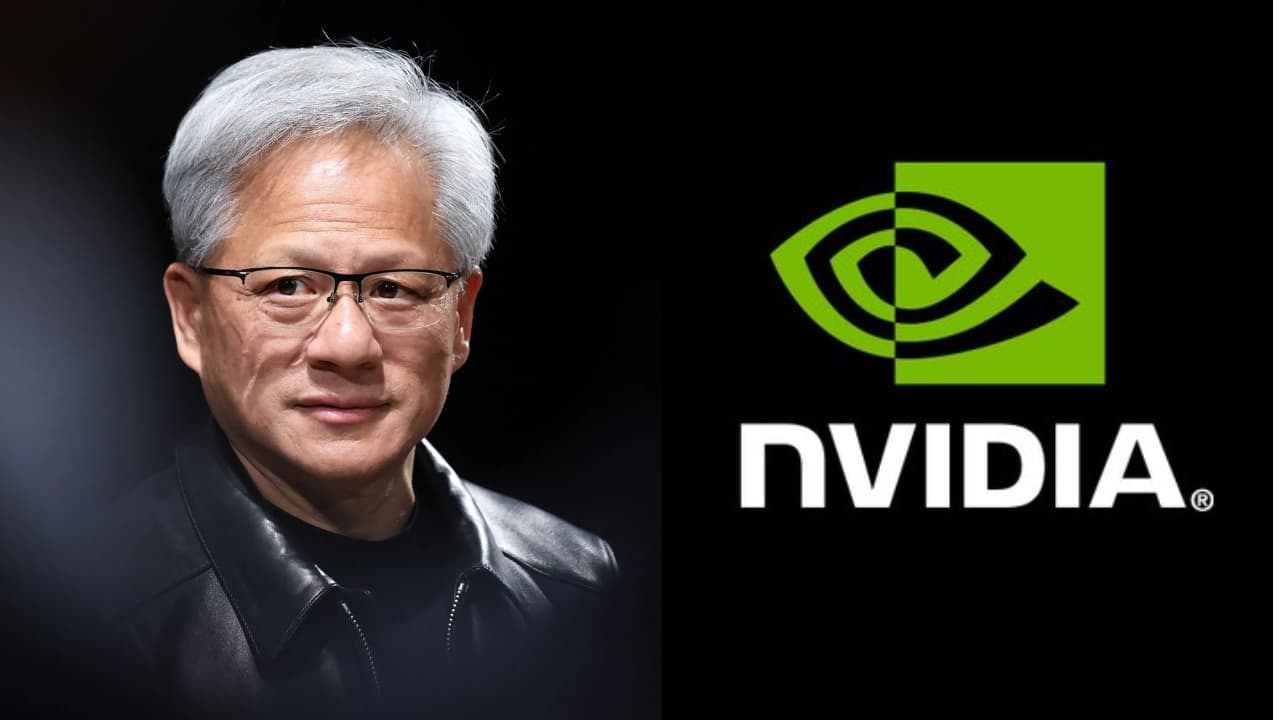
Nvidia co-founder Jensen Huang resigned as chief executive on Thursday prompting the company’s board to appoint Chief Financial Officer Colette Kress as interim CEO while an outside firm searches for a permanent successor.
Colette Kress Becomes Interim CEO
Nvidia paired the announcement of Jensen Huang’s resignation with the appointment of Colette Kress as interim CEO. Kress, who has served as Nvidia’s chief financial officer since September 2013 and previously held senior finance positions at Microsoft, Cisco, and Texas Instruments, is a familiar face to Wall Street and regularly represents the chipmaker on quarterly earnings calls.
Analysts note that Kress already manages the company’s financial guidance, including a third-quarter revenue forecast. Jay Aldebert, chief growth officer at International Services Inc., described Kress as the interim choice because market participants already know her.
Beyond Kress, the board is evaluating several internal and external contenders. Internal possibilities include Ian Buck, vice president and general manager of hyperscale and high-performance computing, who joined Nvidia in 2004 and developed CUDA, the proprietary software platform allowing developers to run software on Nvidia GPUs.
Other internal names discussed in industry reports include longtime executive Jeff Fisher, retired worldwide field operations head Jay Puri, and Mellanox founder and chief technology officer Michael Kagan.

Industry Leaders Emerge as Potential Candidates
External speculation features semiconductor executives and prominent technology leaders. Rene Haas, chief executive of Arm and a former Nvidia executive who worked with Huang for seven years before leaving in 2013, has emerged as a logical candidate. Observers have also floated Lisa Su, CEO of rival chipmaker AMD, and former Google CEO Eric Schmidt.
According to Bloomberg, the board retained an outside firm that is considering Apple chief hardware officer Johny Srouji. Technology reporter Patrick McGee endorsed Srouji on social media as an “incredible choice” for his technical expertise in custom silicon development.
President Donald Trump advanced another candidate in a Truth Social post, writing that Tim Cook was the sole replacement for Huang. Trump posted:
NOW THAT Nvidia CEO JENSEN HUANG, who has done a fantastic job, has resigned, there is only one man to take his place —TIM COOK of Apple. A Legend replaces a Legend!
President Donald Trump, via Truth Social
Industry experts view Cook as an unlikely choice because he would need to step down from his position as Apple’s executive chairman.
Succession Challenges and Shareholder Lawsuits
The leadership transition follows an independent investigation initiated after Huang acknowledged an extramarital affair with Alice Huang, an executive at data center operator Megaspeed International whom intelligence officials suspected of acting as a Beijing operative. The New York Times subsequently reported a second affair with Kimberly Powell, Nvidia’s vice president of health care.
On November 10, independent directors retained former acting U.S. Attorney Joon H. Kim and Wachtell, Lipton, Rosen & Katz to conduct an independent inquiry. Investor Mark Kistenmacher filed a shareholder lawsuit in California alleging that the company failed to disclose the relationship and made misleading statements regarding Megaspeed.
Industry analysts emphasize the scale of the transition. Dan Ives, senior managing director at Yorkville Ives & Co., said that “There is no succession plan and it would be a stretch to find a candidate internally to replace Jensen”, adding that the situation represents “the definition of key man risk.” Dave Altavilla, president and principal analyst at HotTech Vision and Analysis, called Huang “one of the most difficult CEOs in technology to replace.”
Nvidia Shares Drop Following Executive Departure
Financial markets reacted sharply to the executive departure. Nvidia shares dropped 10% at the opening bell on Thursday, November 12, pushing the stock price 18% lower over a five-day span.

During after-hours trading, shares touched $158.76 following a regular session close at $173.73, which represented an 8.62% decline that briefly placed the price below its 52-week low of $164.27. Using 24.15 billion shares, the after-hours price indicated an estimated market value of $3.83 trillion, down from $4.20 trillion at the close, representing an estimated $362 billion lost.
The next test for the company is scheduled for Tuesday, November 17, when Nvidia holds its third-quarter financial report and conference call at 5 p.m. ET.
Earlier coverage: Nvidia CEO Jensen Huang Resigns Following Relationship Allegations