
Researchers at the University of Washington published a computer simulation of an abiotic Earth in The Planetary Science Journal on September 18, 2026, mapping five billion years of planetary evolution without biological influences.
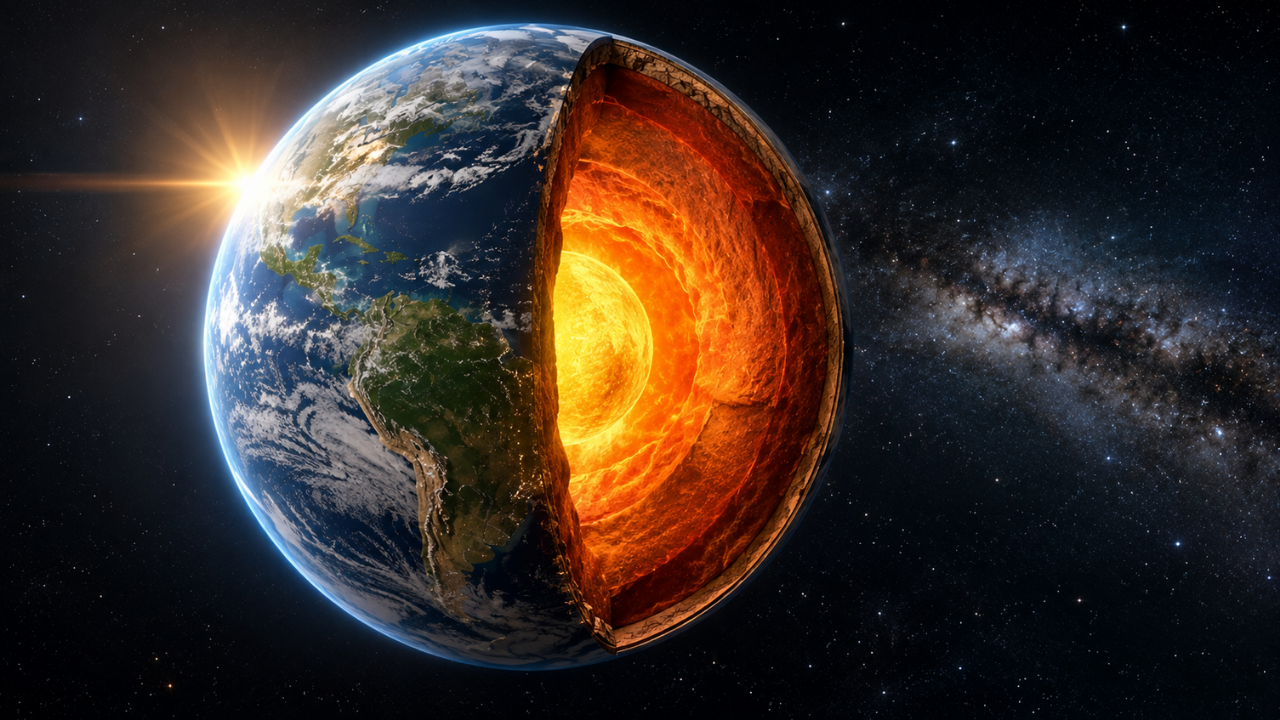
Lead author Samantha Gilbert-Janizek built upon an earlier model developed by Rory Barnes that simulated the core, mantle, and crust of a planet. The new model expanded the scope by incorporating the surface and atmosphere, running the simulation from the formation of Earth 4.5 billion years ago to 500 million years into the future.
Despite excluding biological activity, the simulation successfully reproduced 19 key properties of pre-industrial Earth. Seventeen items fell within the uncertainty range of observational targets, while the remaining two differed by only about two standard deviations. Across 19 different rocky planet characteristics completely independent of biology, the framework monitors factors such as stellar heat absorption, thermal and chemical transfers from the interior to the outer crust, and subterranean gas emissions.
Astronomers have cataloged more than 6,000 planets beyond our solar system. Detecting gases such as oxygen and methane on distant worlds can suggest biological activity, but those same compounds can also arise from natural geological processes and atmospheric reactions. Living organisms on our planet constantly supply molecules like methane and oxygen, which otherwise interact and neutralize each other.
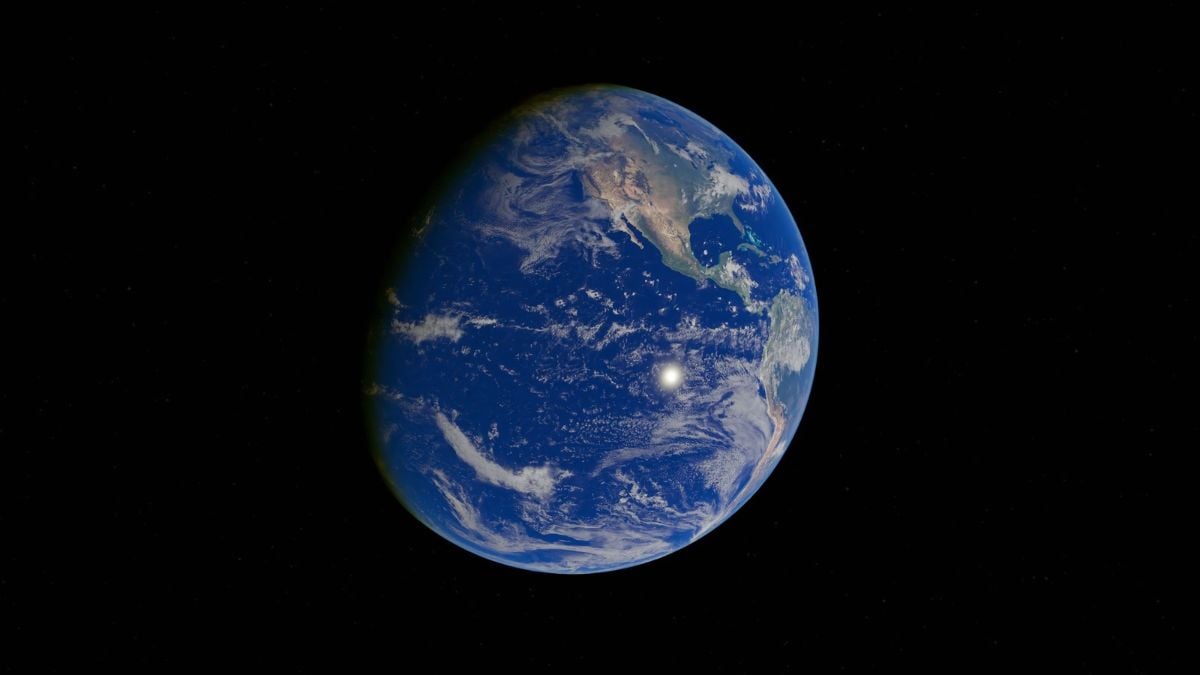
The virtual Earth model provides a baseline to test whether non-biological processes can explain observed atmospheric compositions. Researchers can enter the bulk properties of a rocky exoplanet into the plug-and-play system to generate synthetic spectra using radiative transfer codes.
When we interpret observations of an exoplanet’s atmosphere, this tool will help us determine the probability that what we observe indicates life on the surface,
Samantha Gilbert-Janizek, Lead author
If a simulated lifeless planet yields an atmosphere matching telescope observations, the real world probably lacks life. A mismatch indicates that biological activity could be altering the atmosphere, suggesting the planet warrants closer examination. According to the study’s authors, the simulation illustrates just one of numerous plausible trajectories and does not establish that a lifeless Earth would have consistently sustained habitability.
The synthetic spectra generated by the lifeless Earth model cover the planned 0.2 to 2.0 micrometer wavelength range for NASA’s proposed Habitable Worlds Observatory. The tool helps scientists interpret data collected by instruments such as the James Webb Space Telescope and future extremely large ground-based telescopes with mirrors exceeding 30 meters.
Researchers acknowledged several limitations in the model, including simplified representations of clouds and atmospheric chemistry. The simulation demonstrates one potential evolutionary pathway rather than proving Earth would have remained habitable without life. Before scientists can definitively use the software to tell apart geological features from living organisms on far-off worlds, additional improvements to the system will be required.
After more than a decade of work by many scientists, Dr. Gilbert-Janizek has finally completed a model of the Earth that simultaneously reproduces properties of Earth’s core, mantle, surface and atmosphere. That calibration gives us confidence that future simulations of exoplanets will be accurate.
Rory Barnes, via Space
Earlier coverage: Scientists Simulated What Earth Would Be Like if Life Never Existed