TCL CSOT achieved mass production of ultrahigh-mobility oxide technology with electron mobility of ~50 cm² V⁻¹ s⁻¹ on an 8.6-generation line on Friday in Shenzhen, China.
This marked the first time high-mobility oxide crossed the 50 cm² V⁻¹ s⁻¹ threshold in commercial manufacturing.
Building High-Mobility Oxide Panels
Developing the technology required engineering work across multiple fronts by TCL CSOT alongside the team at the Institute of Science Tokyo’s MDX Research Center for Element Strategy, led by Prof. Hideo Hosono. Production uses a continuous rotary-target sputtering process and a composite stacked oxide layer design to suppress defects.
A defect repair process improves the interface to overcome stability challenges associated with ultrahigh-mobility materials. TCL CSOT achieved film thickness uniformity under 5 percent and an average mobility of 51.6 cm² V⁻¹ s⁻¹.
Ultrahigh-mobility devices are sensitive to moisture, hydrogen, and oxygen. TCL CSOT developed a hydrogen-oxygen balance control system for both the front- and back-channel insulators to provide threefold protection.
The manufacturer introduced a new gate driver on array architecture alongside optimized device design and improved thermal management to counter weaker gate control, threshold-voltage drift, and increased self-heating.
Updating Display Performance Trade-Offs
The mass production of ultrahigh-mobility oxide technology eliminates compromises between high refresh rates and low power consumption. It also addresses trade-offs between high resolution and brightness.
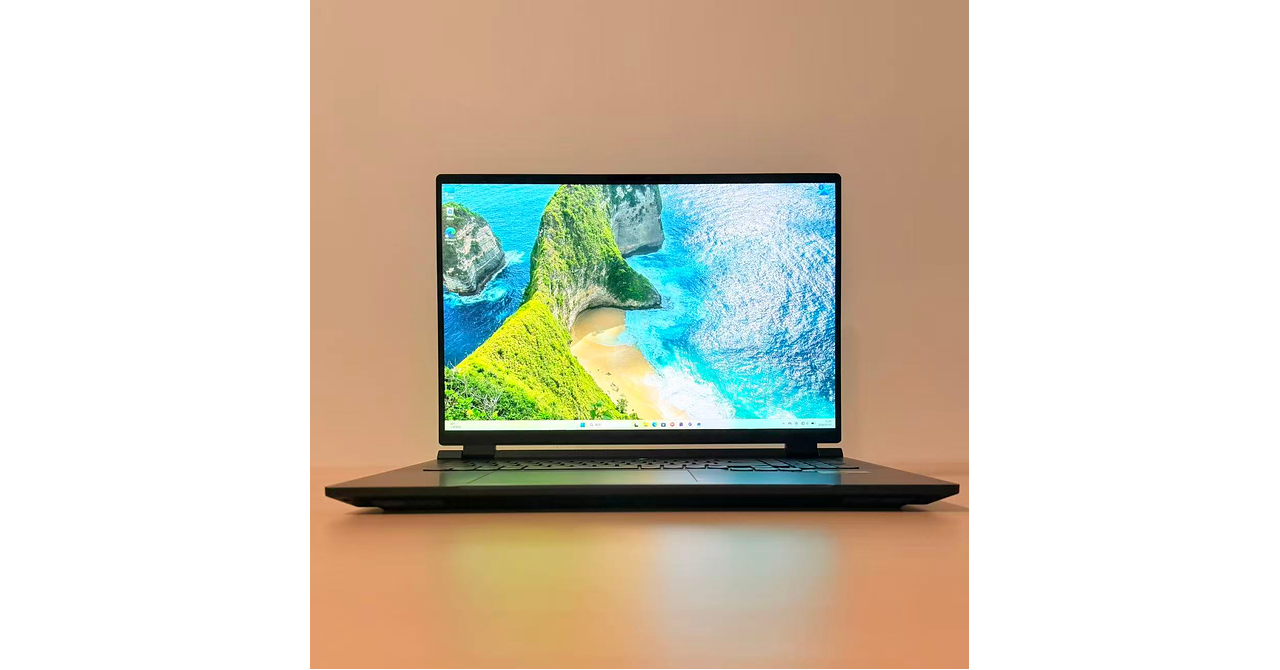
Oxide thin-film transistors offer extremely low off-state current. This allows static images to be held at ultra-low refresh rates to cut power consumption.
Higher current drive enables driver circuits to operate with lower voltage swings and shorter charging times. Shrinking the thin-film transistor also increases the aperture ratio.
That raises pixel density without dimming high-resolution screens and reduces edge routing for narrow bezels.
Expanding Inkjet-Printed OLED Interest
TCL CSOT demonstrated inkjet-printed organic light-emitting diode panels at the DTC 2026 conference beyond oxide liquid crystal displays. These included a 27-inch QHD 500Hz panel and a 16-inch 2560×1600 240Hz laptop panel.
TCL CSOT is expanding its manufacturing capacity with the T8 generation 8.6 OLED production line in Guangzhou. Mass production is scheduled for the fourth quarter of 2027.