Bahrain’s High Criminal Court sentenced 64 people to life imprisonment and five others to 15 years in prison on November 16, 2026, following a mass trial that targeted Shia religious figures and activists.
Prosecutors accused the defendants of establishing and managing an unlawful organization linked to Iran’s Islamic Revolutionary Guard Corps. The charges include plotting to overthrow the government through sabotage and rioting, while promoting the ideology of the Guardianship of the Islamic Jurist.
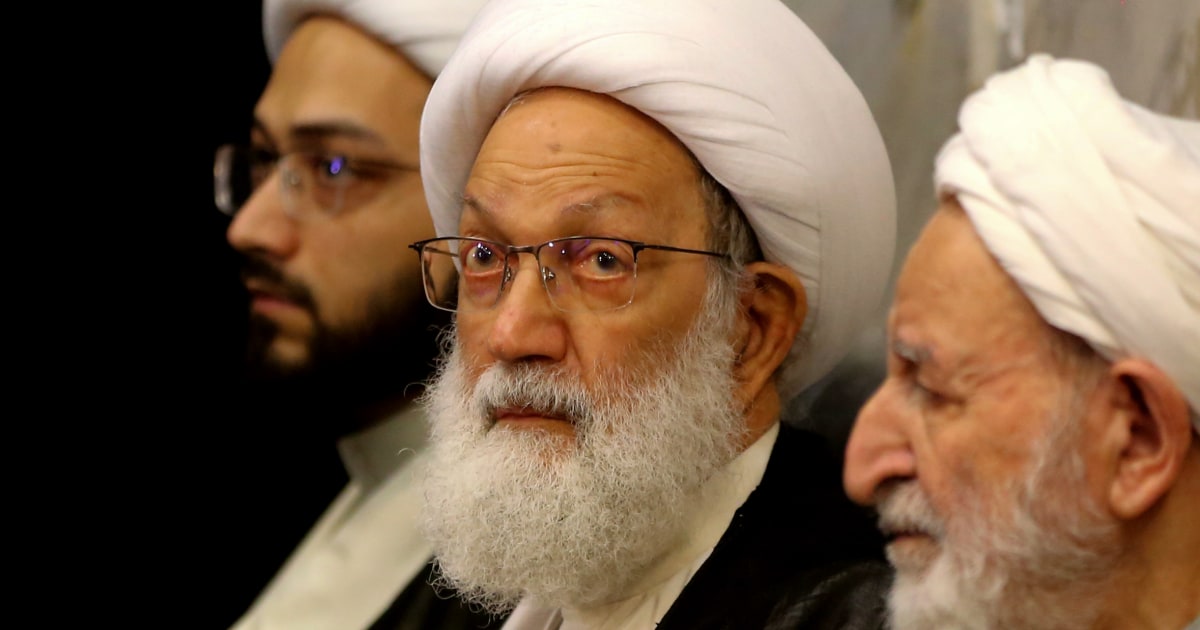
Among those given life sentences in absentia is Sheikh Isa Qassim, the spiritual leader of Bahrain’s Shia community who has lived in Iran since 2018. Other prominent clerics named by human rights groups include Mohammed Sanqour and Ali Al-Sadadi. According to the Bahrain Institute for Rights and Democracy, 60 of the 69 total defendants are Shia clerics, while the remaining nine are religious reciters and affiliates.
Of the 69 total individuals charged in the case, 56 defendants were in custody during the proceedings, comprising 47 clerics and nine affiliates, including religious reciters known as radoods. An additional 13 clerics faced prosecution and were tried in absentia before the High Criminal Court.
Rights organizations condemned the mass prosecution, pointing to serious due process violations, incommunicado detentions, and allegations of coerced confessions obtained through torture. Human rights monitors reported that defendants faced abuse in custody, including sleep deprivation, prolonged blindfolding, and threats of violence.
Human rights groups, including Human Rights Watch and Amnesty International among a coalition of 20 organizations, warned prior to the final verdicts regarding closed hearings and coerced testimony. Reviews of memoranda from the Special Investigation Unit, which falls under the authority of the Public Prosecution and is mandated to investigate torture allegations, raised concerns among monitors that torture claims were not thoroughly examined.
The defense struggled when the trial schedule shifted abruptly. After an initial expectation that judgments would arrive later in November, the court delivered its verdicts early following a request from the public prosecution.
A Bahraini court sentenced 64 Shia Muslims, most of them clerics, to life in prison on terror charges on November 16, a rights group said, as authorities crack down on groups it accuses of ties to Iran.https://t.co/4aUxV7zeWo
“I thought this was going to be a retaliatory conviction, that it was going to be harsh. But to get 64 life sentences shows how far they are willing to go. They want to spread fear among the public,” said Sayed Ahmed Alwadaei, head of advocacy at the Bahrain Institute for Rights and Democracy.
Alwadaei also criticized the accelerated timeline, stating that “this is making a mockery of what is supposed to be an independent process,” and noting that prosecutors effectively dictated when judges delivered the sentences.
🇧🇭🇮🇷 Bahrain has sentenced its most senior Shia cleric, Sheikh Isa Qassim, to LIFE IMPRISONMENT in a sweeping trial targeting religious figures accused of links to Iran. Today's verdict follows a mass trial involving 69 defendants, including 60 Shia clerics and nine associates,… pic.twitter.com/gSBoeioZzP
Government Defense and Fines Ordered by the Court
Bahraini authorities rejected claims of religious persecution and insisted the judiciary acted properly. Public Security Agency head Tariq Al Hassan framed the crackdown as a necessary defense against an ideology demanding allegiance to foreign leadership over domestic sovereignty.
The Bahraini government said that all defendants were afforded full legal safeguards and the right to a defense. A government statement maintained that “this case was about criminal conduct, not faith or belief,” adding that any complaints of mistreatment would be investigated.

The Bahrain News Agency confirmed the sentencing outcomes, noting that the rulings applied to both individuals in custody and those at large. Alongside the prison terms, the court imposed severe financial penalties. Additional cash worth approximately 935,000 Bahraini dinars was also confiscated by authorities.
Regional Repercussions and Protests
The verdicts arrived amid heightened sectarian tensions following the regional war involving Iran, Israel, and the United States. Bahrain, which hosts the U.S. Fifth Fleet, experienced retaliatory strikes earlier in the year, prompting a domestic security crackdown on expressions of sympathy with Tehran.
Scores of Bahraini Shi'ite clerics get life in prison for plotting with Iran https://t.co/zAJG4gAWa8
In the wake of the sentences, demonstrations erupted in Shia-majority areas of Bahrain, with protesters defying security cordons in neighborhoods such as Jannusan. Regional political figures also weighed in, as Iran’s Foreign Ministry condemned the rulings as a systematic violation of human rights that demonstrated alignment with U.S. sectarian provocations.
External reactions also included statements from Iraqi political leaders. Qais al-Khazali, leader of Iraq’s Asaib Ahl al-Haq, accused Bahrain of attempting to eliminate the Shia presence through the mass sentencing of religious scholars. Additionally, international bodies and organizations such as the World Organisation Against Torture and the European-Bahraini Organisation for Human Rights voiced alarm over the judicial actions.