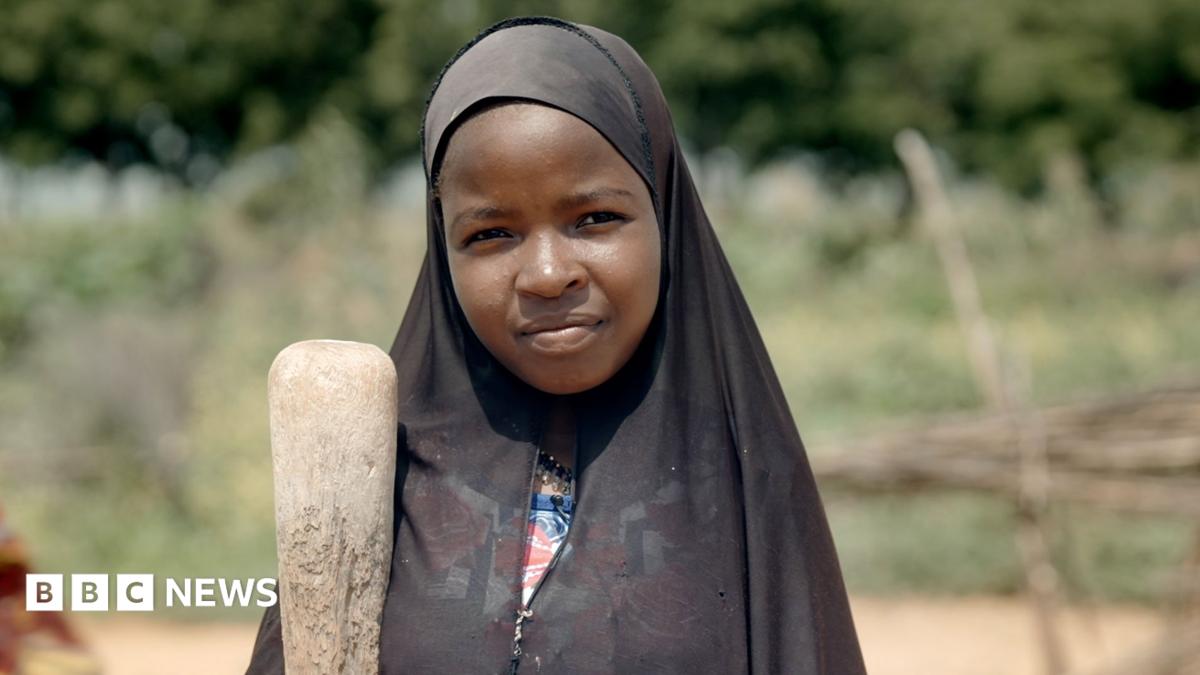
“It pains me to see other children studying and going to school while I cannot,” said Rukayya, a 12-year-old living in a displaced persons camp in Goronyo, Nigeria.
Rukayya is one of nearly 19 million school-age children missing out on an education in Nigeria, according to estimates shared by Unesco in 2024. The BBC World Service launched Dars Hausa on Sunday, November 17, delivering radio, television, and social media lessons in Hausa to children across West Africa.
Rukayya and 15-year-old Hadiza live in the same displacement camp in Goronyo, a few kilometres from their home villages. Both are part of the 670,000 people driven from their homes in north-west and central Nigeria by armed robbery and kidnappings, based on figures from the International Organization for Migration.
Criminal gangs locally known as bandits raided Hadiza’s village two years ago, scattering cattle and forcing residents to flee barefoot. Hadiza briefly attended school in the camp before marrying at age 13.

It’s tradition here that once a girl is married, her education ends.
Hadiza, displaced student in Goronyo, via BBC World Service
Nigerian law prohibits marriage under 18, but the rule is not always enforced. Rukayya’s education stopped after bandits killed her father in front of her about a year ago. She gathers firewood to sell and begs so her younger siblings can eat.
“If my father was alive, I wouldn't have to go out and beg,” Rukayya said. She also said it does not stop her because it is their only way to survive.
The single school serving children in the Goronyo camp typically crams about 50 students into each class. Teacher Kamilu Sulaiman Jakada said lessons are free, but attendance is sparse and sporadic.
it is the children that are the breadwinners
Kamilu Sulaiman Jakada, camp school teacher, via BBC World Service
Jakada said school support depends on people and organizations rather than consistent government backing. A gang once rode motorbikes to the school and fired shots in the air, causing panicked parents to withdraw their children. The traditional Almajiri Islamic education system leaves many children uninstructed in core subjects like mathematics and science, leading Unicef to classify them as out of school.
Federal law guarantees every Nigerian child nine years of free, compulsory education split between six years of primary and three in secondary school, with responsibilities divided across federal, state, and local levels. Poorer families struggle with the costs of books, uniforms, and transport.
In Nigeria’s northeastern Yobe State, separate efforts supported by Unicef and implemented by the Global Village Healthcare Initiative for Africa (GHIV Africa) under the Education Cannot Wait Multi-Year Resilience Programme recently mainstreamed 877 out-of-school children into formal schools.
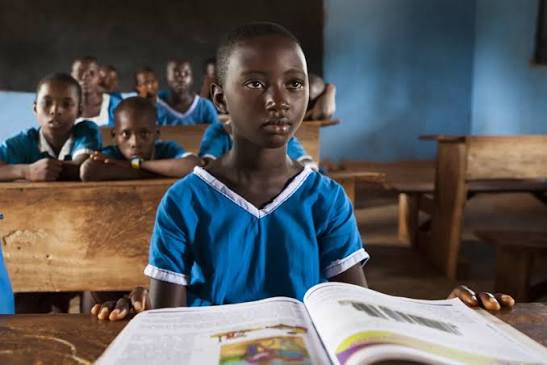
Sa’id said that education is the government’s top priority, pointing to initiatives like Lumina, which aims to support one million girls by 2030 through accelerated learning programmes.
Modelled on previous BBC educational rollouts for Afghan children barred from classrooms in 2023 and an Arabic version following in February 2025, Dars Hausa brings structured English, mathematics, and science instruction to West Africa. Nearly half of Nigerian households own a radio, according to data shared by Save the Children.
The programme airs weekly on Sundays at 06:45 West Africa Time with an evening repeat at 20:45 on BBC News Hausa radio, alongside digital distribution on YouTube, Facebook, X, and Instagram. Hadiza continues practising the English alphabet by writing on the dirt ground.
“Sometimes I write on the ground to practise and see if I'm still writing correctly,” Hadiza said.