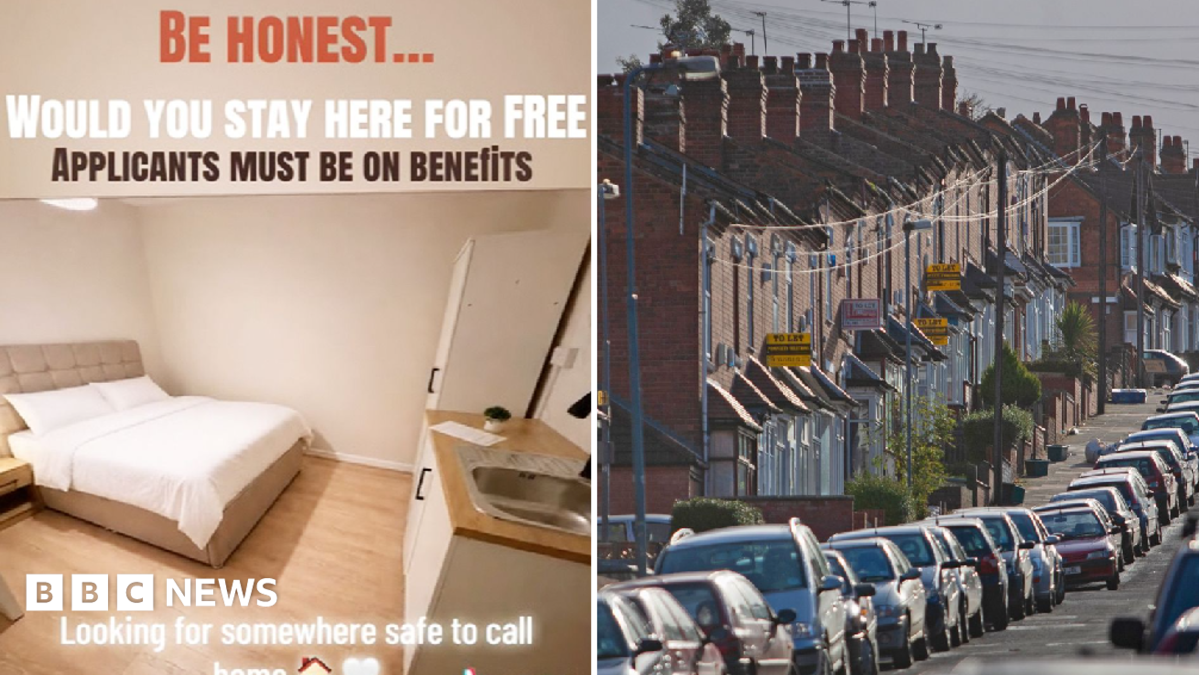
Private companies in Birmingham are generating millions in taxpayer-funded welfare by operating supported exempt accommodation properties. A BBC Panorama investigation revealed that vulnerable residents, including domestic abuse survivors and people recovering from addiction, are treated as cash cows while receiving little to no support.
The scale of the supported exempt accommodation sector in Birmingham has drawn severe criticism from local leaders and housing charities. The Department for Work and Pensions distributed £410 million for the scheme in Birmingham alone during the last financial year. More than 34,000 residents live in these properties across the city. This concentration far exceeds that of London, which has approximately 22,000 supported housing residents despite having a population more than seven times larger.
Charity directors and members of Parliament argue that multi-layered management arrangements allow private entities to siphon public funds. Patricia Coleman-Taylor, who runs the Birmingham anti-poverty charity Narthex, stated that vulnerable individuals are being exploited as cash cows to generate income
that flows from government coffers directly into landlords’ pockets.
How Property Operators and Social Media Lure Vulnerable Tenants
Property agents draw people into the taxpayer-funded system using social media videos offering free rooms, PlayStation consoles, and even holidays. Once residents move in, the reality of the accommodation often falls short of these advertisements.
Alysha, a survivor of domestic abuse who sought shelter in Birmingham after escaping a violent relationship, lived in three different supported accommodation properties. One shared house was managed by Second City Support Ltd. She told reporters that residents went eight days without heating or hot water after the boiler broke last December, while managing agents allegedly dismissed her calls.

I was at my wits’ end. I’d be begging [Second City] and they would just cut the call because they didn’t want to deal with it.
Alysha, domestic abuse survivor and former resident, via Journalarta
By law, registered providers need only offer more than minimal
care. Alysha observed that while social media advertisements promised weekly support sessions and help accessing general practitioners, staff would visit solely to obtain signatures confirming attendance at support sessions that had not occurred.
Financial Flows and Profit Margins Behind Dawson Housing Properties
Financial arrangements in the sector involve registered not-for-profit providers hiring profit-making private companies to manage properties and deliver support services. In Alysha’s case, the not-for-profit registered provider Dawson Housing received £443 a week in housing benefit via Birmingham City Council, equivalent to £23,000 annually, for her room and support costs. Dawson Housing hired Second City Support Ltd to manage the property.
A sister company, Second City Housing Properties, purchased the house in 2024 for £191,000 and sold it a year later for £410,000. Property owner Darren Davey stated that his companies invested approximately £150,000 in renovations and associated costs. Financial records reveal that across three financial years, Davey paid himself £2.9 million in dividends while earning more than £900,000 in salary.
Brian Edwards and the Financial Barriers to Employment
Other residents describe feeling trapped by the strict parameters of housing benefit rules. Brian Edwards, a 54-year-old former charity worker, moved into a supported house provided by Windrush Alliance and managed by Nxtgen Housing Ltd after a relationship breakdown led to homelessness.
Brian stated he informed Nxtgen that he did not require support, but believes enhanced housing benefit was applied for anyway. Shortly after, he landed a contract position, though he maintains he was warned that accepting employment would result in the cancellation of his enhanced housing benefit, leaving him either with monthly rental bills surpassing £1,000 or facing eviction.
If I work, I lose my housing. If I stay in my housing, I can’t work. I’ve become trapped, not just trapped in housing, trapped on benefits.

Nxtgen Housing countered these claims by explaining that it had reviewed various support plan choices with Brian, noting that he picked out specific areas of assistance and that taking on a job was never discouraged. Lawyers for Dawson Housing denied that support was inadequate and stated that regular in-person support was delivered. Windrush Alliance did not respond to requests for comment.
Investigators Uncover Ghost Tenant Schemes and Write off Millions
Investigators uncovered multiple forms of abuse, including ghost tenant schemes where managing agents list individuals as residents to claim housing benefit for rooms they do not occupy. Financial misconduct has also affected major non-profit providers. Due to funds being transferred out to former directors and associated entities—monies that a newly formed 2024 board classified as doubtful to ever be recovered—Windrush Alliance had to write off £1.8 million.
Politicians have condemned the situation sharply. Labour MP Jess Phillips described companies spending taxpayers’ money while providing poor support as an absolute catastrophe
and noted that bad landlords can make loads of money
while acknowledging that some housing providers get this money who are absolutely providing supported accommodation
.
Roger Harmer, the Liberal Democrat leader of Birmingham City Council, stated that taxpayers’ money is being wasted. It’s a scandal.
Five of the six largest supported exempt accommodation providers in Birmingham have been classified as non-compliant with standards established by the Regulator of Social Housing, yet all five continue operating and receiving public funds. On October 15, 2026, the Regulator of Social Housing initiated enforcement action against Concept Housing Association CIC, citing serious and sustained governance and financial failures. To manage the wind-down process and safeguard residents, the regulator brought in an insolvency specialist and mandated independent health and safety assessments. Government licensing regulations consultation began on October 15, 2026, marking a practical implementation step following 2023 legislation.