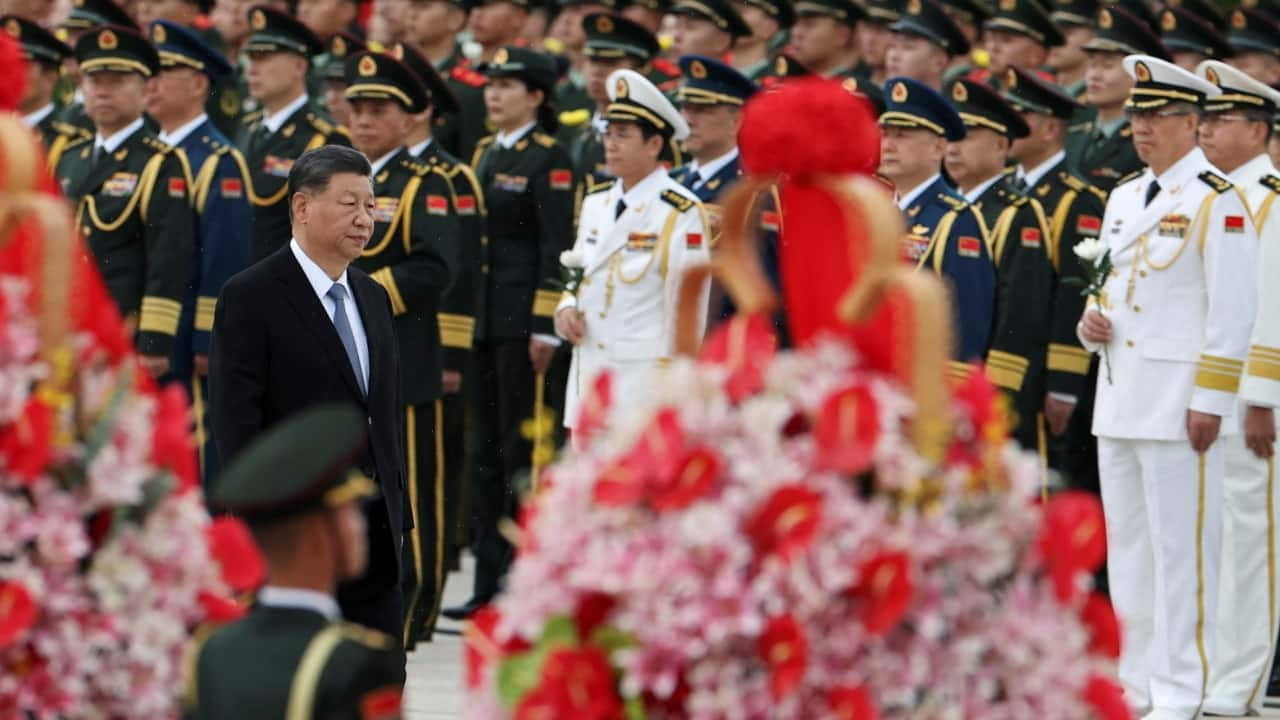
China’s ruling Communist Party confirmed the expulsion of 33 senior officials, including 16 military leaders and defense industry executives, following a meeting in Beijing on October 29, 2026.
Central Military Commission Shrinks to Two Members
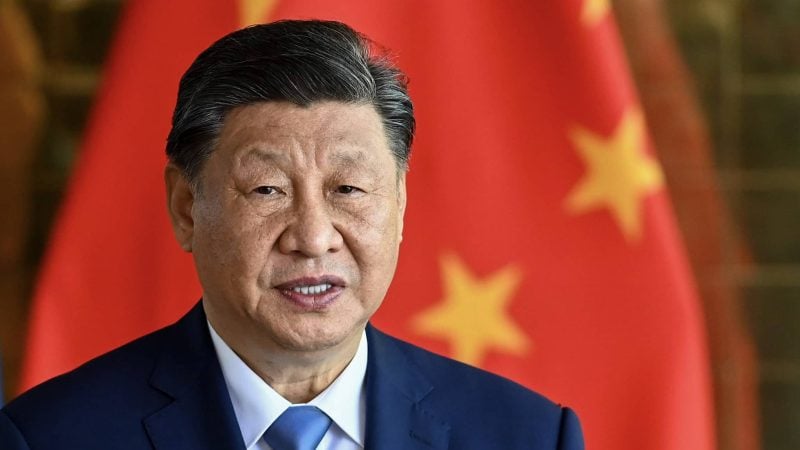
The high-level purge reshaped the leadership structure of the People’s Liberation Army. The Central Military Commission, which oversees the country’s armed forces and is chaired by Xi Jinping, was reduced to two members: Xi Jinping and General Zhang Shengmin.
The fifth plenum of the 20th Central Committee formally approved the expulsion of former Central Military Commission vice-chairman Zhang Youxia and former Central Military Commission member Liu Zhenli. Both men faced lengthy corruption investigations. The People’s Liberation Army newspaper accused the two ousted officers of damaging Xi’s authority and hurting combat effectiveness, according to Anadolu reporting cited by news summaries.
Beyond the military command, the purge reached into the defence industry establishment. Four former heads of major state-owned defence companies were stripped of party memberships after disappearing from public view in 2024: Yu Jianfeng of the China National Nuclear Corporation, Yuan Jie of the China Aerospace Science and Industry Corporation, Zhang Zhongyang of the China Aerospace Science and Technology Corporation, and Wen Gang of the China State Shipbuilding Corporation.
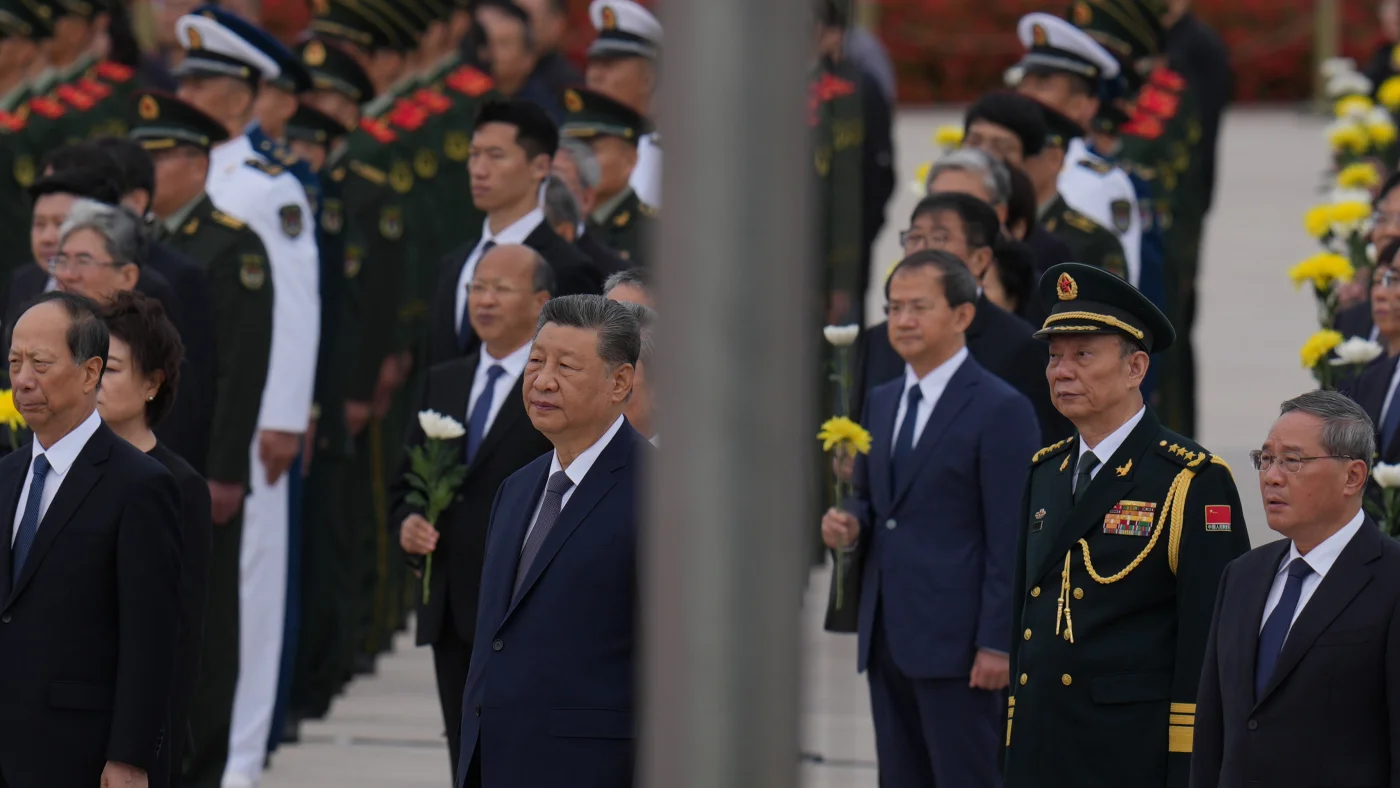
General Zhang Shengmin Rises to the Politburo
Party leaders elected Gen. Zhang Shengmin to the Politburo during the plenum. Zhang serves as deputy secretary of the CMC Commission for Discipline Inspection for the military.
The appointment aligns with the convention that two vice chairmen of the Central Military Commission hold seats in the party’s leadership. The elevation is notable because the Chinese Communist Party has not added a member to the Politburo at a midterm plenum in more than three decades.
If Zhang Shengmin is to take over the entire armed forces on behalf of the CMC chairman [Xi], he needs to have a seat on the Politburo. That would allow him to attend the Politburo’s monthly meetings, stay informed about major decisions by the Party’s leadership, as well as strengthen his own political standing.
Shen Ming-shih, an expert on the People’s Liberation Army at Taiwan’s Institute for National Defense and Security Research, via The Epoch Times
Record Low Turnout at the Beijing Plenum
Only 162 Central Committee members and 117 alternate members turned up for the meeting, resulting in a 74 percent attendance rate. Analysts at the Asia Society Policy Institute said that turnout dropped below 300 for the first time during Xi’s 14 years in power, marking the lowest attendance level since the era of Mao Zedong.
“an effort to consolidate and maintain authority,” Chong Ja Ian, an associate scholar with Carnegie China, told the BBC said the campaign had evolved.
The total number of #PLA vessels across the #1stIslandChain has decreased, but the groups of Northern, Eastern & Southern Theater Commands plus #Liaoning carrier strike group remain operating in waters east of the #Philippines. #PLAAF was also active near #Taiwan today. pic.twitter.com/jX0D5KKIz1
Zhang Fuhai, deputy secretary of the Central Commission for Discipline Inspection, defended the ongoing campaign during a briefing in Beijing.
“We would rather offend thousands than let down 1.4 billion people,” Zhang Fuhai, deputy secretary of the Central Commission for Discipline Inspection, said.
Loyalty Campaigns Focus the Chinese Military on Internal Restructuring
Three officials in Taiwan stated their assessment that the loyalty campaign will keep the Chinese military focused on internal restructuring. These officials spoke on condition of anonymity. Joseph Wu, secretary-general of Taiwan’s National Security Council, posted on X that dozens of ships held unannounced drills in seas off the Chinese coast, with a carrier strike group remaining in the area.

Researchers at the Center for Strategic and International Studies counted more than 100 senior officers removed since 2022, as of February 2026. This affected about half of top military leadership posts.
How Many Officials Were Expelled at the Fifth Plenum?
How many officials were expelled at the fifth plenum?
The Central Committee confirmed the expulsion of 33 senior officials, including 16 military leaders and defense industry executives. Sixteen of these disciplinary cases were handled directly on the Central Military Commission track.
What is the status of the Central Military Commission?
Following the expulsion of five of its six military leaders, the commission has only two active members: Xi Jinping and General Zhang Shengmin.