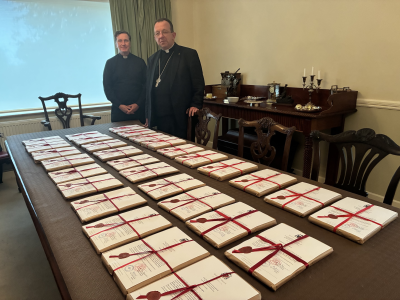
The Irish phase of the canonisation process for World War I chaplain Father Willie Doyle concluded on Sunday as the Diocese of Meath sealed official documents for transfer to the Vatican, bringing the Jesuit priest closer to becoming Ireland’s next saint.
Sunday evening’s solemn vespers at the Cathedral of Christ the King in Mullingar marked the formal completion of the local diocesan inquiry into the life and work of the Irish Jesuit priest, who died on the battlefield more than a century ago. Presided over by Bishop Tom Deenihan, the ceremony drew family members, 15 bishops from across Ireland, representatives of the British government and military personnel from both Ireland and England.
The sealed records will now travel to the Dicastery for the Causes of Saints in Rome. There, a Roman postulator will write the positio, the formal document examining Doyle’s life, virtues and reputation for holiness.
From Dalkey to the Trenches of Passchendaele
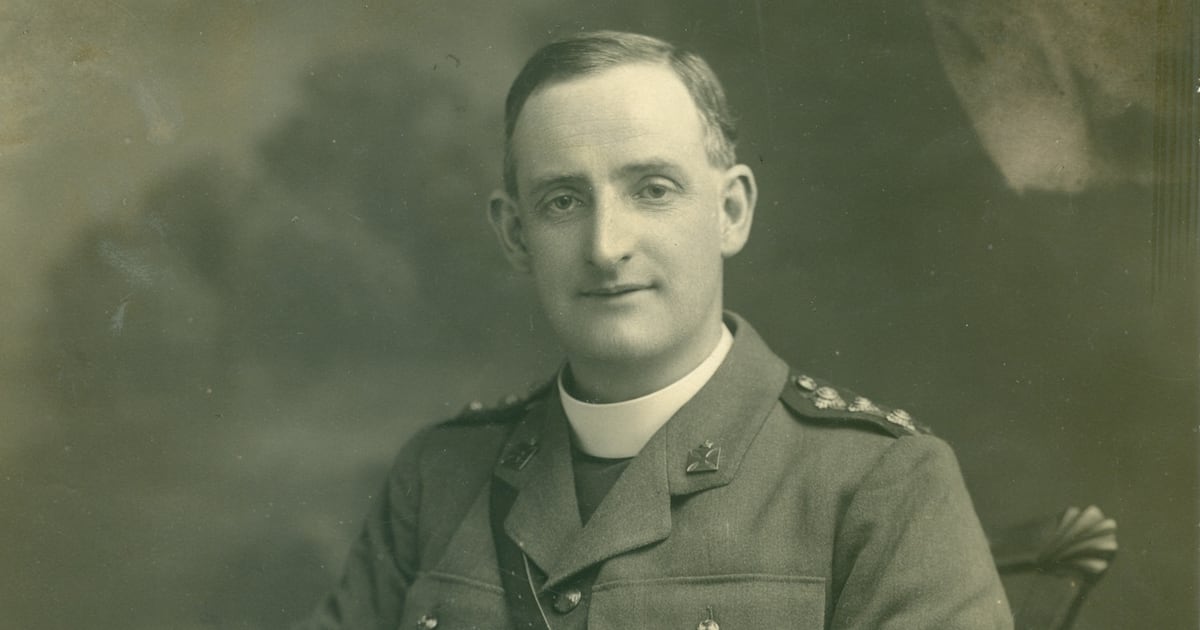
Born in Dalkey, County Dublin, in 1873, William Joseph Gabriel Doyle entered the Jesuit novitiate at Rahan, County Offaly, at the age of 18. He was ordained in Dublin in 1907 and spent several years serving on the Jesuit mission staff, conducting retreats and earning a reputation as a powerful preacher and confessor.
When the First World War broke out, Father Doyle volunteered as a military chaplain for the Royal Army Chaplains’ Department, eventually assigned to the 8th Battalion Royal Irish Fusiliers in the 16th (Irish) Division. Despite holding the rank of captain, he chose to live among the troops in the front lines.
His wartime bravery earned him the Military Cross for actions at the Somme, a divisional parchment of merit for conduct during a gas attack, and high praise from military leadership. The commander of Doyle’s division described the priest as the bravest man that he ever met.
The Fatal Battle on Frezenberg Ridge
Father Doyle was killed on August 16, 1917, during the Battle of Passchendaele in Belgium, part of a catastrophic assault by Irish divisions on fortified German positions.
On that fatal day a group of soldiers, lead by Lieutenants Marlow and Green, got into trouble beyond the front line and Father Doyle ran to assist them.
Catholic Church, via Rte
The Catholic Church notes that Lieutenants Marlow and Green were Protestants from Northern Ireland. As the three men sought shelter, they were struck by a German shell and killed. Because the officers were members of another Christian denomination, church officials describe him as an ecumenical martyr of charity. His body was never recovered.
Reviving a Century-Old Cause in Mullingar
Although many contemporaries sought his canonisation after the war, the Jesuit order initially demurred. The formal cause was eventually opened on November 20, 2022, at the Cathedral of Christ the King in Mullingar following petitions from the Father Willie Doyle Association, founded by Dr Patrick Kenny.
Bishop Tom Deenihan noted the historical weight of Sunday’s milestone during the closing session.
This is the first Irish cause to close in over 40 years, the last being that of Venerable Nano Nagle, foundress of the Presentation Sisters.
Fr Tom Deenihan, Bishop of Meath, via Rte
Father John Hogan, the postulator for the cause, remarked on the international devotion surrounding the priest and pointed to how his personal struggles with mental health after a fire at his house of formation have resonated with modern followers facing similar difficulties.
The Path Forward in Rome
With the diocesan inquiry complete, the documentation moves to the Vatican’s Dicastery for the Causes of Saints. The dicastery will consider if Father Doyle’s life demonstrates Christian virtues to a heroic degree, which is required if any candidate is to be declared venerable.
Achieving beatification and subsequent canonisation will require the verified attribution of miracles. Father Hogan noted that several potential favours are already under consideration.