The political climate in Jakarta has shifted from a simmering internal investigation into an open, high-stakes confrontation. As of Thursday, November 5, 2026, the Indonesian National Police have named Inspector General Slamet Uliandi as the fourth suspect in an illegal wiretapping operation targeting President Prabowo Subianto. This escalation marks a widening net that now ensnares some of the highest-ranking officials in the country’s security apparatus.
The gravity of this development cannot be overstated. Investigators from the Bareskrim Cybercrime Directorate have moved beyond initial witness questioning to formal charges, alleging that Slamet—who previously headed Bareskrim’s monitoring division from 2010 to 2019—functioned as an adviser to Bareskrim’s monitoring center. According to Brig. Gen. Suhermanto, officers involved in the surveillance were required to obtain Slamet’s approval to conduct wiretaps or, in a critical move that occurred this past October, to authorize the deletion of sensitive electronic data.
A Security Apparatus Under Scrutiny
The investigation has already targeted three other senior police generals, including Listyo Sigit Prabowo, along with Inspector General Ahrie Sonta and Inspector General Eko Hadi. While the other three suspects are currently being held at the Mobile Brigade (Brimob) headquarters in Depok, Slamet Uliandi remains free from detention, reportedly due to his medical condition.
As the legal fallout spreads, the effects on Indonesia’s civil liberties are becoming clear. The use of state-sanctioned surveillance equipment for unauthorized, internal political targeting represents a dangerous hijacking of institutional power. If the nation’s highest office is not immune to such tactics, the vulnerability of journalists, human rights defenders, and political activists becomes an immediate concern for the public.
Military Deploys Thousands of Troops Across Jakarta
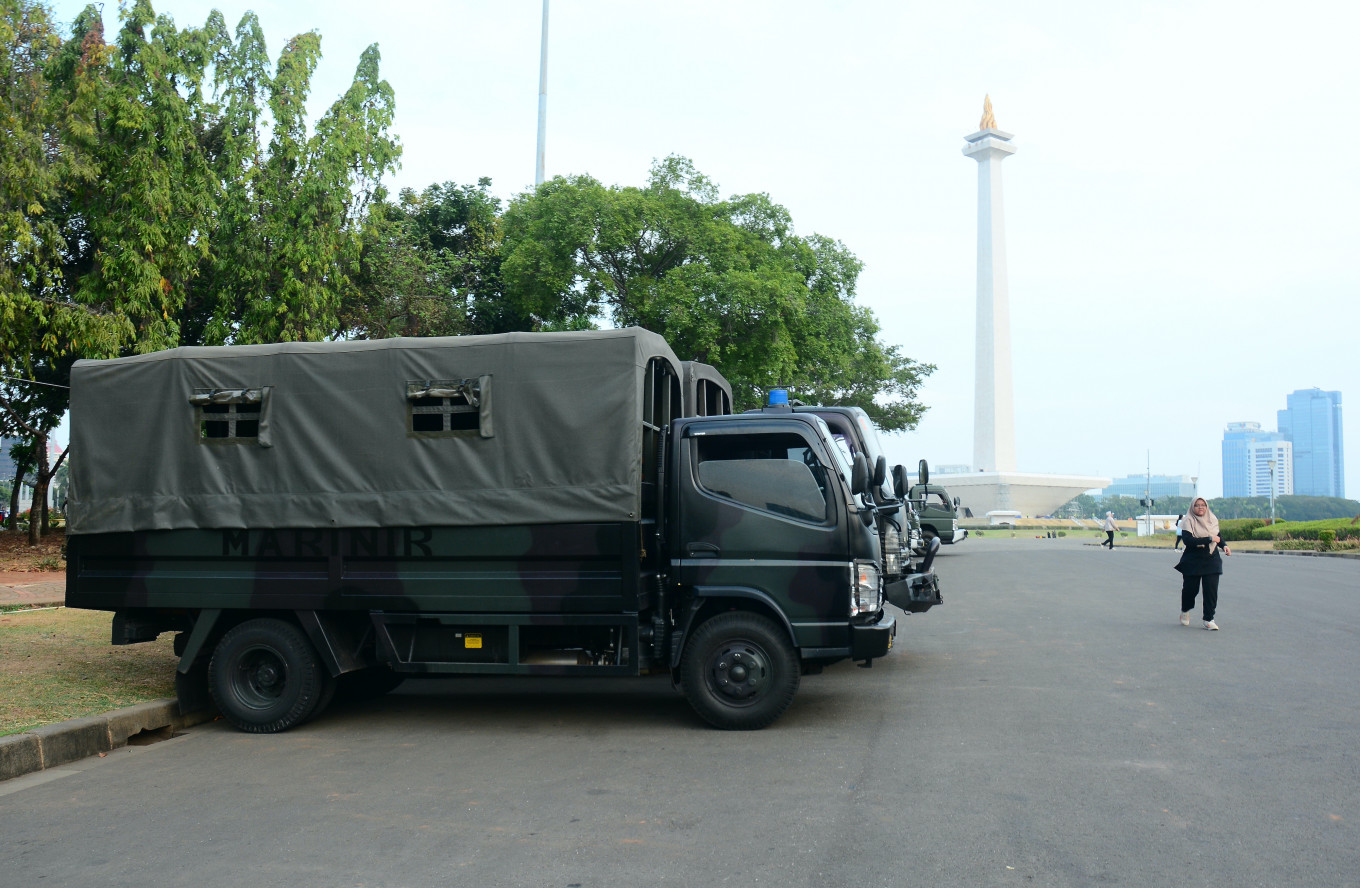
The atmosphere on the ground in Jakarta reflects the severity of the crisis. Military activity has intensified, with thousands of troops deployed to the capital. An internal Indonesian Military (TNI) document, following a November 2 telegram from TNI Commander Gen. Agus Subiyanto, outlined a mobilization plan involving nearly 21,000 Navy personnel. While officials have characterized these movements as part of efforts to maintain national security and stability, as well as preparations for upcoming military exercises, the timing of such a large-scale deployment alongside the arrests of police generals has fueled widespread public anxiety.
In response to the scandal, the government is now signaling a pivot toward reform. Coordinating Minister for Law, Human Rights, Immigration, and Corrections Yusril Ihza Mahendra confirmed that the administration is preparing a review of existing wiretap regulations. The goal is to evaluate existing safeguards alongside the Coordinating Ministry for Political and Security Affairs and the National Cyber and Crypto Agency (BSSN), covering bodies including the Corruption Eradication Commission (KPK), the Attorney General’s Office, the National Narcotics Agency (BNN), and the National Police.
The Path Forward for Oversight
The question now facing the administration is one of systemic accountability. The current investigation is not merely a search for the individuals who tapped the President’s lines; it is an inquiry into how institutional safeguards failed to prevent the misuse of formal law enforcement instruments. There are calls to revitalize the National Police Commission (Kompolnas) to ensure that external oversight of police performance and institutional practice is significant.
For now, the investigation remains in a state of rapid evolution. With four senior generals named as suspects and the military maintaining a visible presence in the capital, the focus has shifted to whether this crackdown will lead to a restructuring of surveillance oversight. The true cost of this breach will be measured by whether the government can restore public trust in the agencies tasked with protecting the nation’s security.