“Putin wants to end the war,” U.S. envoy Jared Kushner said on Thursday, following an unexpected meeting between President Donald Trump and Russian leader Vladimir Putin on the sidelines of a summit in Shenzhen, China.
The encounter, which was not originally on the schedule, brought together the leaders of the United States, Russia, and China for 90 minutes of talks aimed at reshaping international diplomacy. As Trump wrapped up the meetings and departed aboard Air Force One, his diplomatic team initiated high-stakes consultations with European allies in Berlin, where leaders were holding a parallel summit in solidarity with Ukraine.
Trump Urges Diplomatic Settlement in Shenzhen
Trump arrived to a red-carpet welcome in Shenzhen, where he was greeted by Chinese President Xi Jinping. Entering the meeting room where Putin was waiting, Trump pointed at the Russian leader and jokingly remarked, “Who is he? He’s my friend,” before the three heads of state settled into their closed-door discussions.
President Donald J. Trump Addresses Historic Trilateral Meeting with Chinese President Xi and Russian President Putin. "We have a special responsibility to maintain open, respectful, & productive dialogue on issues impacting not just our people, but the entire planet." – @POTUS pic.twitter.com/6dLHVlAl1a
During the trilateral meetings, Trump urged both Putin and Xi to pursue a diplomatic settlement. “He sent a very strong message to both of them on the desire for peace, and would like to engage both of them very aggressively to get there,” Kushner said at a press conference on Thursday.
Emergency Coalition of the Willing Summit in Berlin
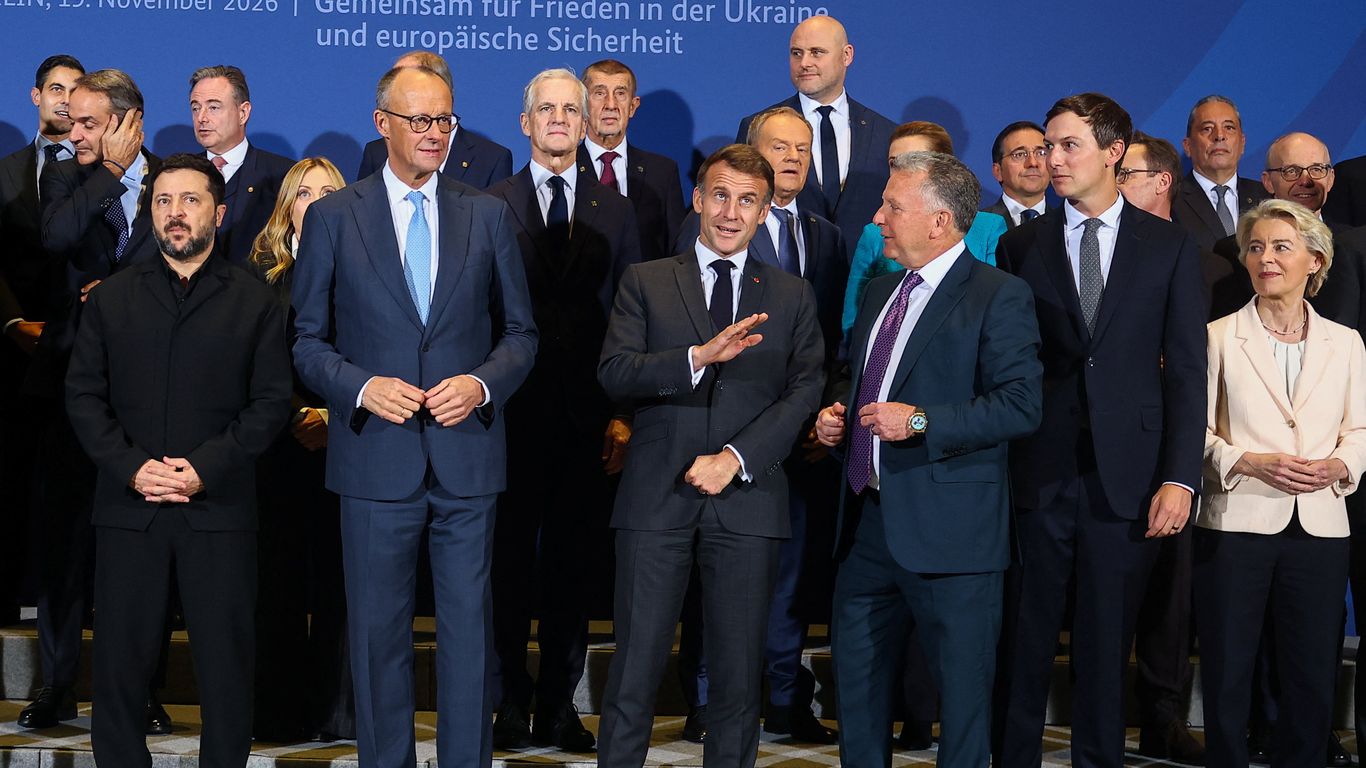
While the Shenzhen talks concluded, more than 25 European leaders, alongside the heads of the European Union and NATO, gathered at the Chancellery in Berlin for a meeting of the Coalition of the Willing co-hosted by German Chancellor Friedrich Merz, French President Emmanuel Macron, and British Prime Minister Andy Burnham.

Ukrainian President Volodymyr Zelenskyy stood alongside Merz to stress solid wartime support for Kyiv and demand European inclusion in any future negotiations.
European leaders expressed deep anxiety about being sidelined by superpower diplomacy. Merz explicitly rejected any outcome resembling the 1945 Yalta Conference. “A Yalta format will not bring peace,” Merz said at a press conference following the summit. “At Yalta, Europe was divided up. It was parcelled up. And we won’t allow anything like that to happen again.” To underline the point, Merz presented visiting leaders with fragments of the Berlin Wall.
We met with Steve Witkoff @SEPeaceMissions, Jared Kushner @jaredkushner, and European national security advisors. It is important that cooperation between Europe, Ukraine, and America in the negotiation process is becoming closer. From the very beginning, Ukraine has advocated… pic.twitter.com/T3c1XIiAzl
Trump Questions Military Spending on Kyiv
From Air Force One, Trump placed a surprise telephone call into the Berlin meeting, briefing European officials on his discussions with Putin and Xi. According to participants, the U.S. president sharply questioned the rationale for continued billions in military spending on Kyiv, arguing that countries could save money if the war ended.
At the same time, an unnamed U.S. official later clarified to reporters that it was inaccurate to say Trump demanded an immediate cutoff of funding, but rather reiterated his desire to conclude the conflict.
Without a doubt, Russia has lost 2026 to Ukraine on the battlefield. And without a doubt, it is hell-bent on vanquishing the civilians with ballistic missiles. And this is not a question of people's resilience. It is simply that these are unfair rules. Even in war, there are… pic.twitter.com/QTYJoGzU1c
Kushner and U.S. envoy Steve Witkoff sought to soothe European concerns in person at the Berlin talks. “President Trump wants to make a deal with Europe by his side. He’s not looking to impose anything unilaterally,” Kushner told reporters, adding that U.S. and European positions were growing much closer.
Trump also encouraged direct engagement with Moscow during his call. “Friedrich, you can make a call to Putin and this will make a deal,” Trump told the German host during the conference call.
Sharp Divisions Over Moscow’s Intentions
Reactions among European leaders to Trump’s outreach were sharply divided. Polish Prime Minister Donald Tusk openly criticized the friendly optics of the Shenzhen summit. “Mr Putin is not our friend and will never be,” Tusk stated. Danish Prime Minister Mette Frederiksen echoed those concerns, telling reporters that Putin would be even more emboldened and looks happy.
By contrast, NATO Secretary General Mark Rutte adopted a more conciliatory tone, praising Trump’s diplomatic push. “President Trump has been constantly working Herculean efforts to get peace done in Ukraine, and I can only commend him for that,” Rutte said in Berlin.
A historic first on the world stage. President Donald J. Trump, President Xi, and President Putin hold trilateral talks in China. pic.twitter.com/w2qDiJo8W5
Kushner Discusses Security Arrangements for Ukraine
Addressing the architecture of a postwar settlement, Kushner stated that Washington believes Moscow is open to robust security arrangements for Ukraine. “I think we’ve gotten the Russians comfortable with that concept where any security guarantee for Ukraine would be based on Article 5,” Kushner said in Berlin. However, Putin publicly stated in China that Moscow could not accept any military or defense ties between Ukraine and NATO.
Putin also announced that Russia had invited European leaders to Moscow for bilateral talks, noting that discussing European security without Europeans is pointless. Yet those diplomatic openings coincided with severe escalation on the ground.
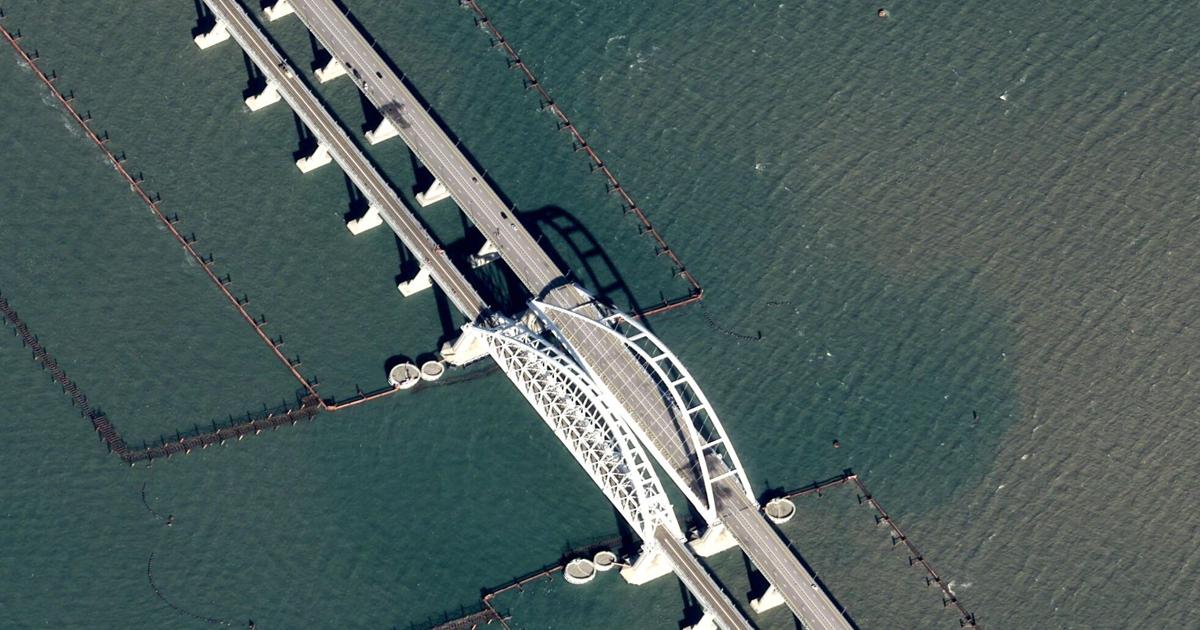
Putin vowed retaliation for recent Ukrainian attacks on the vital Kerch Bridge linking Crimea to the Russian mainland. “After the strikes on the Crimean Bridge, there will be no agreements,” Putin declared in China.
This diplomatic mission follows Kushner’s previous work in the Middle East, where he authored a peace plan that facilitated the signing of the Abraham Accords in 2020. Before his official appointment as a special envoy for peace in 2026, he served as a senior advisor during the first Trump administration and was a leading broker in the United States–Mexico–Canada Agreement.

“We also will go back and relay to the Russians that we see strength and unity and commitment [in Europe], but we also see a real desire for peace,” Kushner said, emphasizing that U.S. and Russian officials plan to relay back that while they see a real desire for peace in Europe, they also witness strength, unity, and unwavering commitment.
Earlier coverage: Putin Rejects Non-Military Zones and Warns Foreign Troops Will Be Targets


