Severe flooding forced water rescues and road closures across northern Peru and coastal Ecuador after relentless storms driven by an exceptionally strong El Niño struck, according to South China Morning Post.
Weeks of heavy rainfall preceded the extreme weather along the Pacific coast from the Colombian border into northern Peru. Forecasters extended a red alert through Monday for Piura and Tumbes. The climate phenomenon will remain at extraordinary strength until February.
Storms Submerge Northern Peru
Waist-high water submerged streets in Piura after a record 143mm (5.6 inches) of rain fell in a 24-hour period. Monitoring stations in Miraflores and Mallares recorded 143 and 109 liters per square meter between the morning of November 26 and November 27. Peruvian President Keiko Fujimori said that emergency crews rescued about 400 people from flooded homes. About a dozen residents remained trapped.
Peruvian army personnel in Piura’s Ignacio Merino neighborhood used boats and kayaks to reach isolated residents. They prioritized older adults, patients, and children. Soldiers evacuated more than 350 people from the area while carrying personal possessions such as bicycles and pushchairs. Military units also installed a water-transfer unit to direct water back toward the Piura River.
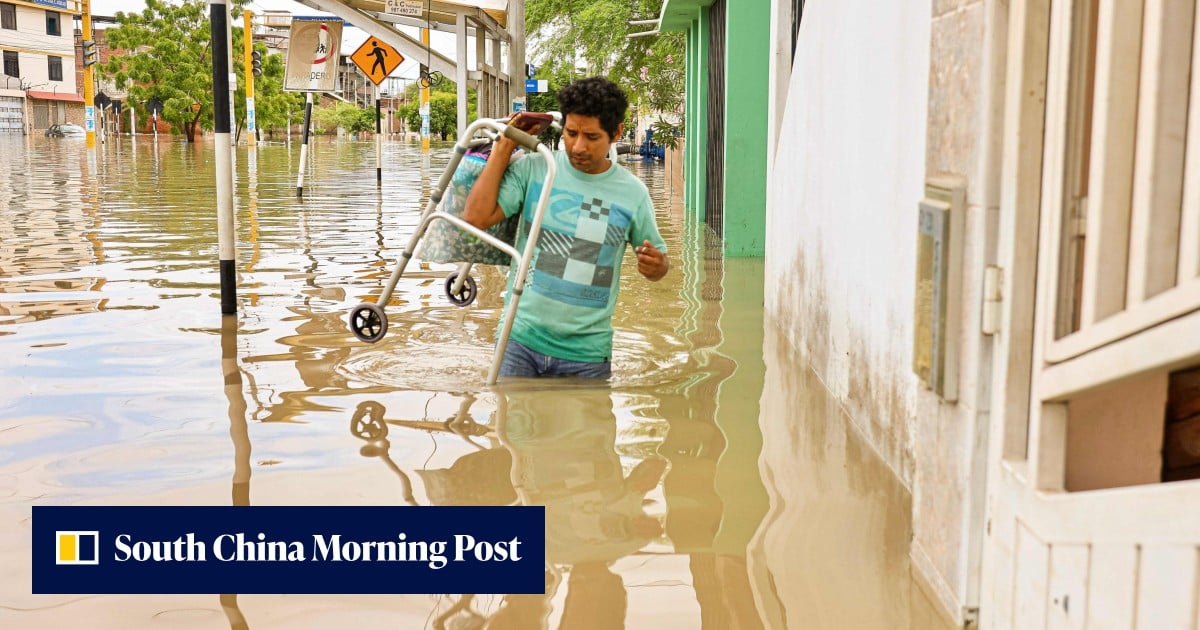
Pierre Garavito, a Piura resident, told the AFP news agency that this was just the first heavy rain from the El Nino phenomenon and described how it was treating them, adding that he had lost everything.
Luis Vasquez, head of the National Institute of Civil Defence, indicated that about 2,000 families faced impacts across Piura’s urban sectors. The overflowing Tumbes River submerged a portion of the Pan-American Highway across the border. Police rescued several ranchers trapped by rising waters earlier in the week. Residents in areas like Santa Margarita watched refrigerators float in residential water. Retirees like Cesar Pacherre criticized the lack of preventative measures by authorities.
Casualties and Infrastructure Damage in Ecuador
The national emergency toll in Ecuador reached 34 deaths since late August. About 47,000 people faced effects according to the country’s risk management agency. Two people died on Friday when a mudslide struck their homes.
Police and firefighters in the northwestern province of Esmeraldas evacuated families after two rivers burst their banks. Floods and landslides damaged more than 50 road sections nationwide. At least 10 routes closed, including the primary highway connecting Quito to the coast.
We’ve been soaking in mud for four days.
Fernanda Navarrete, resident
Authorities had previously rescheduled Ecuador’s local elections from February to avoid El Niño’s expected peak. The severe weather disrupted preparations for the vote on Sunday. The National Electoral Council reported moving polling stations in five provinces. It warned that dozens more faced potential risks.
Peruvian Army Sets up Shelter and Delivers Humanitarian Aid
Peruvian army personnel set up a shelter in Los Algarrobos to receive displaced families. They delivered 1,500 litres of water and 700 humanitarian aid baskets containing rice, pasta, sugar, oil, tuna, milk, and oats. Emergency teams and authorities responded to the flooding while the country’s risk management agency monitored conditions across affected areas.
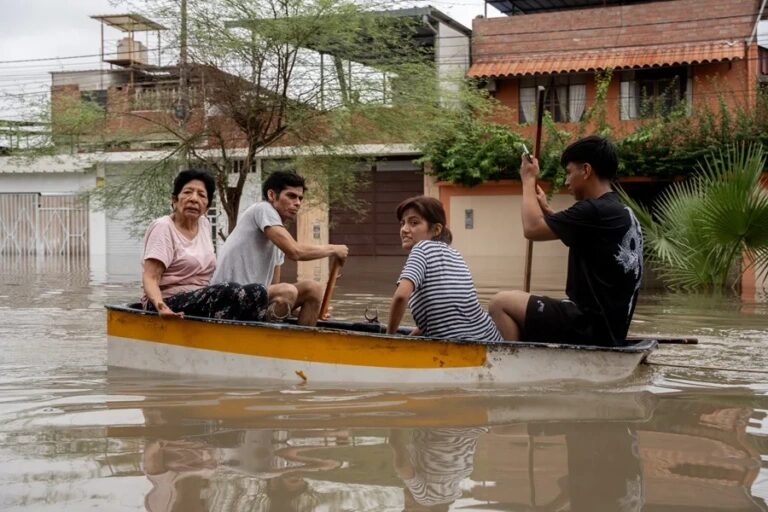
Elizabeth Espinoza, a mother of five selling gelatin desserts on Lima’s outskirts, told AP that things were so expensive the money did not cover anything anymore.
Flooding Drives up Living Costs and Threatens Economic Growth
President Fujimori toured the flooded El Chilcal neighborhood by police boat during a lightning storm on Friday. She warned that Peru faces a “mega Niño”. Her administration coordinates international aid support from the United States and China. Officials discuss potential early disbursement of emergency financial assistance originally slated for 2027.
Agricultural production and fish catches suffered disruptions, driving up living costs. Annual inflation in Lima climbed to more than 5 percent in October. Peru’s central bank estimated that El Niño could reduce national economic growth by nearly one percentage point this year and more than a point in 2027.
Things are so expensive, the money doesn’t cover anything anymore.
Elizabeth Espinoza, mother of five