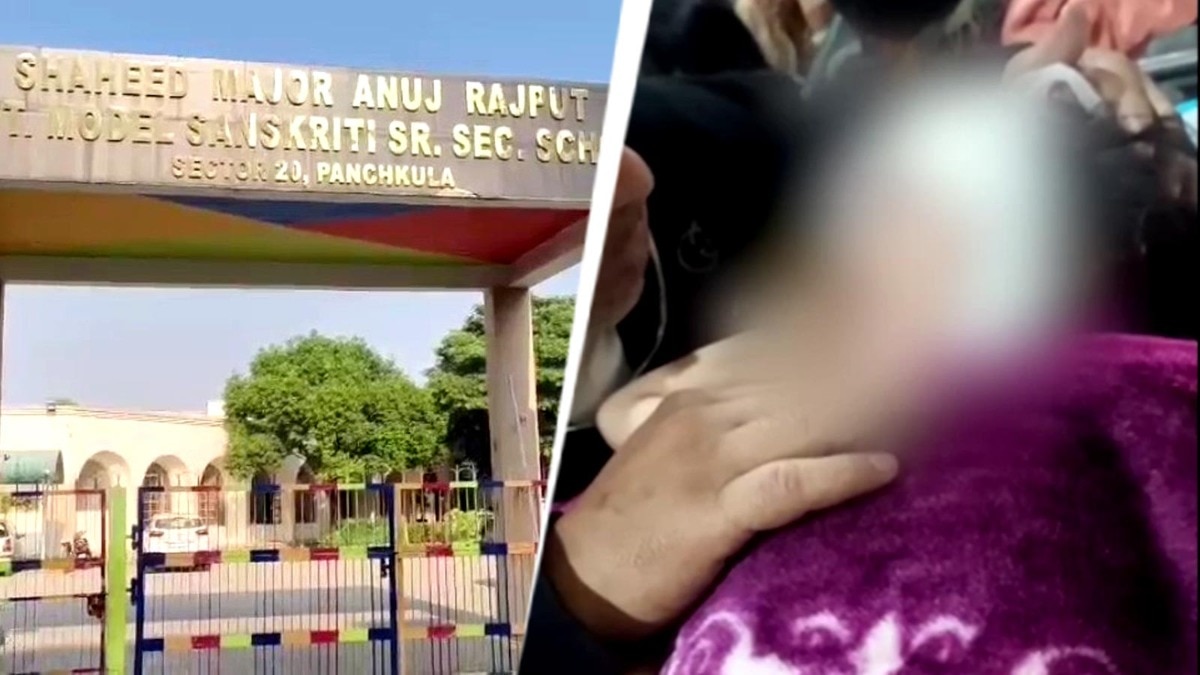
A six-year-old kindergarten student is receiving specialized medical care at a regional hospital after sustaining severe head and bodily injuries during an assault inside a school in Haryana’s Panchkula district. The October 28 attack, which reportedly involved stones and a flowerpot wielded by an older student, has triggered immediate administrative inquiries and sharp questions from the victim’s family regarding campus security and adult supervision.
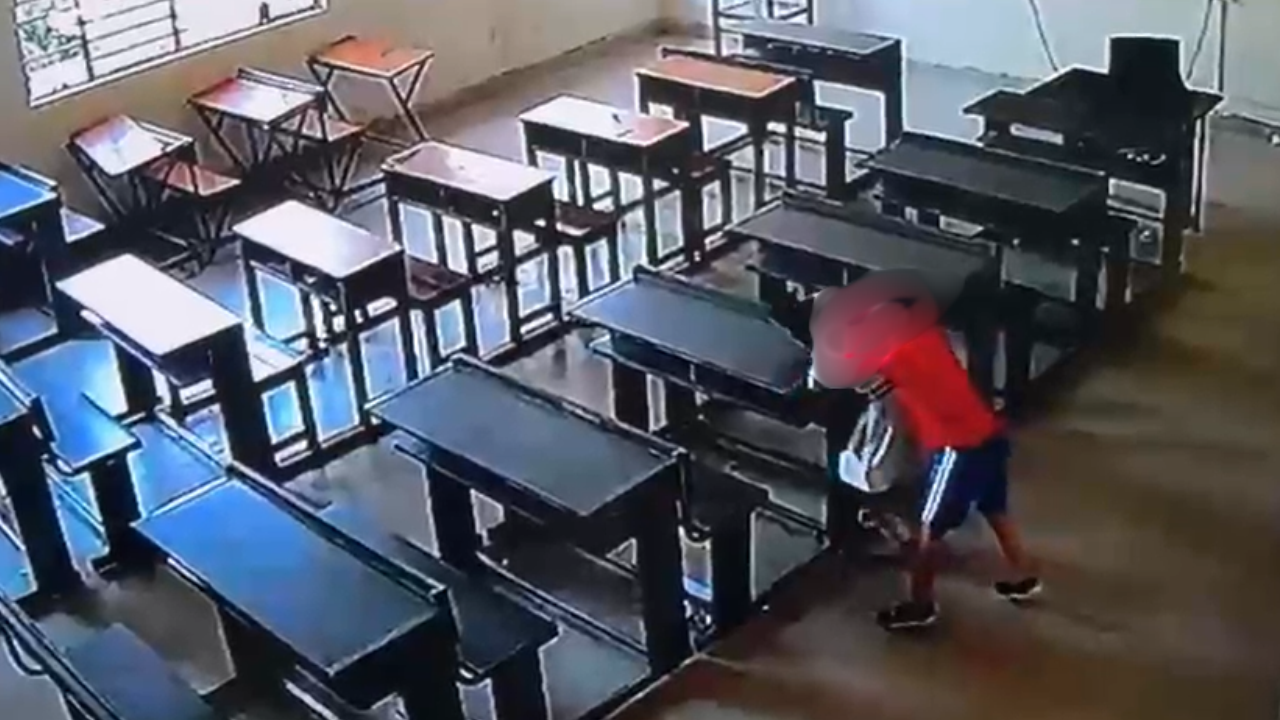
According to initial accounts, the young girl was lured to the first floor of the Sanskriti Model School in Sector 20 by a third-grade student who falsely claimed her father was calling for her. Once on the upper level, the older child allegedly struck her repeatedly with stones and a heavy flowerpot, dragged her across the premises, and left her unconscious inside an empty classroom.
Victims Relatives Question Unnoticed Assault Caught on Surveillance Cameras
The severity of the initial trauma prompted immediate transport to the Civil Hospital in Sector 6. Given the gravity of her condition, attending physicians quickly transferred her to the Postgraduate Institute of Medical Education and Research (PGIMER) in Chandigarh.
Surveillance systems installed throughout the facility have become a central point of contention for the victim’s relatives. Family members publicly questioned how the prolonged assault went entirely unnoticed despite CCTV monitors actively feeding into the principal’s office. Adding to the family’s distress, relatives searching the grounds reported that the same third-grade student accused of the assault ultimately led them to the secluded classroom where the injured child lay incapacitated.
This incident serves as a lesson for all schools. It’s crucial, because if such incidents occur, despite having so many schools and so many teachers, then no one will want to send their children to school. Whether it’s a private school or a government school, the staff are paid substantial salaries, yet they fail to do their jobs properly, the victim’s uncle stated to news agency ANI.
Official Investigations and Jurisdictional Oversight
Local law enforcement agencies responded swiftly to the campus. A police team led by Sector 20 police station in-charge Yashdeep, alongside investigating officer Pradeep Kumar, initiated a formal inquiry on the premises. Authorities have begun questioning school administrators to establish the exact timeline of events and evaluate the adequacy of daily supervision arrangements.
Investigators are also speaking with the parents of the third-grade student to determine the underlying factors that provoked the violence. Because the involved minor falls between the ages of seven and twelve years, Deputy Commissioner of Police (Crime) Amrinder Singh noted that a formal behavioral and mental status evaluation is legally and operationally essential before determining subsequent administrative or judicial steps.
Parallel inquiries have expanded beyond local police channels. The Haryana State Commission for Protection of Child Rights has formally taken cognizance of the episode, demanding a comprehensive investigation into potential administrative lapses and systemic safety failures within the school administration. Simultaneously, the district education department has launched its own internal review to inspect institutional oversight protocols.
Broader Safety Concerns Across Regional Campuses
The Panchkula incident unfolds against a backdrop of escalating anxiety over campus violence in northern educational institutions. Earlier in the month, a separate fatal encounter occurred outside a school in southwest Delhi’s Mohan Garden area, where a student was stabbed to death following an argument over school uniform shoes. That dispute, which began after the student was reported to a teacher for not wearing the prescribed school shoes, resulted in the apprehension of individuals.
As state investigators continue examining the CCTV footage, interview faculty members, and evaluate the juvenile’s psychological profile in the Panchkula case, core questions regarding institutional liability and daily corridor monitoring remain entirely unresolved.