PNP Launches Hotlines for Bato dela Rosa as Surrender Deadline Nears
The Philippine National Police has launched dedicated hotlines for the arrest of Senator Ronald “Bato” dela Rosa, ABS-CBN reported, as authorities count down the final days of a government-set surrender window. With the deadline fast approaching, law enforcement agencies have intensified their search while maintaining that a voluntary surrender remains the preferred path for the embattled lawmaker.
Dela Rosa is wanted by the International Criminal Court in connection with crimes against humanity charges tied to the deadly drug war waged under former President Rodrigo Duterte. As a co-perpetrator named in the international arrest warrant, the senator faces mounting pressure from both the executive branch and investigative bodies as the Department of the Interior and Local Government’s one-week grace period winds down.
Senator Shows No Indication of Voluntary Surrender
As of late October 2026, authorities report zero indication that the senator intends to step forward voluntarily. PNP spokesperson Police Colonel Allen Rae Co noted that officials have yet to receive any surrender feelers from the lawmaker’s camp.
Wala pa pong feelers as of now. ‘Yun pong one week na binigay for him to be able to surrender, ito po ay sign of goodwill for him to be able to end this with dignity,
Police Colonel Allen Rae Co said, according to GMA Network.
That one-week window was explicitly designed as an off-ramp for the senator to resolve his legal standing without a violent confrontation. With that window closing, the PNP has deployed additional tracker teams across the country. Meanwhile, the National Bureau of Investigation stated it is pursuing every available lead. NBI chief Melvin Matibag remarked that investigators would leave no stone unturned in locating the senator, vowing to check every potential hiding spot.
Clashing Assessments Over Bounties and Whereabouts
The operation has triggered public debate among high-ranking security figures, particularly regarding a P50-million bounty placed on the senator’s head. Interior and Local Government Secretary Jonvic Remulla previously asserted that authorities had pinned down the senator’s location in Mindanao, adding that he is being shielded by a heavily armed faction capable of violent resistance.
PNP releases hotlines for info on Dela Rosa's whereaboutsMANILA – The Philippine National Police (PNP) on Wednesday announced mobile numbers where the public may report information on the whereabouts of Senator Ronald "Bato" dela Rosa.During a press briefing at Camp Crame,… pic.twitter.com/mCZs8KF2fQ
That rationale drew public skepticism from former PNP chief and Senator Panfilo “Ping” Lacson, who questioned the necessity of a massive financial reward if police already know where the suspect is staying. SunStar Philippines reported Lacson’s remarks highlighting the logistical contradiction:
Ang hindi ko lang ma-reconcile, kung pinpointed na ang location niya bakit kailangan pa ng P50 million? Doon ako nahihirapan mag-reconcile,
Lacson stated.
Lacson also argued that fleeing the country would expose the senator to greater legal peril abroad, maintaining that fighting the case from within the Philippines offers more stability despite the gravity of an international tribunal warrant. At the same time, Lacson pushed back against critics demanding that dela Rosa be denied due process as retribution for extrajudicial killings during the Duterte administration.
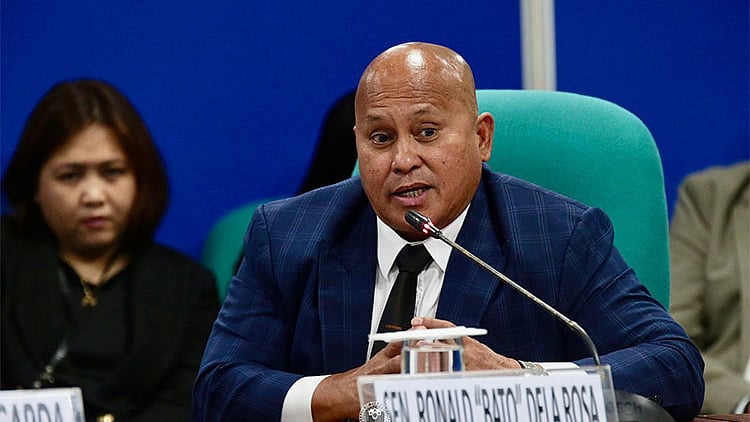
Malacañang’s Warning and Legal Standoff
The executive branch has adopted a firm stance against the senator’s continued evasion. Palace Press Officer Usec. Claire Castro emphasized that authorities will pursue dela Rosa relentlessly if he lets the deadline pass without complying. Castro argued that as a former member of the Philippine National Police and a sitting lawmaker, dela Rosa holds a unique obligation to model respect for the judicial process rather than serving as a fugitive figurehead.
Dela Rosa’s legal team continues to push back against the proceedings, recently petitioning the Supreme Court to block the execution of the arrest warrant. As legal motions move through the courts and law enforcement agencies field tips through newly established channels, the remaining hours of the government’s ultimatum will determine whether the case ends in a negotiated surrender or a high-stakes apprehension in the southern provinces.