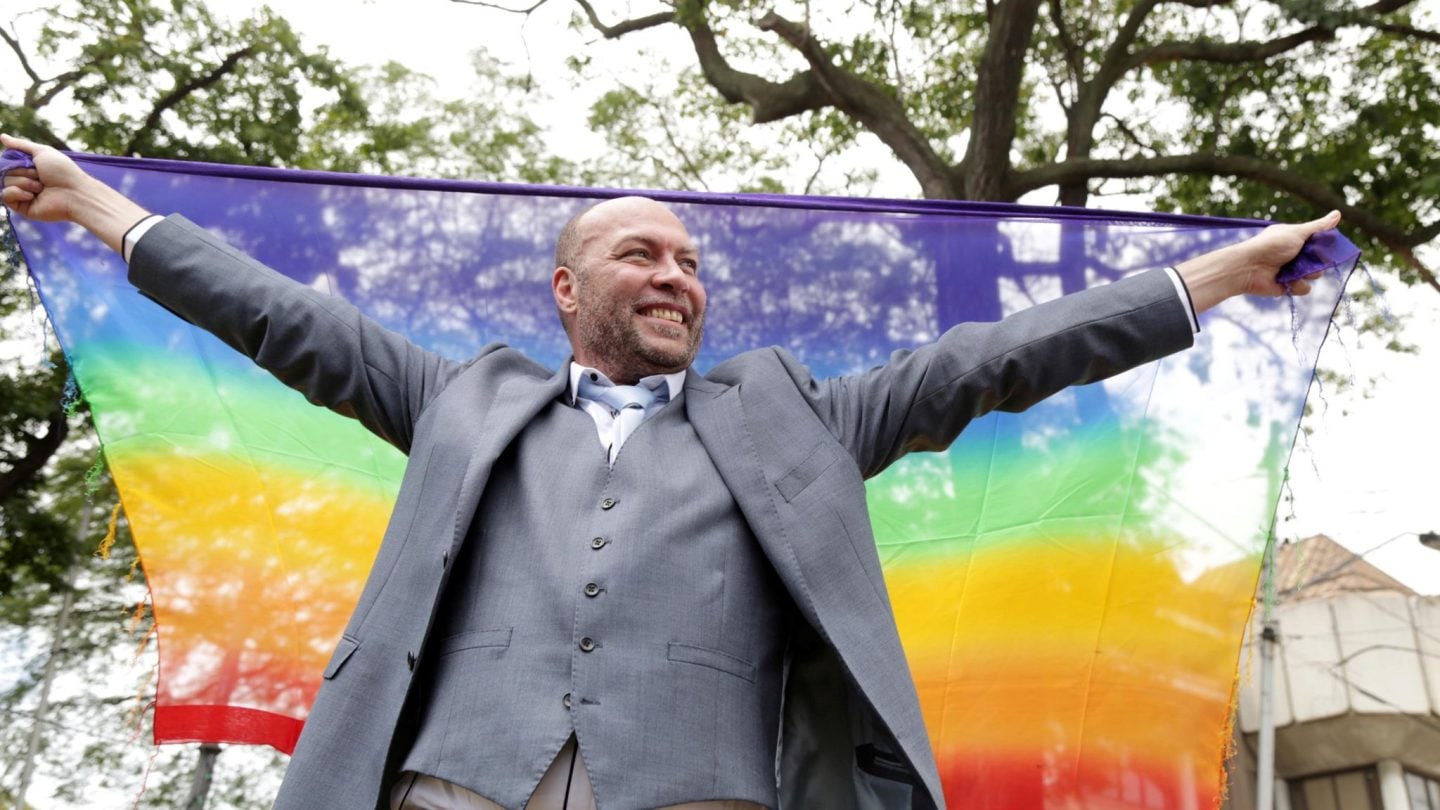
Trinidad and Tobago’s laws criminalizing private, consensual same-sex conduct were struck down on November 10, 2026, by the UK Judicial Committee of the Privy Council.
The decision dismantles provisions that carried penalties of up to five years in prison for sodomy. Two years in prison applied for gross indecency under the 1986 statute.
The unanimous ruling marks the first time the high court has evaluated the constitutionality of such legislation.
Jason Jones Fights Laws for Ten Years
The litigation originated in February 2017 when Jason Jones, an activist born in Trinidad and Tobago, filed a constitutional challenge against the Sexual Offences Act.
Jones argued that the legislation infringed upon fundamental rights guaranteed by the national constitution.
Although Jones secured an initial victory in the Supreme Court of Trinidad and Tobago in 2018, that ruling was partially reversed in March 2025 by a local appeals court.
Four months after the reversal, authorities authorized Jones to take his case to London for a final appeal before the Privy Council.
The Privy Council serves as the highest appellate court for Trinidad and Tobago.
Judges Protect Privacy Rights
During the proceedings, the Judicial Committee of the Privy Council said that constitutional protections must remain practical and effective for contemporary society rather than being anchored in the past.
Philip Sales said that modern interpretations of privacy and family life protect core aspects of human identity, including sexual orientation.
Freedom Law Chambers represented Jones. The legal firm praised the outcome as a victory for the rights of homosexual people, equal dignity, and respect for private and family life.
The ruling carries implications beyond Trinidad and Tobago.
The Privy Council also serves other independent Commonwealth nations and UK overseas territories.
This ruling is another powerful reminder that decriminalization is not a special privilege, but a universal human rights imperative. Governments that continue to criminalize consensual same-sex conduct should repeal these laws and ensure that everyone can live with dignity, equality, and freedom from fear.
Cristian González Cabrera, senior LGBT rights researcher at Human Rights Watch
United Nations High Commissioner for Human Rights Volker Türk supported the judgment.
Türk said that he hoped the decision would contribute to eliminating a historical source of stigma, exclusion, barriers, and violence faced by residents due to their sexual orientation and gender identity.
Caribbean Courts Repeal Colonial Laws
This legal outcome aligns with a regional movement toward decriminalization across the Caribbean.
Recent judicial rulings have dismantled similar colonial-era laws in Saint Lucia, Dominica, and Barbados, as well as in Antigua and Barbuda.
Consensual same-sex conduct remains illegal in several Caribbean jurisdictions, including Jamaica, Grenada, and Saint Vincent and the Grenadines.
While acknowledging the ruling, Jones said that broader human rights and equality concerns remain unaddressed for LGBT+ individuals affected by former British colonial legislation across other parts of the Commonwealth.
What I am going to do in the coming months is very specific activism on how the Caribbean, not just Trinidad and Tobago, tackles endemic homophobia
Jason Jones
Trinidad and Tobago continues to use the London-based Privy Council as its final court of appeal.
National discussions continue regarding replacing it with the Caribbean Court of Justice.
The Caribbean Court of Justice is headquartered within Trinidad.
Will Trinidad and Tobago replace the London-based Privy Council with the Caribbean Court of Justice?