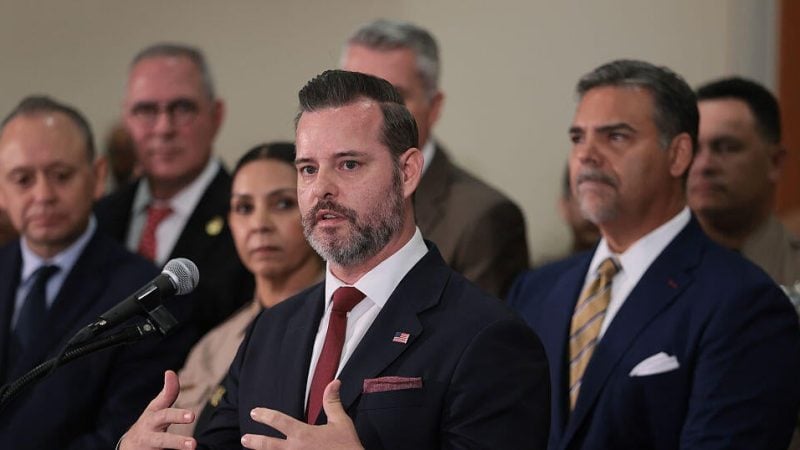
“In the exercise of my judicial functions, I shall always remain independent from any influence or unwarranted crime or undue pressure. I shall discharge these duties without fear or favor,” Rodil Zalameda declared during his oath-taking ceremony on Friday, November 6, 2026, as he officially became the 28th chief justice of the Philippines, Inquirer reported.
The transition of power took place in the Session Hall of the Supreme Court in Ermita, Manila, marking the end of Alexander Gesmundo’s tenure. Gesmundo, who had served as chief justice since April 2021, stepped down after reaching the mandatory retirement age of 70. The ceremony included all 15 members of the Supreme Court en banc, with outgoing Chief Justice Gesmundo handing over the ceremonial gavel to Zalameda.
This appointment is the first chief justice selected by President Ferdinand Marcos Jr. since he took office in 2022. Zalameda, 63, moves into the role from his position as an associate justice, bringing over three decades of legal experience that spans roles as a prosecutor, a Court of Appeals justice, and a Supreme Court associate justice since his initial appointment in 2019.
A divided reception for the new leadership
While the Palace expressed confidence that Zalameda would lead with integrity and respect for the rule of law, his elevation has not been without significant friction. The appointment was met with doubt from Kapatid, a support group for political prisoners, regarding his ability to maintain public trust in the judiciary.
RODIL ZALAMEDA SWORN IN AS 28TH CHIEF JUSTICE LOOK: Rodil V. Zalameda formally took his oath as the 28th Chief Justice of the Supreme Court before Senior Associate Justice Marvic M. V. F. Leonen in Manila on Friday, November 6. Zalameda succeeds Alexander G. Gesmundo, who retired… pic.twitter.com/aLH6djZZpY
Critics have pointed to Zalameda’s previous judicial record as a source of concern. According to the Inquirer, Ruben Carranza, a senior associate at the International Center for Transitional Justice, suggested that Zalameda’s rulings have indicated a willingness to serve “whichever dynasty is in power.” This perspective is rooted in several high-profile decisions, including:
- His vote to deny an appeal from a survivor of extrajudicial killings.
- His role in the decision that acquitted former first lady Imelda Marcos of graft charges this year, overturning a Sandiganbayan conviction that had stood since 2018.
- His vote to deny a temporary restraining order plea from Senator Bato dela Rosa regarding an arrest warrant from the International Criminal Court.
- A widely observed fist-bump with former President Rodrigo Duterte upon Zalameda’s appointment to the high court in 2019.
The Inquirer notes that Zalameda was selected from a Judicial and Bar Council (JBC) shortlist that included several other candidates, such as Senior Associate Justice Marvic Leonen, Associate Justices Alfredo Benjamin Caguioa, Japar Dimaampao, and Jose Midas Marquez.
The roadmap for judicial reform and modernization
Zalameda is stepping into a role that carries immense administrative weight beyond simply presiding over cases. As chief justice, he will chair the Judicial and Bar Council and oversee the entire administration of the country’s judiciary. The Daily Tribune reports that Zalameda has already outlined a phased approach to reform, focusing on reducing court backlogs and strengthening accountability.
His proposed initiatives include:

- Improving case management by redistributing trial court caseloads to minimize delays.
- Expanding court infrastructure and allocating more resources to physical courthouses.
- Upgrading technology and improving compensation and support for court personnel.
- Establishing a monitoring group to track the progress of major graft cases, including those involving alleged irregularities in flood control projects.
Zalameda, who began his career as a branch clerk at the Makati City Regional Trial Court, has emphasized that his perspective is shaped by his time “at the bottom” of the judicial hierarchy. He told the council, “Malapit po ako sa empleyado dahil galing ako sa baba,” suggesting a leadership style rooted in the practical realities of court employees.
The Daily Tribune notes that Zalameda is expected to lead the judiciary until his compulsory retirement on August 2, 2033, providing him with nearly seven years to implement these systemic changes.
Newly appointed Chief Justice Rodil V. Zalameda took his oath of office on November 6, 2026, before Senior Associate Justice Marvic M. V. F. Leonen at the #SupremeCourtPH (SC) 𝘌𝘯 𝘉𝘢𝘯𝘤 Session Hall in Manila. Chief Justice Zalameda succeeds Chief Justice Alexander G.… pic.twitter.com/0VZGOnXKya
Contrasting paths to the high court
The selection process highlights the diverse backgrounds of those who vied for the position. While Zalameda’s career is marked by his rise through the prosecution and appellate ranks, the Inquirer provides context on his fellow nominees to illustrate the breadth of legal expertise available to the President. For instance, Senior Associate Justice Marvic Leonen, appointed in 2012, has pointed out that automated digitalization cannot replace human intelligence and independent judgment in rendering court rulings. Meanwhile, Associate Justice Japar Dimaampao is an expert in commercial laws and taxation, and Jose Midas Marquez has significant institutional memory, having served as court administrator during the impeachment of former Chief Justice Renato Corona.
As Zalameda takes the gavel, his promised reforms and the skepticism of some groups regarding his ability to maintain public trust remain central questions for the Philippine legal system.
More on Rodil Zalameda
Zalameda takes his oath as PH’s 28th chief justice MANILA – Newly appointed Chief Justice Rodil V. Zalameda took his oath of office Friday before Supreme Court (SC) Senior Associate Justice Marvic M. V. F. Leonen at the SC En Banc Session Hall in Manila. Zalameda is the… pic.twitter.com/kWlxQkrqKc
RODIL ZALAMEDA IS NEW CHIEF JUSTICE BREAKING: Rodil Zalameda is the 28th Supreme Court chief justice, succeeding retiring incumbent Alexander Gesmundo who will step down on Friday, Nov. 6. Zalameda was in the short list from a public panel interview and closed door… pic.twitter.com/b5HW7QKsRC
Chief Justice Alexander Gesmundo, Justices Rodil Zalameda, Samuel Gaerlan, Jose Midas Marquez, and Antonio Kho Jr., and Court Administrator Raul Villanueva were met by Ronald Davis, Director of the US Marshals Service (USMS), on the 3rd day of the Philippine SC's US Study Visit. pic.twitter.com/hLBJ0InueF