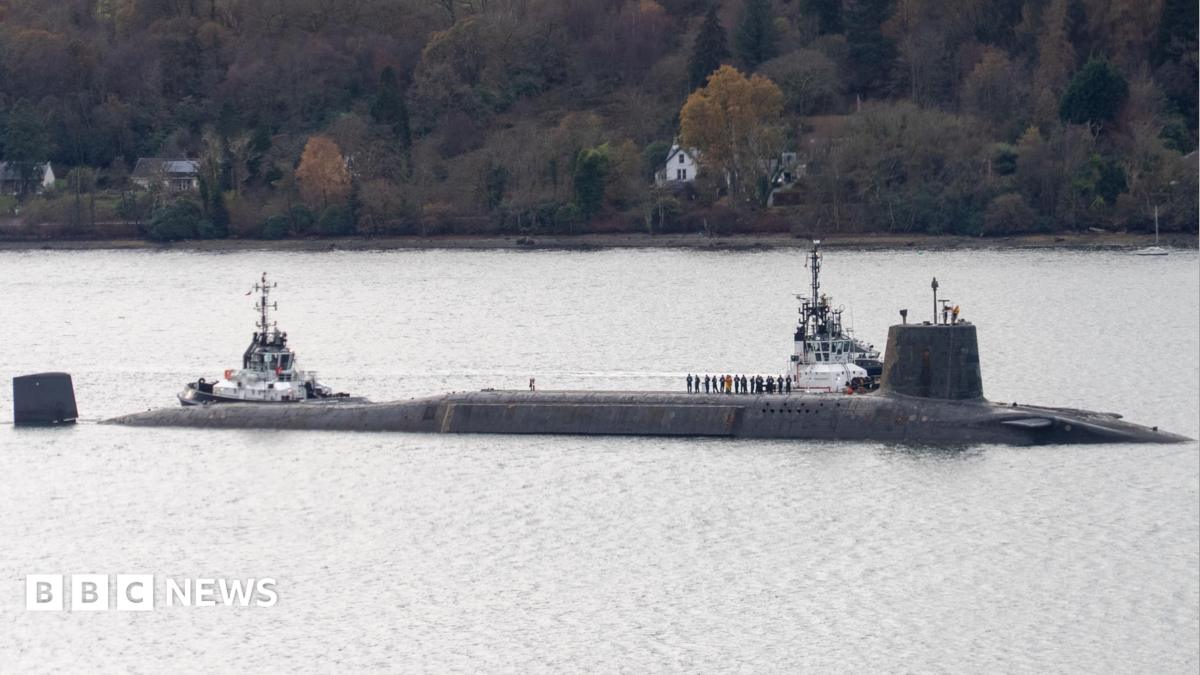
A Royal Navy Trident submarine has returned to its Scottish base after a record-breaking 217 days spent submerged on patrol.
The 140-strong crew of HMS Vengeance completed the longest ever publicly reported nuclear deterrent patrol for the fleet after setting sail from Faslane on 12 April.
Operation Relentless ensures that at least one nuclear-powered and armed ballistic missile submarine remains at sea at all times, deterring adversaries and protecting the UK alongside NATO allies.
Aboard the 15,000-tonne submarine, Defence Secretary Wes Streeting and First Secretary of State Louise Haigh personally thanked around 140 Navy submariners, received an operational briefing, and toured the vessel carrying Britain’s Trident nuclear missiles.
First Secretary of State Louise Haigh said that for 57 years, these tours have formed a cornerstone of national defence, noting that the successful mission once again kept everyone safe and secure.
“I think the whole country can be extraordinarily proud of our submariners and of our nuclear deterrent,” Defence Secretary Wes Streeting said.
The deployment underlines the engineering demands and financial consequences of sustaining ageing boats until their Dreadnought-class replacements are ready, with the first replacement, HMS Dreadnought, not expected to be ready until about 2032.
When Continuous At-Sea Deterrence began in the late 1960s, standard patrol length was just eight to 12 weeks, and the Royal Navy conducted psychological studies due to concerns that spending such time underwater posed a potential risk to mental health.
“Patrols are getting longer and longer,” David Cullen, a nuclear expert with the Basic thinktank, said.
Three Vanguard-class submarines were at sea during October, consistent with one maintaining the deterrent patrol, another preparing to take over, and a third possibly in transit to the US base in Kings Bay to rotate Trident missile stocks.
First Sea Lord Gen Sir Gwyn Jenkins praised the dedication of submariners at a conference in Oslo, noting that past decisions, especially by David Cameron’s government, left a toxic legacy resulting in a binary choice between gapping Continuous At-Sea Deterrence or demanding ever more of people and submarines.
Roughly 150 people are on patrol 365 days a year in order to keep the whole of NATO safe.
Gen Sir Gwyn Jenkins, First Sea Lord, via Navy Lookout
The government has committed over £63 billion over the next four years to the Defence Nuclear Enterprise, which supports over 47,000 highly skilled jobs backed by a supply chain of more than 6,000 UK-based companies. This funding includes around £47 billion allocated for submarines, maintenance, and infrastructure.