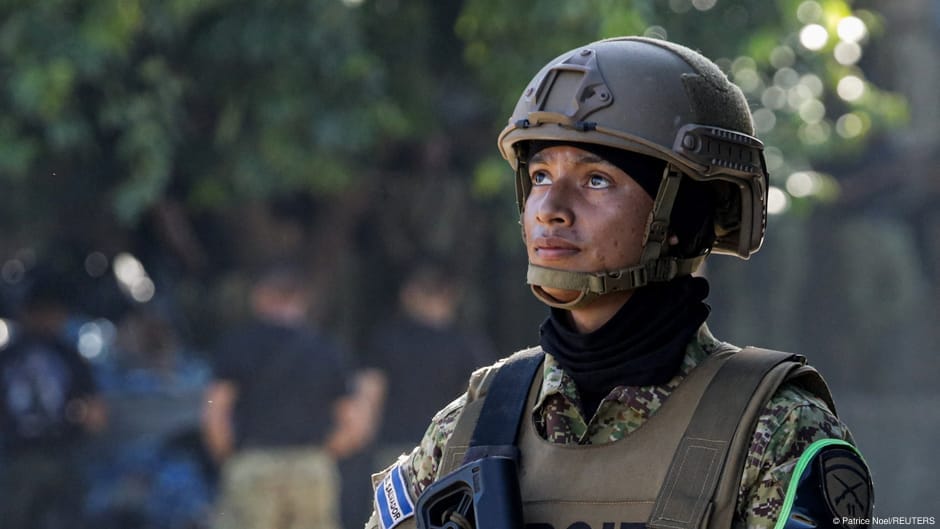
Haitian National Police and Salvadoran special forces retook control of the Sylvio Cator Stadium in Port-au-Prince on Thursday ending more than two years of gang occupation.
Joint Security Operation at Sylvio Cator Stadium
The deployment of this contingent followed an order from President Nayib Bukele, who dispatched the forces after four Salvadoran aviation technicians went missing following an ambush on October 18, 2026, in Port-au-Prince. Following the successful reclamation of the 10,000-capacity venue, Salvadoran military forces established a presence to secure the facility, which had been under gang control since February 2024.
President Nayib Bukele, who announced the stadium’s liberation on social media, said that his forces discovered “several human skulls” inside the site. Bukele described the stadium as secured through a joint operation and said that the site would serve as a staging point for further operations into gang-controlled territory.
#Haiti / #ElSalvador 🇭🇹🇸🇻: Salvadoran Forces have reportedly deployed “Armed Robot Dogs” in Pòtoprens (Port-au-Prince). Seemingly numerous #China-made 🇨🇳 Unitree Robotics Go2 Quadruped Robot Dogs armed with #Israel-made 🇮🇱 IWI ARAD-5 assault rifles have been deployed. pic.twitter.com/9dXwbyya3h
“We will now establish an operational base at the stadium so we can continue advancing deeper into territory controlled by the gangs,” Bukele wrote on X, adding, “We now have the upper hand on the ground.”
Deployment of Robotic Systems
Footage released by the Salvadoran government showed armed, four-legged robots accompanying soldiers during the stadium sweep. The video, which circulated widely, depicted the machines moving down hallways and climbing stairs.
The robots appeared to be outfitted with Israeli-made IWI ARAD-5 assault rifles, which the Salvadoran military has issued since 2022 to replace aging M16s. Experts and observers noted the use of bolted metal brackets to mount the weapons, with a metal rod extending toward the trigger mechanism.
The exact nature of the robotic systems remains a subject of debate. While the footage showed the machines navigating the interior of the stadium, no robots were observed firing weapons or engaging targets.
The technical specifications and control architecture—specifically whether the units are operated by remote human input or function autonomously—have not been disclosed by the Salvadoran government. As noted in industry reporting, the mere capability of a system does not equate to full autonomy, as such weapons may still require continuous human input to operate.
Salvadoran Military Presence in Haiti
Salvadoran troops are stationed in Haiti, nearly 2,000 kilometers from their homeland, as part of a complex security environment.

While these forces joined Haitian police and the UN-backed Gang Suppression Force (GSF) in operations in the Cul-de-Sac plain, UN officials have confirmed that the majority of the additional Salvadoran troops fall outside the official GSF mandate and reporting structure. The legal terms of the bilateral agreement between the Haitian and Salvadoran governments have not been made public.
This intervention has drawn scrutiny from experts like Romain Le Cour Grandmaison of the Global Initiative Against Transnational Organized Crime. Le Cour Grandmaison has questioned whether the “Salvadoran model”—a policy of mass incarceration and iron-fisted tactics—is applicable to the Haitian context. He warned that the entrenched nature of Haiti’s gangs might lead to different outcomes than those seen in El Salvador.
Nations Work Together to Restore State Authority
He emphasized that the two nations would continue to work together, alongside the GSF, to “regain control of the territory and restore state authority.” The government’s offensive is occurring amid a broader humanitarian crisis; a recent UN report said that between July and September 2026, at least 1,167 people were killed and 459 injured across Haiti, with much of the violence attributed to turf wars and operations by security forces.
The international community remains divided. While some have raised questions regarding the legitimacy of the Salvadoran deployment in Haiti, the U.S. president has offered Nayib Bukele a level of endorsement and autonomy to carry out security measures he deems necessary.
In November, Donald Trump addressed the deployment, stating, “I said: ‘Look, you’re running your country.” “You have to do what you have to do.’” As the Haitian government prepares for general elections next year, the effectiveness of this joint security strategy remains a critical, and contested, factor in the nation’s stability.