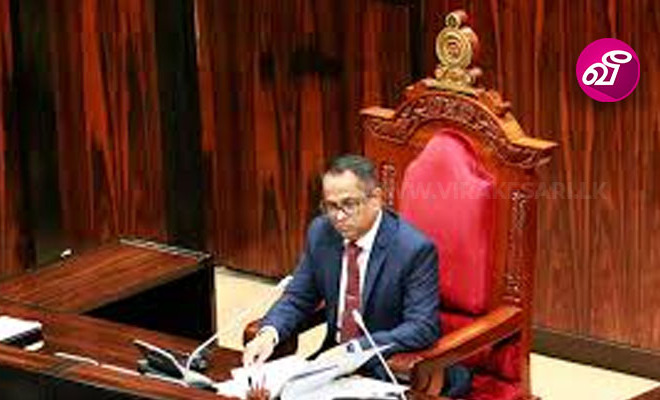
Speaker Jagath Wickremaratna announced the determination to Parliament on Saturday following a constitutional review by a three-judge bench comprising Chief Justice Preethi Padman Surasena, Achala Wengappuli, and Sampath Abeykoon.
Court Mandates Updates to Specific Constitutional Clauses
The ruling follows 26 separate petitions filed by citizens and legal bodies after the draft law was initially formally tabled in Parliament on October 20, 2026. Petitioners had urged the court to mandate a special two-thirds majority and a public referendum, arguing that specific provisions infringed upon fundamental rights and judicial safeguards.
The required updates affect Clauses 2 through 66, including specific deletions. Wickremaratna informed the legislature that Clause 6, which permitted the prosecution of individuals who were not official members of a criminal gang, must be removed entirely, alongside items 15, 16, 17, and 33 of the First Schedule.
Civil Liberties and Concessions During Proceedings
The legislation faced intense scrutiny from the Bar Association of Sri Lanka and various human rights organizations over executive overreach and potential threats to civil liberties. Critics previously warned that expansive definitions of serious offences and organized groups could encompass peaceful protests and trade union activities.
Legal professionals also pointed out structural parallels to the Prevention of Terrorism Act, a temporary measure enacted in 1979 that remained in force for more than four decades. During the legal proceedings, the government agreed to drop several contentious elements to address these concerns.
Chief Justice Preethi Padman Surasena initially graduated with a bachelor’s degree in physics from the University of Colombo in 1985 before entering the Sri Lanka Law College that same year and being sworn in as an attorney in 1989.
His judicial career includes service as a High Court judge starting in 2007 and presiding as the 46th president of the Court of Appeal of Sri Lanka from 2018 to 2019, prior to joining the Supreme Court as a puisne justice in 2019.

Provisions concerning tattoos and body modifications used by law enforcement to identify suspected gang members were removed following public concern over profiling. Plans requiring prior court approval for publishing information on serious crimes were also dropped, and proposed initial detention periods were reduced from 72 hours to 48 hours.