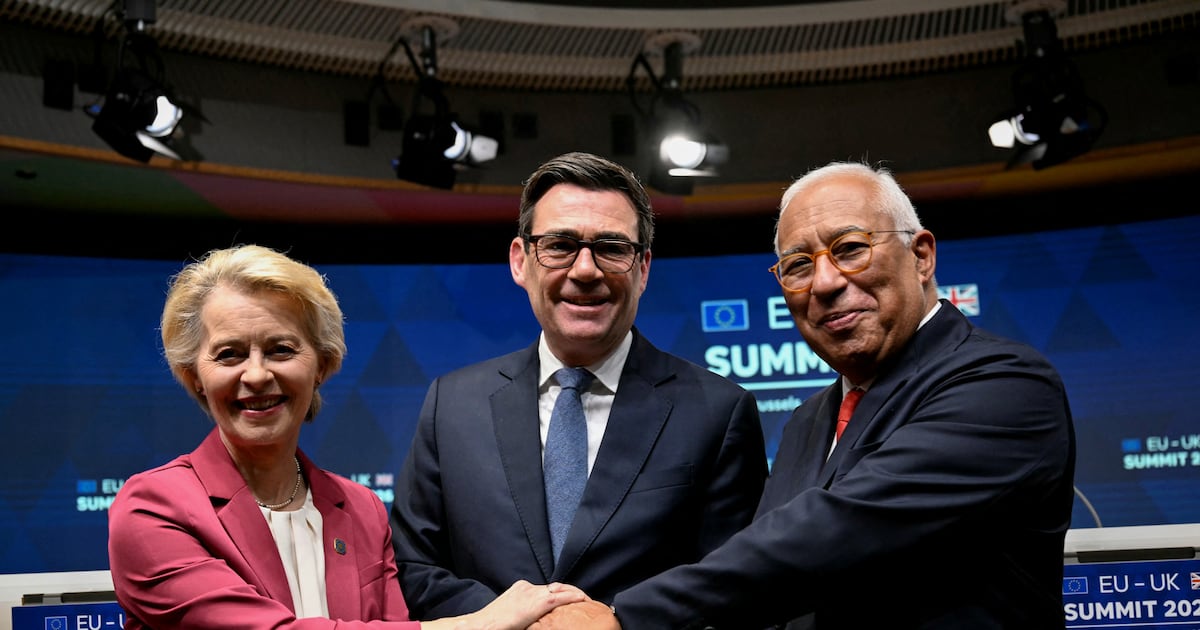
The United Kingdom will pay a specific “participation fee” to the EU under legal documents revealed on Thursday covering administrative costs for two post-Brexit agreements struck in Brussels last week.
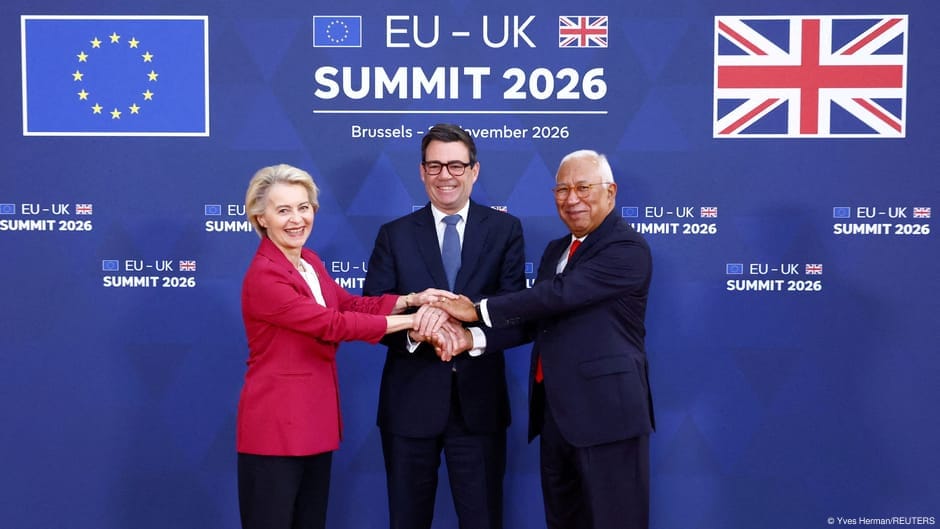
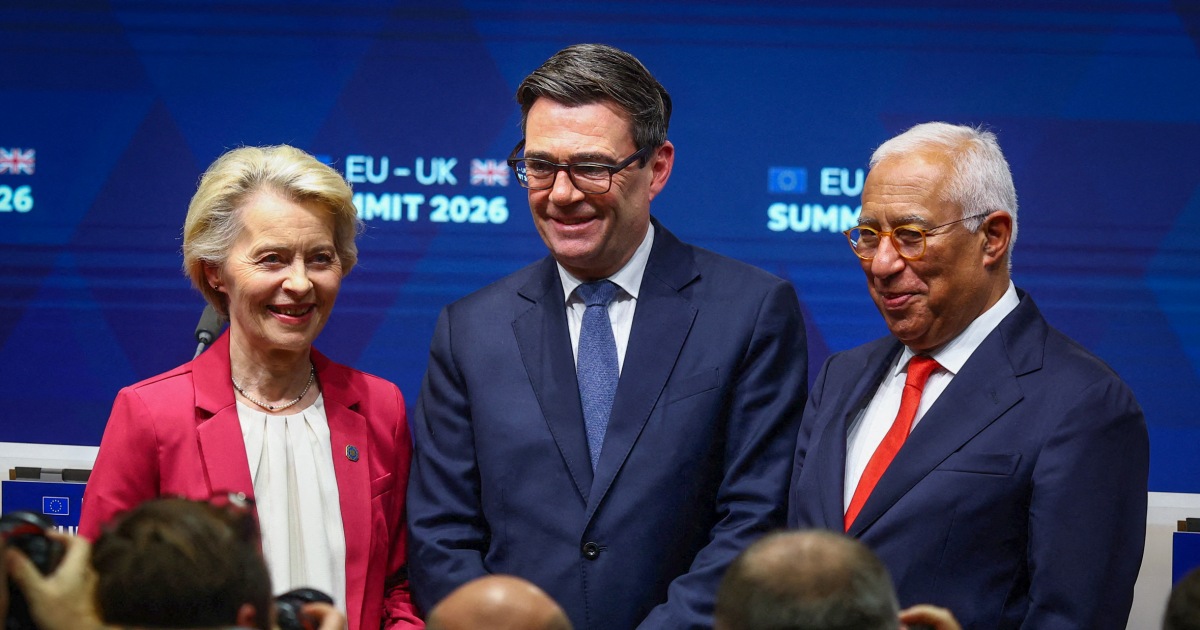
- Prime Minister Andy Burnham agreed to post-Brexit trade and mobility packages at a November 20 summit in Brussels.
- The UK will pay a participation fee set at 4% of its main institutional contribution alongside an operational share.
- Legislation introduced on November 26 aims to implement food standard alignment and emissions trading linkage by 2028.
Funding Terms for the European Partnership Treaties
Legal texts published on November 26 detail the financial arrangements required to implement the agreements reached by Prime Minister Andy Burnham and European Union leaders in Brussels on November 20. Under the treaties, the UK will contribute towards the running costs of three EU agencies and shared administrative systems.
European Council President António Costa said that they remain open to having the closest possible relationship. European Commission President Ursula von der Leyen said that the trade pact functions as a two-way street bringing greater choice for consumers.
“open horizons and create friendships that will last a lifetime,” European Commission President Ursula von der Leyen said.
Food exporters have been telling European Movement UK how much they need a food and drink deal with the EU to make doing business easier. It's encouraging to see UK producers welcoming the new agreement and the opportunities it will bring. Read more: https://t.co/aAz3oeVLY9 pic.twitter.com/PcFItED7Mp
“Brexit took opportunities from young people,” Prime Minister Andy Burnham said.
The payments consist of two distinct contributions paid in euros. The bulk of the cost comes as an “operational contribution” calculated in proportion to the size of the British economy relative to the EU, mirroring the budgetary split used by member states.
In addition, the UK must pay a participation fee set at 4% of that main contribution figure. This approach follows the precedent set by the 2021 trade pact negotiated by the Conservatives, which applied an additional surcharge to UK contributions toward relevant European programs.
Ministers declined to enter into specifics of the fees during negotiations, but the government has sought to compare the administrative outlays against economic gains. Officials expect the running costs to reach the low tens of millions per year, which they said will be “massively outweighed” by predicted economic gains from increased trade.
Foreign Secretary Ed Miliband said that these agreements were not about cost to the taxpayer. Reform UK deputy leader Richard Tice said that a government from his party would scrap what he termed a surrender deal and refuse to remit any funds to the bloc.
Parliamentary Introduction of the European Partnership Bill
The UK Cabinet Office introduced the European Partnership Bill into the House of Commons on November 26 to establish the primary statutory mechanisms required for the summit agreements. Hamish Falconer, minister for European relations, defended the legislation in Parliament.
NEW & EXCL Just about to go on the Today programme: Later today, I understand: Two draft UK-EU treaties on food/farm deal and carbon trading linkage will be published, alongside the “Cutting Costs”/ EU Partnerships Bill first reading in the Commons. Also expecting some sort…
Falconer said the European Partnership Bill allows the implementation of two major trade agreements. These are the food and drink trade deal and the emissions trading scheme linking agreement. He said it allows the elimination of paperwork for food and drink traders, protects billions of pounds worth of British exports from carbon taxes, and makes doing business with the UK’s largest trading partner cheaper and easier.
The bill addresses two core regulatory domains. The Sanitary and Phytosanitary Agreement establishes a common UK-EU SPS area with mutual recognition and dynamic regulatory alignment, eliminating routine border inspections and health certifications for biological samples, reference strains, and plant germplasm.
This framework removes charges including up to £200 each for export health certificates, up to £1,200 per load on British cheese, and up to £1,400 per shipment of British salmon, alongside removing ‘Not for EU’ retail labels.

Dame Angela Eagle, Secretary of State for Environment, Food and Rural Affairs, said that British businesses have faced burdensome paperwork and unnecessary barriers when trading across the channel. She said that the accord will relieve pressure on household food bills.
The second pillar links the UK ETS and EU ETS markets with synchronized compliance registries. This mechanism aims to expand carbon liquidity and stabilize allowance pricing while exempting nearly £6.5 billion of British industrial exports from carbon border levies. Linking these systems helps avert punitive cross-border adjustments under the EU Carbon Border Adjustment Mechanism, saving domestic industries and research facilities from high tariffs.
Detailed Timeline and Parliamentary Scrutiny
Following its First Reading on November 26, the European Partnership Bill is scheduled for a Second Reading debate in early January 2027. During this process, the parliamentary Delegated Powers and Regulatory Reform Committee will scrutinize a 53-page Delegated Powers Memorandum regarding the scope of secondary lawmaking powers conferred on ministers.
Conservative leader Kemi Badenoch said that the Prime Minister seeks broad powers to install and enact European rules. She said that such an approach demonstrates disdain for democratic processes.
Operational schedules set out in the legislative framework target the 2027-2028 academic and fiscal year for full synchronization of the common SPS zone and the linked emissions trading platform. The emissions trading linking agreement is scheduled to take effect on January 1, 2028. The SPS agreement is slated to come into force on March 1, 2028, supported by targeted transition periods for organics, pesticides, and precision breeding.

Structured Migration Dialogues and Continent Ties
Leaders said they will establish a structured dialogue on migration, as recorded in their joint summit statement. This encompasses returns to third countries and engagement with third countries among other topics.
David Henig, director of the UK Trade Policy Project at the European Centre for International Political Economy, said that European and British relations must remain strong for the sake of a continent struggling both economically and geopolitically. Henig said it is unclear whether the next parliament will restart the debate over membership in earnest.
Commercial Responses and Export Realities
Jon Clark from Fruit World International, which imports and exports cherries from the UK, said that phytosanitary and customs procedures currently generate extra cost and extra time when moving goods. Clark said that both parties will see the benefit of making an agreement.
Andy Burnham said he’s not re-opening the EU debate. But look what’s happening. pic.twitter.com/H1IaM0d6wE
Clark said that while re-strengthening the seed trade by supplying the European market would be great, six years is a long time and European growers have sourced seed elsewhere in the interim. An EU diplomat said the agreement is a great deal for the UK because London successfully obtained what it requested.
Prime Minister Andy Burnham reached the premiership after Labour returned to government in 2024 and his approval ratings remained comparatively high while those of Keir Starmer declined.
Having previously served as Mayor of Greater Manchester from 2017 to 2026, Burnham returned to Parliament in June 2026 by winning the Makerfield by-election and resigned as mayor. Following Starmer’s resignation, Burnham won the subsequent Labour Party leadership election unopposed, assuming office as Prime Minister and Leader of the Labour Party in July 2026.
Summit Agrees Youth Mobility Scheme and Economic Security
Beyond food and carbon markets, the Brussels summit produced agreements on youth mobility and economic security. The youth experience scheme will allow up to 100,000 citizens under thirty from each territory to reside across borders for work, study, or travel for up to three years starting around 2030, bypassing standard visa hurdles. Representatives from major grocery chains and trade associations welcomed the reduction in supply chain friction.
Lidl GB Chief Executive Officer Ryan McDonnell said the measures promote efficiency. Co-op Group interim Chief Executive Officer Kate Allum said relief comes for family budgets. Morrisons CEO Rami Baitieh said that removing trade barriers assists with living costs.
British Chambers of Commerce director general Shevaun Haviland said that the future of Britain involves ties with the continent on terms that support smaller enterprises. She said that numerous smaller operators confront significant export hurdles.