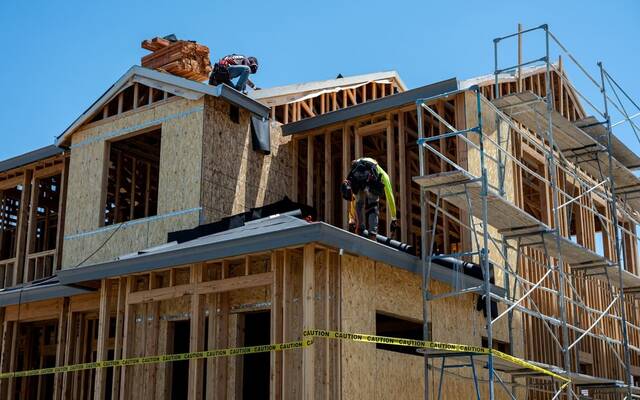
American homebuilder confidence dropped to its lowest level in over 14 years this October, driven by rising mortgage rates near 7.4% and escalating construction costs linked to Middle East energy shocks. The National Association of Home Builders and Wells Fargo Housing Market Index fell three points to 29, severely stalling buyer traffic.
Sentiment across the residential construction sector has plunged to levels not seen since the summer of 2012. The Housing Market Index, compiled by the National Association of Home Builders and Wells Fargo, dropped three points to 29 in October, sliding well beneath the key breakeven threshold of 50 that separates positive market sentiment from negative territory. Economists surveyed by Reuters had anticipated a more modest drop to 31 points, but compounding headwinds pushed the gauge below expectations.
The contraction reflects a deep affordability squeeze. Freddie Mac released a statement on Thursday, October 15, 2026, reporting that the average interest rate for a standard 30-year fixed home loan stood at 7.4%, marking the highest level for the rate since November 2023, compared to approximately 6.27% during the same period last year.
Energy Pressures and Borrowing Costs Keep Buyers Sidelined
Builders are navigating a volatile convergence of supply-side constraints. Robert Dietz, NAHB Chief Economist, noted that these factors are keeping more buyers on the sidelines, pointing to global energy pressures and elevated borrowing costs as persistent headwinds.
Geopolitical friction has direct financial consequences on the ground. The conflict involving the United States, Israel, and Iran has stoked inflationary pressures, lifting Treasury yields alongside the cost of energy-tied building supplies and diesel fuel. At the same time, import tariffs have added extra expense to raw materials.
Labor shortages compound the operational gridlock. Bill Owens, head of the National Association of Home Builders, explained that more than a third of home builders observed immigration enforcement activities across their job sites over the past month. This enforcement triggered construction delays and deterred authorized workers from reporting to work.
Builders Cut Home Prices to Attract Hesitant Buyers
With unsold inventory accumulating and prospective buyers hesitating, building companies are leaning heavily on price cuts and financial concessions. 43% of builders lowered home prices in October to attract buyers—representing the highest share recorded between 2020 and 2026—while maintaining an average price reduction of 6% for the seventh month. Meanwhile, 65% of firms offered sales incentives, marking the nineteenth straight month that at least 60% of builders used concessions to move inventory.
All three major components of the housing market index moved downward in October:.

- Current sales conditions dropped two points to 33.
- Future sales expectations fell five points to 32.
- Prospective buyer traffic tumbled five points to 18.
Robert Dietz said that higher mortgage rates, soaring construction costs, and weak consumer confidence are deterring more buyers from entering the market, resulting in buyer traffic plunging to its lowest level since April 2012, excluding the onset of the COVID-19 pandemic in April 2020.
Broader Housing Slump Ahead of the Midterms
The broader residential real estate sector reflects parallel weakness. Sales hit their lowest levels since 2014, except for the first months of the pandemic in 2020, according to seasonally adjusted data from brokerage firm Redfin.
These converging pressures place housing affordability at the center of political debate as the nation approaches the November 3 midterm congressional elections. Earlier this year, President Donald Trump declined to sign a bipartisan congressional measure aimed at tackling housing costs, dismissing it as too boring
while pushing for separate, contentious voting requirements.