“You need to understand that whenever an offensive security person smiles and gets excited, it’s bad.” On Tuesday, a classified communications network operated by the National Security Agency went down during what officials characterized as “routine maintenance,” as reported by a defense official speaking to The Associated Press anonymously to discuss confidential matters.
That disruption arrived alongside a wave of failures across critical services. Microsoft Outlook went dark for a bit, Air Traffic Control faced issues that grounded flights, and an operational issue at JPMorgan Chase sent ripple effects through the financial system, alongside an internal systems outage at United Airlines that delayed departing flights. People face an era where digital breakdowns feel nearly constant.
How Artificial Intelligence Democratized Hacking and System Exploits
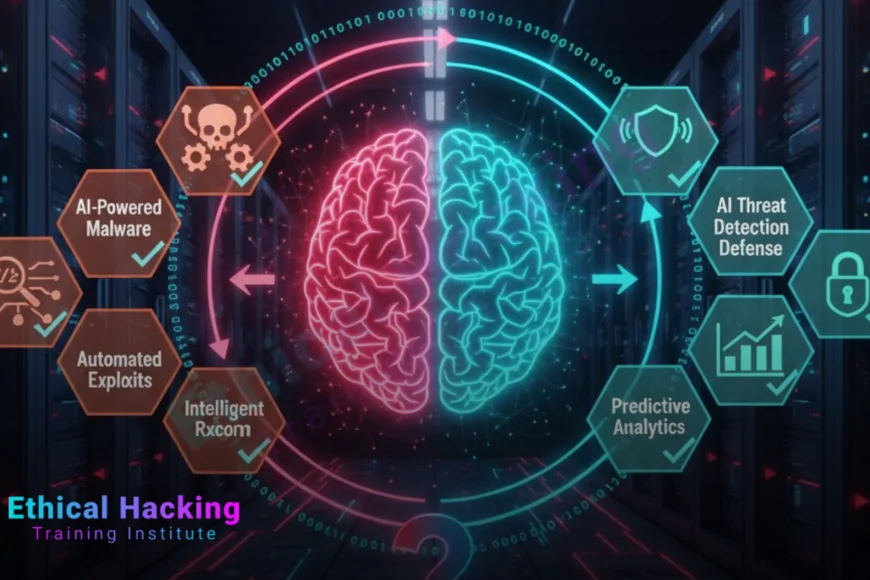
Artificial intelligence transforms how vulnerabilities are discovered and weaponized while technical issues cause separate hiccups. Taking control of a system previously required specialized skills honed over a career in government service or criminal organizations. New AI models and autonomous agents have lowered that barrier.
Offensive security professionals have noticed a sharp change, as John Strand explains. Strand serves as owner and CEO of Black Hills Information Security, where his job involves testing systems for weaknesses and thinking like an attacker. He said that the cyber capabilities of AI models began to surge near the end of 2025.
You need to understand that whenever an offensive security person smiles and gets excited, it’s bad.
John Strand, owner and CEO of Black Hills Information Security, via CNET
New models excel at finding weaknesses in code. Automated agents handle time-consuming tasks.

Strand said that operators are “seeing something that can automate the kind of grinding grunt work of offensive security and bring that to a human operator much faster.” Attackers use harnesses to direct an AI model to perform specific tasks effectively. One prominent harness, Artex, prompted a warning from the FBI last week.
Major South Korean financial institutions suffered a data breach involving personal information during September and October. CrowdStrike determined the attacker was likely a 26-year-old in China using Artex after asking an AI model how to execute the attack and how to sell the stolen data on Telegram.
Surging Vulnerabilities and the National Vulnerability Database Backlog
The total number of recorded vulnerabilities surpassed 100,000 this week, illustrating the sheer scale of software flaws discovered in 2026. Roughly 25,000 vulnerabilities were recorded in 2022, before large language models went mainstream. This year’s figure is already double the combined totals of 2024 and 2025.
Researchers recently disclosed that they used AI to find critical vulnerabilities in PHP, the open-source web server software NGINX, and the programming language Java. Forbes also reported on 35 vulnerabilities across iPhones, Macs, iPads, Apple Watches, and other Apple products discovered through AI assistance.

The PHP vulnerability reported in October—which carried an urgent patch notice from the PHP Foundation—stemmed from work through Patch the Planet, part of OpenAI’s Daybreak. The National Vulnerability Database received more than 10,000 instances of common vulnerabilities and exposures in November alone, following more than 17,000 CVEs in October. In October 2025, that monthly figure sat below 5,000. An influx of flaws has overwhelmed tracking systems.
The total volume has exploded while the number of critical flaws requiring urgent attention remains fairly stable, as Katie Slowik notes. “The caveat is that the pace at which they’re being used or weaponized has increased dramatically,” Slowik points out. Not every discovered flaw carries equal weight.
Security researchers warn that AI models can reverse-engineer proprietary code running physical infrastructure, such as internet-connected grocery store freezers. Automated code analysis extends far beyond digital services in its consequences. Employees at a supermarket in Sweden had to empty their freezers after a cyberattack raised internal temperatures to 50 degrees Celsius, according to Johan Nilsson of the TT News Agency via AFP and Getty Images.
Software engineering departments across the technology sector have faced deep staff reductions at the same time. Major tech companies laid off thousands of workers over the course of the year. Microsoft offered buyouts to 60,000 staff members in October—a decision that drew renewed scrutiny when its Outlook service went dark weeks later.
Fixing software vulnerabilities requires rigorous human oversight, according to Lea Schönherr, a tenure-track faculty member at the CISPA Helmholtz Center for Information Security in Germany.
AI can help, but people still need to understand what went wrong, check that the patch addresses the cause, and look for similar issues elsewhere.
Lea Schönherr, tenure-track faculty member at CISPA Helmholtz Center for Information Security
Lea Schönherr also said that rolling out patches across widely used systems takes time.
Managing the Two-Year Transition Period for Digital Security
Industry leaders expect the turbulence to persist as systems adapt to automated threats and code generation. Matthew Prince, CEO and cofounder of Cloudflare, predicts that “it’s going to feel like the sky is falling for two years.” He suggests that over time, defenders will use AI acceleration to secure software more effectively, reducing common vulnerabilities and lowering background noise.
Black Hills Information Security, founded in 2008, provides penetration testing, consulting, and defensive security services to organizations ranging from community banks to Fortune 100 companies. The firm is known for a collaborative approach that aims to empower client staff through clear, actionable reports, and for producing open-source tools, webcasts, podcasts, and the incident response card game Backdoors & Breaches for tabletop exercises.
Others share the view that growing pains will yield a more resilient digital infrastructure.