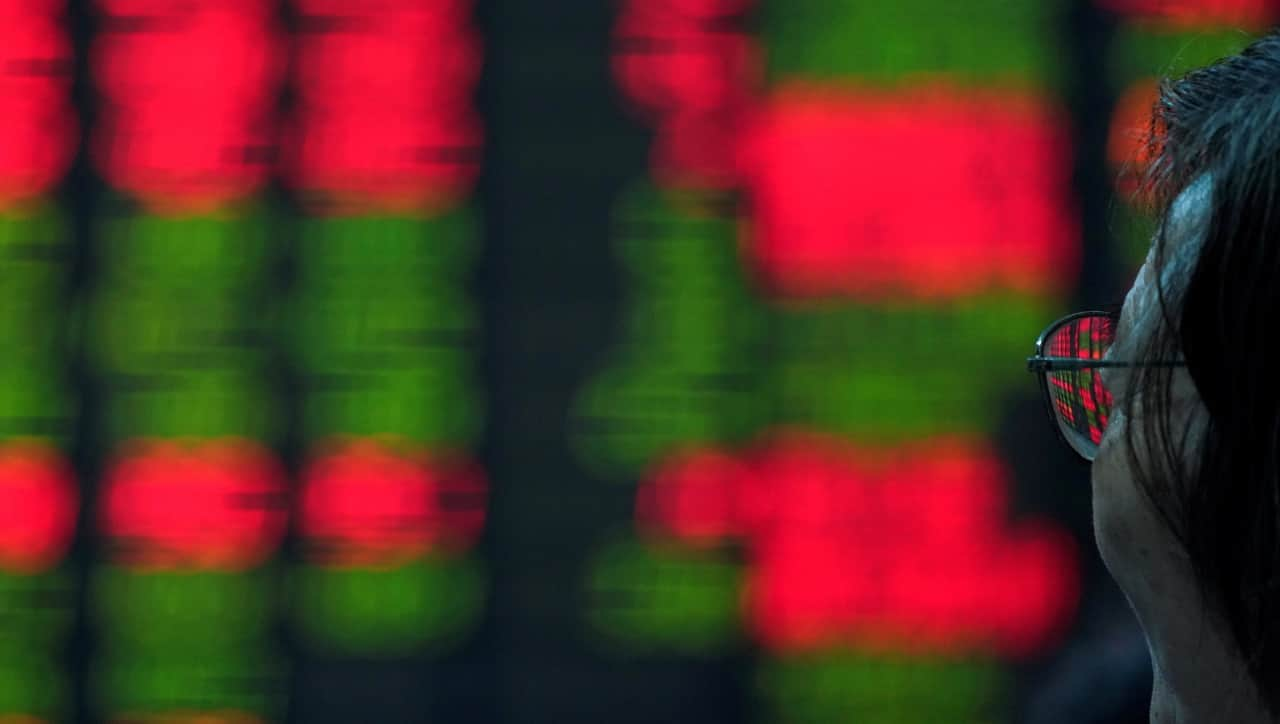
China’s high-flying artificial intelligence sector suffered a combined $1.7 trillion market value loss across three major technology indexes since the end of June, transforming a dominant market rally into a steep financial retreat.
The sharp pullback reflects a mix of frothy early valuations, heavy policy reliance, and intensifying international trade pressures. On Friday, the benchmark Shanghai Composite Index declined 1.2 percent to finish the week down 2.8 percent, according to figures from Source 4.
Market Losses and Hardware Slump
The technology sell-off hit mainland hardware producers and Hong Kong-listed internet conglomerates alike. On the onshore exchanges, the ChiNext board plunged 8.8 percent over five trading days, and the Shenzhen Composite Index fell 3.1 percent on Friday to wrap up a weekly loss of 6.5 percent.
Major hardware and component providers felt the brunt of the pressure. ChangXin Memory Technologies, recognized as China’s top memory chipmaker, lost 6.2 percent on Friday. At the same time, graphics processing unit designer Moore Threads dived 11 percent, optical module producer Zhongji Innolight fell 3.7 percent, and robot maker Unitree slipped 1 percent.
In Hong Kong, the Hang Seng Index retreated 5.2 percent for the week following a 1.9 percent decline on Friday, with its dedicated tech index losing 3.8 percent. Tencent holdings fell 1.3 percent after reporting third-quarter revenue that missed market forecasts.
Other notable drops included Z.ai losing 7.2 percent, Minimax plunging 10.8 percent, Kuaishou tumbling 11.4 percent, and NetEase diving 19 percent following a decline in third-quarter profit and revenue. Even SenseTime saw its shares drop 3.3 percent despite posting higher revenue and profit.

Amid the broad downturn, select tech titans posted contrasting results. Alibaba Group shares rose 3.5 percent after announcing that net income for its fiscal second quarter ending September 30 tripled to 64.4 billion yuan alongside a 10 percent revenue increase that beat forecasts. Lenovo shares edged up 0.6 percent after reporting a record quarterly profit surge of 166 percent when excluding a one-time warrant loss.
US Export Curbs and Supply Chain Pressures
Washington’s regulatory measures continue to weigh on domestic ambitions. Draft rules released by the United States earlier in November effectively block Chinese firms from renting cutting-edge processors from Nvidia and other providers via overseas data centers, closing an important channel used to train next-generation models.
Tencent informed investors during an earnings call that the development of its upcoming HY4 model might face delays due to hardware limitations, though management expects local supply chains to help bridge the gap over time. Meanwhile, Alibaba stated it projects its cloud sales growth to moderate to between 30 percent and 45 percent next year before rebounding past 50 percent in 2028.
“Investors are worried both about an AI capex slowdown and whether US-China supply chain business is sustainable.” Bush Chu, investment director of China equities at Aberdeen Investments, said.
“As a China fund manager, experiencing this year’s wild swings and second-half selloff has honestly left us pretty speechless,” Chu said.
Analysts note that institutional sentiment remains cautious. “The key issues are weak AI monetization, compute bottlenecks, intense competition and margin pressure,” said Nick Ferres, chief investment officer at Vantage Point Asset Management, adding that the “escalation in US tech and compute curbs adds another dimension to the downside pressure.”
Economic Risks for Beijing and Retail Sentiment
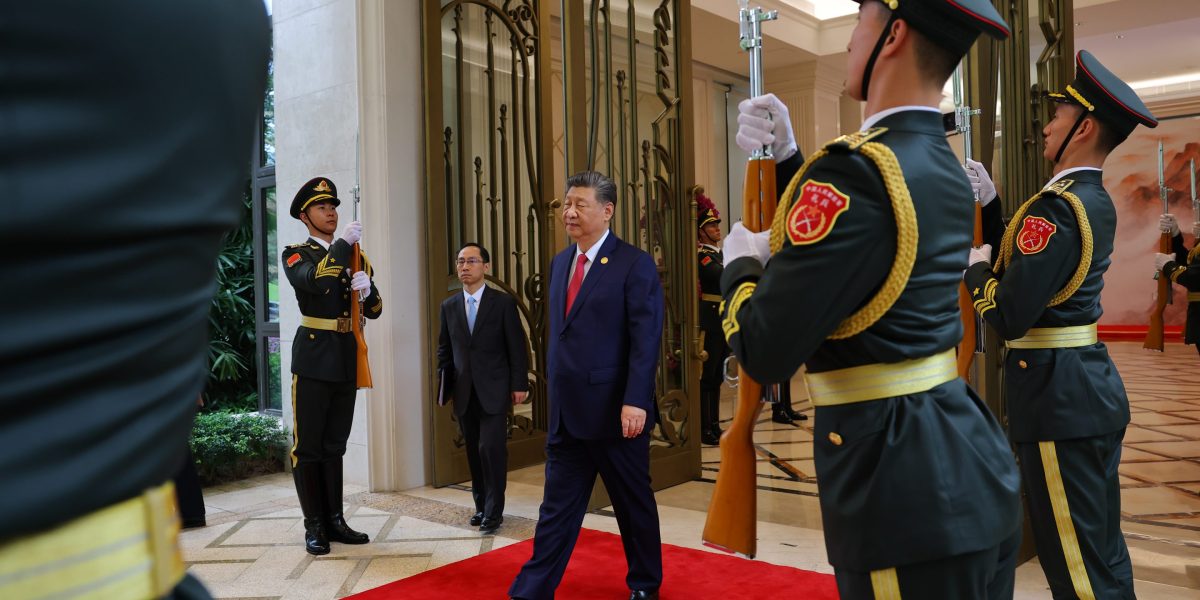
The correction affects government economic strategy more broadly. According to Yardeni Research, the market downturn threatens President Xi Jinping’s objective of redirecting household savings away from a troubled real estate market—which accounts for roughly 70 percent of household wealth—and into equities to finance domestic technology infrastructure.
Retail participants remain hesitant following past market interventions and regulatory crackdowns, keeping the Shanghai Composite Index well beneath its October 2007 peak despite substantial GDP growth over the same period.
“Yet this is a moment of real danger for Xi. A bursting AI bubble would not merely erase wealth or dent China’s technological prestige. It would weaken Beijing’s attempt to replace a broken property model with a stock-market-led one,” Yardeni said.
To support market stability, Premier Li Qiang informed a State Council executive meeting earlier in the month that prioritizing capital market stabilization remains the top objective for the remainder of the year. Regulators have moved to ease corporate buyback requirements while discouraging large share sales to prevent further dilution.

Alibaba Group was founded in a Hangzhou apartment in June 1999 by Jack Ma and 17 friends and students as a business-to-business marketplace. Its American initial public offering on the New York Stock Exchange in September 2014 raised US$25 billion, marking the largest IPO in world history at that time.
The company operates the world’s largest B2B, C2C, and B2C marketplaces through Alibaba.com, Taobao, and Tmall, and became the second Asian company to surpass a US$500 billion valuation in early 2018.
Valuations have adjusted across the board, though market participants hold diverging views on entry points. While major Hong Kong-listed internet firms trade at low forward multiples—such as Alibaba at 10 times forward earnings estimates—onshore chipmakers like SMIC continue to command higher valuations at 80 times earnings.
Earlier coverage: China Hosts World Leaders in Shenzhen's AI Hub: What They Won't See