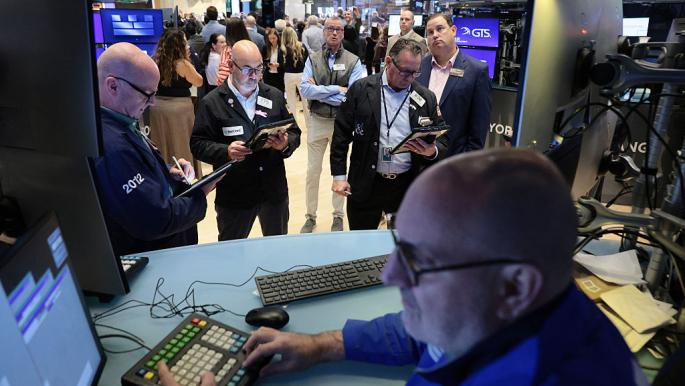
Global gold prices hovered near $4,165 to $4,180 per ounce by mid-October 2026, holding firm above key technical supports despite strong US inflation data and shifting Federal Reserve rate expectations. Sovereign buying and safe-haven demand underpinned the yellow metal as energy markets and currency fluctuations rattled global trading desks.
Precious metals faced a complex web of crosscurrents through mid-October 2026, balancing persistent US inflationary pressures against aggressive central bank reserves accumulation. Spot gold traded around $4,165 to $4,180 per ounce, recovering from an intraday dip near $4,075 earlier in the week as traders weighed the path of monetary policy.
Federal Reserve Rate Speculation and US Inflation Data Drive Market Volatility
Market sentiment shifted sharply following higher-than-expected US economic reports. September consumer price index and core producer price index metrics outpaced forecasts, driven largely by climbing energy and fuel expenses. Producer prices recorded their largest jump in four and a half years.
Federal Reserve officials offered measured responses to the sticky inflation prints. Chicago Fed President Austen Golsbee called the stronger-than-expected readings disappointing during statements covered by the newswire reporting. Meanwhile, Cleveland Fed leader Beth Hamack noted that the central bank might need to accelerate interest rate hikes if public inflation expectations deteriorate significantly.
According to CME FedWatch tool metrics, trader probabilities for keeping interest rates unchanged through the December meeting shifted from 6% up to 11%, while bets on a 25-basis-point increase dropped from 94% to 89%. The dollar index slipped to a two-week low near 102.73, easing pressure on dollar-denominated bullion, while the SPDR Gold Trust reported holdings decreasing by 0.29 metric tons to 1,053.91 metric tons on Thursday.
At the close of the week, December 2026 gold futures rose 0.3% to settle at $4,181.10 per ounce, registering a weekly loss of 0.83%. Spot gold was recorded at $4,159.89 per ounce, while Brent crude oil futures dropped 41 cents to $105.51 per barrel and US West Texas Intermediate crude fell 54 cents to $97.43 per barrel. Silver spot prices declined 0.62% to $57 per ounce, platinum slipped 0.13% to $1,629.53 per ounce, and palladium fell 1.4% to $1,115.76 per ounce.
Central Bank Sovereign Buying and India Investment Fund Restrictions Shape Demand
Institutional accumulation remained a powerful anchor for the yellow metal. Long-term projections from major financial institutions offered varied targets, with Citigroup setting a near-term target of $4,800 per ounce across a three-month window, HSBC projecting a 2026 average of $4,490 per ounce, and Morgan Stanley establishing a fourth-quarter target of $4,450 per ounce, alongside JPMorgan anticipating $4,500 during the fourth quarter.
Retail and investment channels experienced localized supply friction. In India, several major mutual fund managers announced the temporary suspension of large subscriptions for gold-backed exchange-traded funds just ahead of peak regional festive buying seasons.
كبير محللي الأسواق المالية في "FXPro" ميشال صليبي يوضح فرص الذهب وسندات الخزانة وكيفية توزيع المحفظة الاستثمارية وسط رهانات الفائدة والتضخم#العربية_Business pic.twitter.com/FD2a8RWaQf
Technical Support Levels and Regional Market Reactions
Precious metals experienced heavy swings alongside wider equity corrections driven by technology sector volatility. In Asia, South Korea’s KOSPI index tumbled roughly 8% and Japan’s Nikkei declined 5%, spurring capital flows into fixed-income assets and lowering US Treasury yields.
Regional gold traders noted that technical floors held firm. Mohamed Salah, chief operating officer at Subeekh, noted that gold successfully defended the $4,000 threshold despite strong inflationary counterwinds, adding that short-term price movements are increasingly driven by energy costs and oil price swings.
Kelvin Wong said that gold remained confined within a price range with a ceiling of $4,221, while touching the lower end of the range at $4,075 earlier in the week.
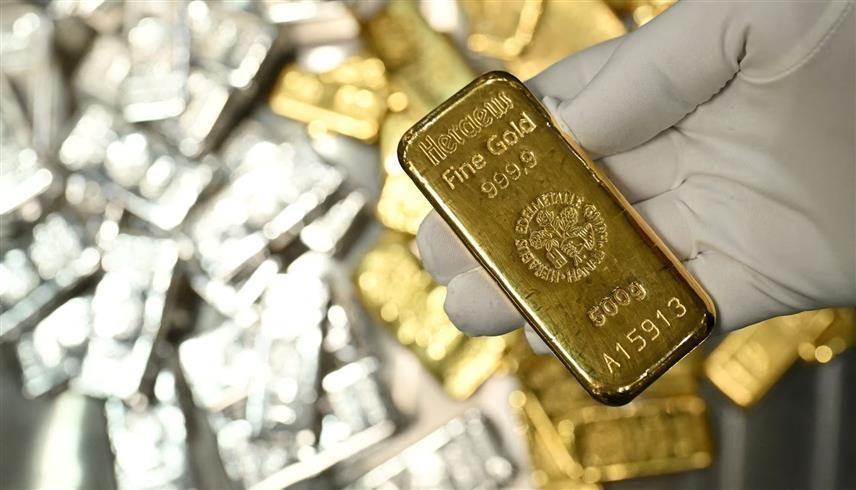
Dar Al-Sabaek analysts in Kuwait reported in a weekly market brief that continuous geopolitical tensions and evolving US monetary signals will dictate near-term trading boundaries, with immediate technical resistance identified near $4,200 per ounce, and initial support levels established at $4,150 and $4,100 per ounce.
Analyst Paul Aon Investments noted that geopolitical use of the US dollar encourages central banks to diversify reserves into safe havens like gold, while Ian Cockrell, chief executive officer of Endeavour Mining, pointed out that the $4,000 level serves as a major psychological floor prior to potential new upward waves.