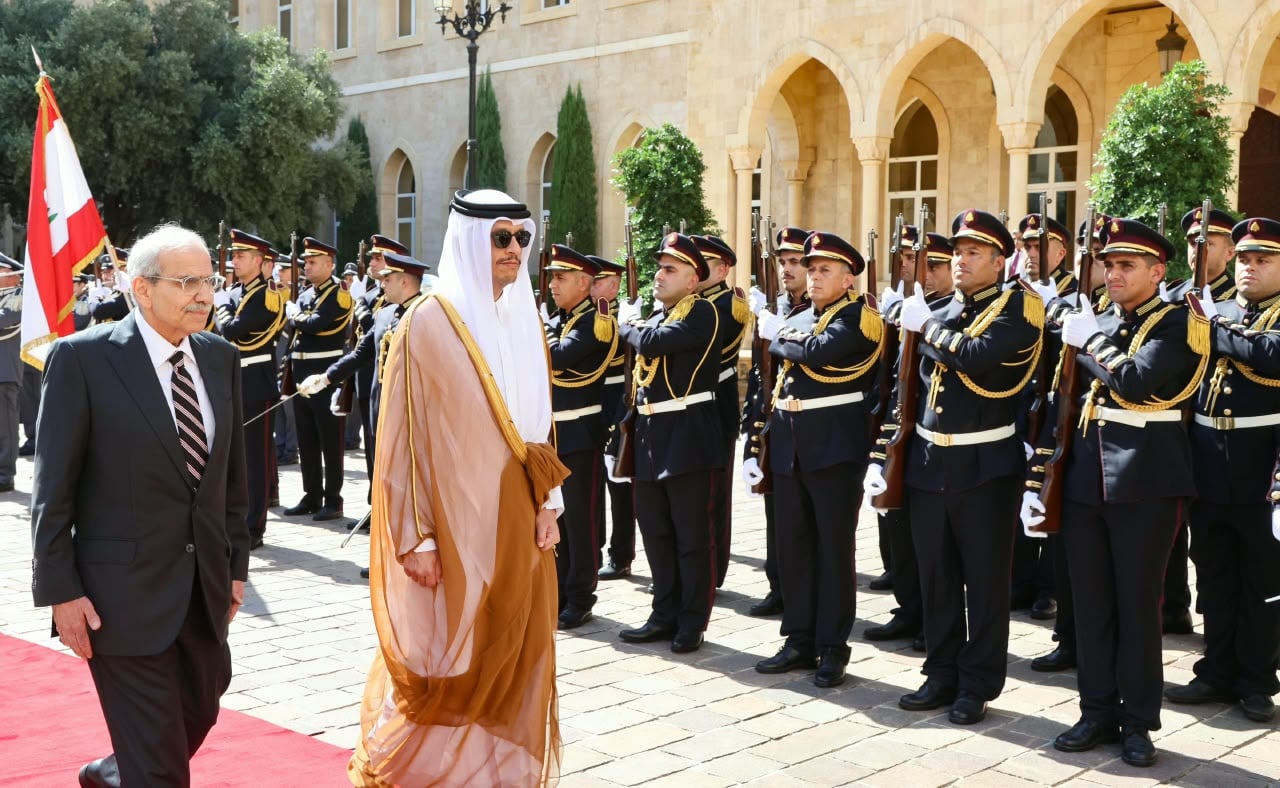
Lebanon and Qatar are finalising a major bilateral agreement for a comprehensive energy overhaul, featuring zero upfront costs for the Lebanese treasury, a solar partnership with TotalEnergies, and long-term infrastructure development discussed during Qatari Prime Minister Sheikh Mohammed bin Abdulrahman bin Jassim Al Thani’s visit to Beirut in October 2026.
A high-level diplomatic and economic push is reshaping Lebanon’s energy sector as Prime Minister Nawaf Salam announced that a landmark government-to-government accord with Qatar is nearing final approval. The initiative aims to overhaul and modernize the country’s crippled power production infrastructure, tackling decades of chronic outages without straining public finances. Lebanon has suffered from a severe power provision crisis for years, which grew significantly worse following the financial and economic breakdown that began in 2019 alongside a critical shortage of foreign currency needed to import generator fuel.
The push follows intensive talks in Beirut led by Qatari Prime Minister and Minister of Foreign Affairs Sheikh Mohammed bin Abdulrahman bin Jassim Al Thani, who met with top Lebanese officials including President Joseph Aoun, Parliament Speaker Nabih Berri, and Salam.
Building Power Generation Under a Build-Operate-Transfer Model
The core of the Qatari initiative centers on a comprehensive investment model designed to bypass Lebanon’s severe capital constraints. Rather than relying on temporary fuel shipments or piecemeal fixes, the project will be structured around a Build-Operate-Transfer framework where entities handle creation and operation before returning assets after a set timeframe typically spanning twenty to twenty-five years.
Nawaf Salam said that this is of paramount importance given the financial circumstances Lebanon is going through, because it allows us to bypass the financing obstacles that have delayed for many years the implementation of essential projects in the electricity sector, and to move to a practical path to address the chronic shortage in production.
Under this arrangement, Qatari entities will handle financing, implementation, and initial operation without any upfront capital expenditure required from the Lebanese treasury. Minister of Energy and Water Joe Al-Saddik noted that the overarching framework agreement will be formally submitted to the Council of Ministers and subsequently referred to Parliament, with technical teams meeting to finalize implementation details. Lebanese and Qatari stakeholders have previously explored cooperative steps, including an official letter submitted in 2024 by a consortium of Total and QatarEnergy to former Prime Minister Najib Mikati to develop a 100-megawatt photovoltaic solar project.
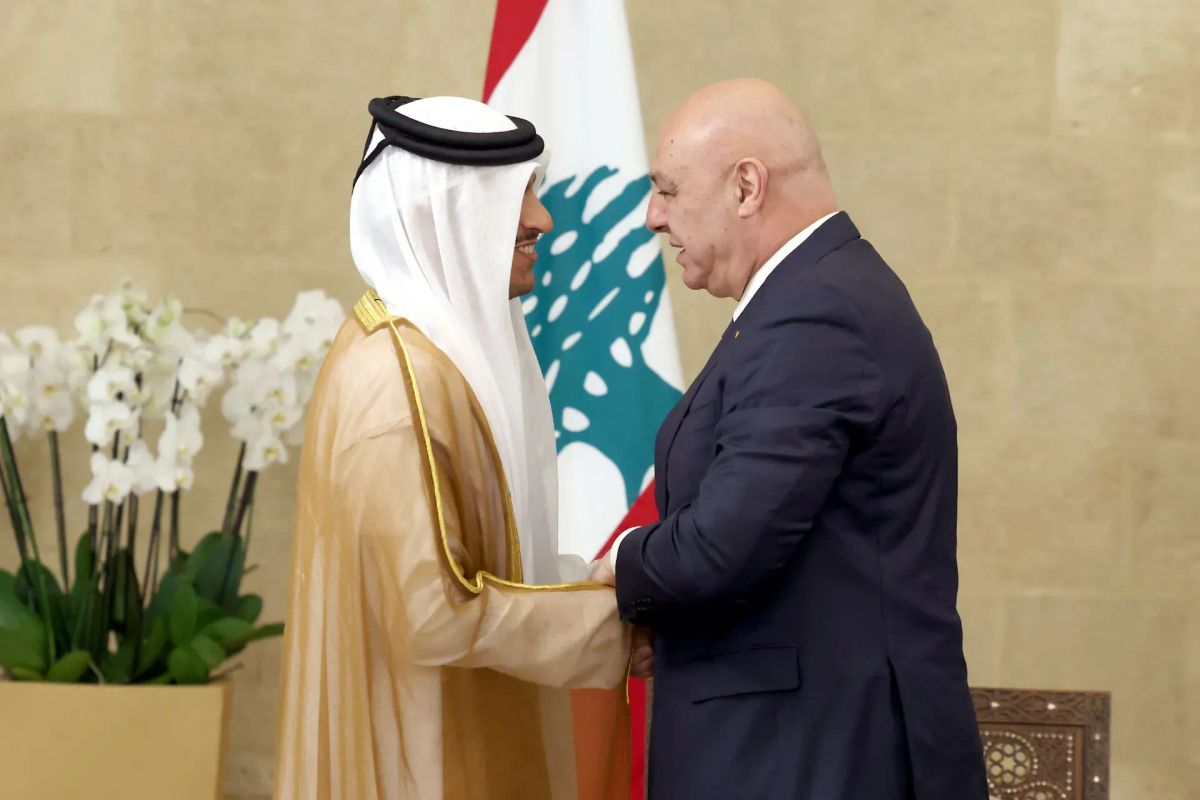
QatarEnergy and TotalEnergies Agree to Build Solar Plant
As an immediate stepping stone toward the broader infrastructure overhaul, QatarEnergy has agreed with French energy major TotalEnergies to jointly develop a solar energy facility in Lebanon. Lebanese Energy Minister Joe Al-Saddik detailed to MTV that the initial solar plant—slated for land allocated to the Lebanese Armed Forces—is expected to generate between 100 and 150 megawatts. This follows earlier Qatari proposals in 2023, delivered by Minister of State for Energy Affairs Saad bin Sherida Al Kaabi, offering to construct three alternative energy plants in partnership with Total to supply up to 500 megawatts.
Beyond solar power, the wider blueprint discussed by specialists incorporates multiple energy sources, with unofficial timelines pointing toward supplying 300 megawatts through Syria within the first six months, scaling to 2,000 megawatts across two years, and reaching 3,000 megawatts inside three years.
📰 Qatari Prime Minister and Foreign Minister: Joint Energy Project with Lebanon Nears Implementation💬 AnalysisThe significance of the announcement is that it moves Qatari-Lebanese cooperation in the energy sector from the level of political commitments and urgent support to…
- Importing liquefied natural gas (LNG) over a 20-year horizon, supported by a floating storage and regasification unit in northern Lebanon.
- Constructing and upgrading power plants running on natural gas, wind, and solar alternatives.
- Utilizing regional grid connections and gas pipeline infrastructure running through Syria, using Qatar's prior experience in rehabilitating neighboring energy grids from zero generation to full 24-hour supply.
- Reactivating infrastructure tied to the Deir Ammar power plant alongside grid interconnections.
Energy Specialists Caution Structural Challenges Remain
While the prospect of large-scale Qatari investment offers relief from crippling blackouts and high diesel generator costs, energy specialists and local officials caution that structural challenges remain.
To ensure financial viability and transparency, the preparation phase is being coordinated with the International Finance Corporation to adhere to strict governance standards.
More on Lebanon
Qatar to finance project to overhaul Lebanon’s struggling electricity sector——Qatar will support efforts to revive Lebanon’s struggling energy sector and address longstanding problems with reliable electricity supply, the Lebanese and Qatari prime ministers said on Friday.“We… pic.twitter.com/ZVQOYTjI9y
QATAR AND LEBANON DISCUSS ENERGY COOPERATION AND REGIONAL STABILITYQatar and Lebanon discussed strengthening bilateral relations, expanding energy cooperation, and promoting regional stability during meetings in Beirut. Qatar reaffirmed its support for Lebanon’s sovereignty,… pic.twitter.com/7pKNd5JEbl
🇶🇦🇱🇧 Qatar pledges to help modernize Lebanon's energy sector with electricity projecthttps://t.co/Zfsj8SahjV