The wealth management industry is undergoing a structural transformation as firms navigate the dual pressures of technological disruption and shifting client expectations. At the 2026 Advisors to Watch Summit in New York, industry leaders articulated a clear consensus: the future of advisory practices rests on the ability to leverage artificial intelligence for operational efficiency while simultaneously deepening the human connection that technology cannot replicate.
- Capacity Reinvestment: Firms are shifting focus from time-saving automation to using that saved capacity for “advisor plus” services, including complex tax, insurance, and balance-sheet management.
AI Integration and the Risk of Work Slop
The role of artificial intelligence in wealth management is moving beyond basic task automation toward augmentation. Jeffrey T. Hancock of Stanford University and Paul Brunswick of Invesco highlighted the distinction between using AI to accelerate routine tasks and using it to improve the quality of client discovery. However, the industry faces a significant hurdle: “work slop,” where AI-generated output requires extensive human oversight to correct or finalize.
The Most Game-Changing Company in WealthJosh Brown sits down with @altruist founder and CEO @jasonwenk to discuss the future of wealth management, Altruist’s Hazel AI, the Vanguard acquisition, what the fastest-growing advisory firms are doing differently, and much more!👇🎙️ pic.twitter.com/06pivOZDeU
Successful firms are now treating AI as a tool for preparation rather than a substitute for professional judgment. Patrick O’Connor of Raymond James Private Client Group emphasized that as AI-driven productivity becomes a baseline expectation, firms will differentiate themselves by reinvesting that time into high-touch client service. Transparency remains paramount; the panel warned that undisclosed adoption of AI can erode the foundational trust between advisor and client.
The Evolution of Portfolio Protection
Macroeconomic uncertainty is forcing a re-evaluation of portfolio construction, particularly regarding precious metals and critical materials. Ed Coyne of Sprott Inc. noted that gold remains a primary tool for liquidity and protection, but the conversation has expanded to include uranium and copper. These commodities are increasingly viewed through the lens of structural demand rather than simple price volatility. As AI infrastructure requires dependable power, uranium’s role in nuclear electricity has gained renewed attention, while copper remains a critical component for grid electrification.

Scaling Beyond the Founder
Many advisory practices are hitting a “growth ceiling” caused by limited capacity rather than a lack of prospects. David Karr of Equitable Advisors argued that firms must move away from solo-founder models to team-based structures to maintain service quality as assets under management grow.
“The challenge isn’t just about hiring more bodies; it’s about creating an organizational architecture where the advisor’s personal touch is a scalable product, not a bottleneck,” noted a senior consultant at a major RIA custody firm who requested anonymity due to ongoing M&A activity.
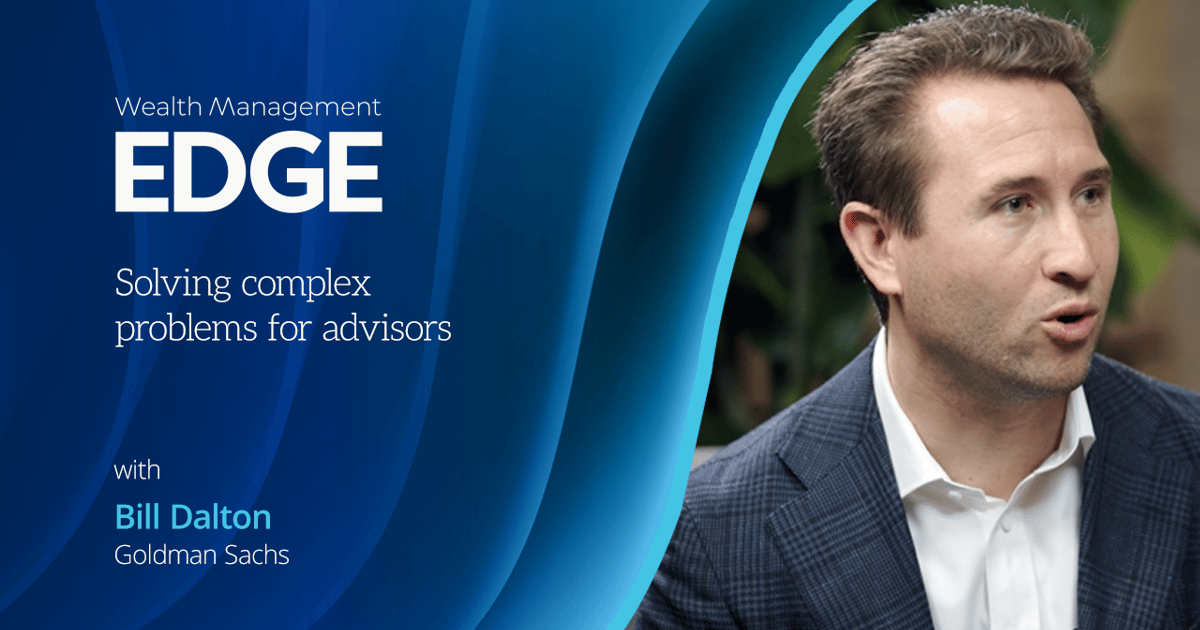
For independent firms, scaling requires a robust infrastructure. Bill Dalton of Goldman Sachs and Nate Lenz of Concurrent highlighted that as firms scale, they must prioritize custody relationships and centralized support systems that simplify rather than complicate the daily workflow. This infrastructure is essential for attracting and retaining the next generation of talent, who require clear paths to ownership and meaningful client responsibilities.
The Future of Advisory M&A
Allen Darby of Alaris Acquisitions cautioned that AI efficiency will not automatically increase a firm’s valuation.
Impact on the Main Street Investor
As advisory firms move toward “advisor plus” platforms, clients can expect more holistic financial planning that integrates lending, tax, and insurance services directly into their portfolio management. This shift toward “serving the entire balance sheet”—as argued by Matthew Franks of RBC Wealth Management—means that investors may find it easier to secure liquidity against concentrated stock or business-related real estate without triggering taxable events.
However, this evolution also places a higher premium on transparency. As firms adopt more complex AI and lending tools, investors must ensure their advisors are clearly communicating the costs and risks associated with these services.
The firms that treat succession and talent development as an ongoing investment, rather than a late-stage requirement, are positioned to capture the greatest share of the market as the industry continues its transition toward scale and specialized service.
Disclaimer: The information provided in this article is for educational and market analysis purposes only and does not constitute financial, investment, or legal advice. Always consult with a certified financial professional before making investment decisions.