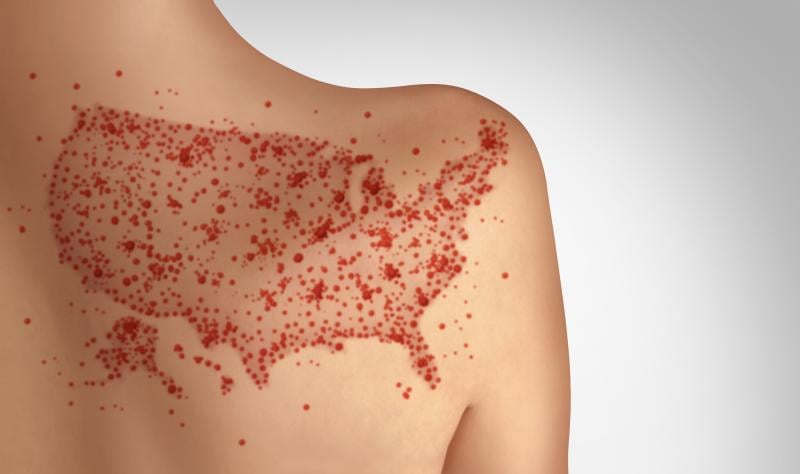
The United States faces the loss of its measles elimination status this week as a Pan American Health Organization commission convenes in Washington, D.C., to review continuous virus transmission that began early last year.
PAHO Commission Reviews U.S. Elimination Status
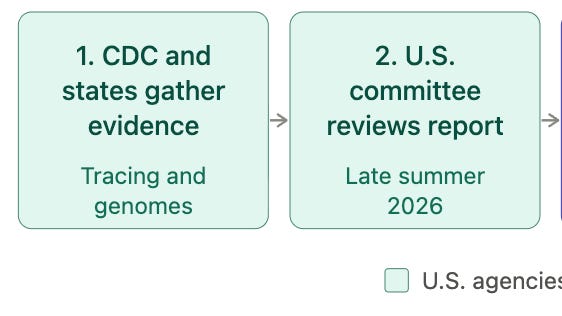
The Pan American Health Organization’s Measles and Rubella Elimination Regional Monitoring and Re-Verification Commission runs its annual meeting from November 10 to 13. The independent technical body reports directly to PAHO and examines whether the same virus genotype and lineage has circulated uninterrupted for at least 12 months in a specific area.
For the United States, PAHO set the analysis period to begin with the West Texas outbreak on January 20, 2025. An independent panel of eight experts evaluates whether the nation has seen continuous transmission for a full year. The commission presents its recommendations to the PAHO Director, who then formally informs national authorities of the final classification.
Endemic transmission was judged to have returned to Canada by the commission in November 2025, an event that stripped the Americas of their designation as free from endemic measles. Brazil lost its status in 2019 but regained it in 2024. The Americas as a whole recorded 57,666 cases, alongside 53 deaths in Guatemala and 23 deaths in Mexico.

One could hypothesize that they didn’t want to annoy the administration before the election.
Measles Cases and Deaths Rise Across 45 States
The Centers for Disease Control and Prevention confirmed 5,182 measles cases across 45 states and Washington, D.C., as of November 5, 2026. That total compares to 2,289 confirmed cases for all of 2025.
State health departments have reported eight measles-associated deaths this year, including six in Pennsylvania, one in New York, and one in Wisconsin. Wisconsin’s death included an infant, marking the state’s first measles-related fatality since 1990. Three people died of measles in 2025, while no deaths were recorded from 2016 through 2024.
State-level totals show heavy concentration in specific jurisdictions. Pennsylvania reported 1,487 confirmed cases across 45 counties as of November 6. Ohio recorded 310 confirmed cases since January, with Ashtabula, Geauga, and Wayne counties accounting for roughly half of the statewide total.
Geauga County recorded 54 cases and Ashtabula recorded 47. Wisconsin reported 431 cases as of November 3. Nationally, the CDC reports that 96% of measles cases are in individuals who are either unvaccinated or whose vaccination status is unknown.
Kindergarten MMR coverage dropped to 92.4% in the 2025–2026 school year, down from 95.2% in the 2019–2020 school year. Vaccination rates vary by state; 18 states report MMR kindergarten coverage below 90%, including Idaho at 75.2%. Historical context highlights that in the decade before the measles vaccine became available, nearly all children contracted measles by age 15, resulting in 3 to 4 million infections annually, approximately 48,000 hospitalizations, 400 to 500 deaths, and about 1,000 cases of encephalitis or brain inflammation.
CDC Maintains Current Outbreak Response Despite Status Changes
Centers for Disease Control and Prevention Director Dr. Erica Schwartz stated that the agency will not fundamentally change its outbreak response even if the United States loses its official elimination status.
Let’s say we did lose our measles elimination status. We’re going to be doing the same exact thing that we’ve been doing today, which is working with the states,
Schwartz said in an interview. Schwartz noted she expects a decision by early next week.
we are leaning in to help them provide awareness about measles, emphasizing, reemphasizing that the number one way to prevent measles is the MMR (combined measles, mumps and rubella) vaccine.
Dr. Erica Schwartz, CDC Director, via Yahoo
Schwartz pointed to closely knit communities with lower vaccination rates, such as the Amish in Pennsylvania, as a primary source of U.S. infections. These communities typically don’t vaccinate their children… their families were making decisions about the MMR vaccine 20 to 30 years ago and we’re just now seeing the results of those decisions,
she said.
U.S. Health and Human Services Secretary Robert F. Kennedy Jr., who oversees the CDC and other health agencies, has for years cast doubt on the safety and efficacy of the MMR vaccine.
In August, President Donald Trump and Kennedy unveiled an executive order calling for breaking up the MMR vaccine into three separate shots. Schwartz emphasized that Secretary Kennedy recognizes that she sits in her chair because the CDC needs a leader, adding that decisions and the agency’s focus rest on her shoulders.
Expert Perspectives on Public Health Standing
Michael Osterholm, director of the Center for Infectious Disease Research and Policy at the University of Minnesota, noted that revoking the status would merely recognize what’s been a fact on the ground for months
and compared it to needing no more assessments after a semi hits your car at 60 miles an hour.
Genetic data might reveal that distinct regions experiencing major outbreaks are actually sharing identical strains of the virus, according to comments made by Peter Hotez, co-director of the Texas Children’s Hospital Center for Vaccine Development and dean of the National School of Tropical Medicine at Baylor College of Medicine.
Andrew Handel, a pediatric infectious diseases physician at Stony Brook Children’s Hospital located in Stony Brook, New York, pointed out that early symptoms of measles often resemble standard respiratory bugs—such as a runny nose, cough, or conjunctivitis—before progressing toward more dangerous health issues like dehydration, pneumonia, and acute brain infections that trigger seizures.
Two doses of the MMR vaccine provide 97% protection against measles, and health officials emphasize that ample vaccine supplies remain available nationwide. Patients with concerns about eligibility, family vaccination schedules, or individual immunity levels are advised to consult qualified medical professionals.
Earlier coverage: U.S. Measles Cases Hit Highest Annual Total Since 1991, CDC Says