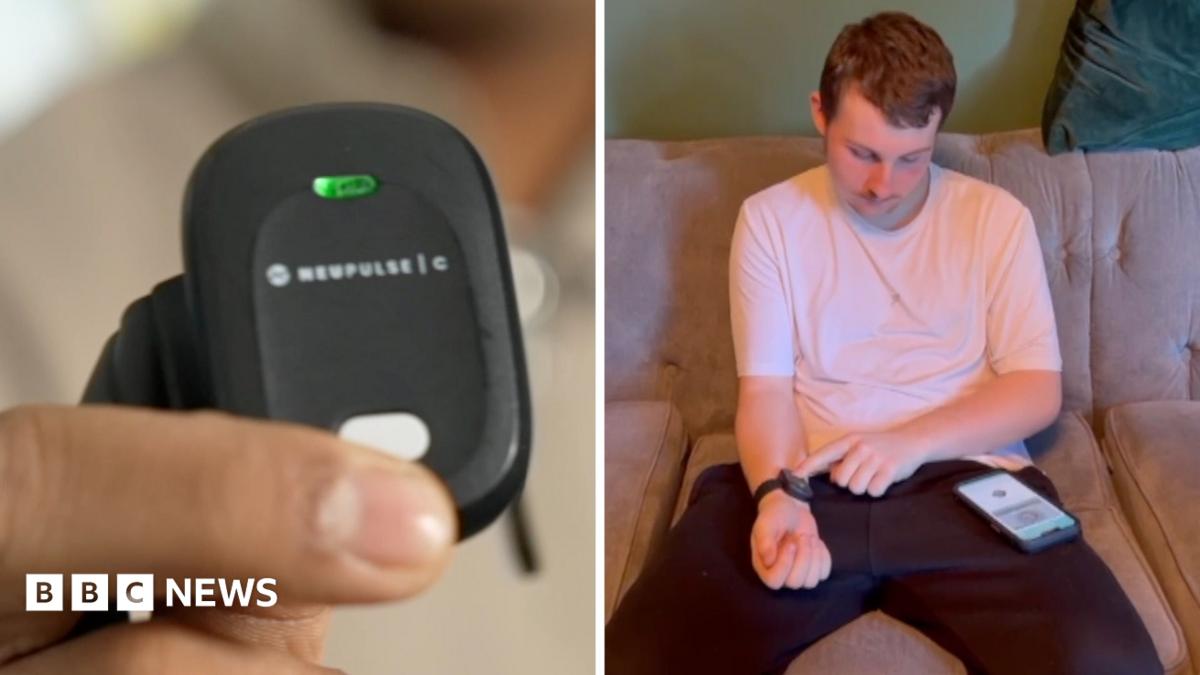
A wearable device designed to manage Tourette syndrome symptoms has shown the ability to reduce tic frequency and intensity by delivering electrical pulses to the median nerve at the wrist.
Researchers at the University of Nottingham developed the prototype device to target brain oscillations associated with movement control. By stimulating the median nerve, the device aims to suppress the involuntary sounds and movements that characterize Tourette syndrome. In a 2023 clinical trial involving 121 participants in the UK, the results showed it significantly reduces the severity and frequency of tics.
The project, led by Professor Stephen Jackson and Dr. Barbara Morera Maiquez of the university’s spin-out firm, Neurotherapeutics Ltd, has secured £1m in additional funding to support commercialization. The team is now working to transition from the research prototype to a version ready for public use.
Mylo, who was involved in the clinical trials, said the device would make “such a big difference”.

Other users have described the impact as life-changing. Katie, a 15-year-old, said her experience with the device provided relief in an “instant.” Similarly, 15-year-old Ollie from Cheshire, who was later diagnosed with Functional Neurological Disorder (FND), described the effect of turning the device on as being “like a light switch.”
The results of this trial mark an exciting step towards an effective, non-invasive treatment for Tourette syndrome that can be used at home. We are now focused on using the knowledge from the trial to develop a commercial device that can be made available to people with Tourette’s.
Dr. Barbara Morera Maiquez, Chief Research Officer at Neurotherapeutics Ltd
While the technology has shown promise, it remains in the regulatory approval process. The Neupulse-C is currently on sale as a wellness device. According to reports, the medical version has not yet received the necessary regulatory clearance for clinical use, and experts have advised that it cannot be recommended for the NHS until that approval is secured.
In 2025, the National Institute for Health and Care Excellence (NICE) indicated that its committee would meet to appraise the technology’s clinical and cost-effectiveness. As the team works toward broader availability, researchers are also exploring potential applications for the device in treating other conditions, including Parkinson’s tremors, anxiety, and obsessive-compulsive disorder (OCD).