University of Michigan researchers published a study in Nature on Wednesday revealing an experimental cancer strategy that tethers two prostate cancer-driving proteins into an inactive state.
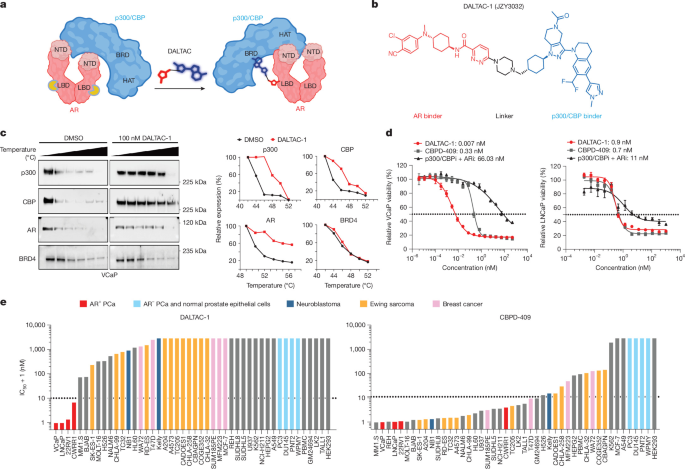
The experimental approach focuses on the androgen receptor, or AR, and a helper protein named p300. Researchers designed a bifunctional small molecule to glue them together in an abnormal physical configuration.
The strategy is known as DALTAC, which stands for domain-alteration chimeras. It builds on the field of chemically induced proximity, which uses small molecules to alter cellular functions by bringing distinct proteins together.
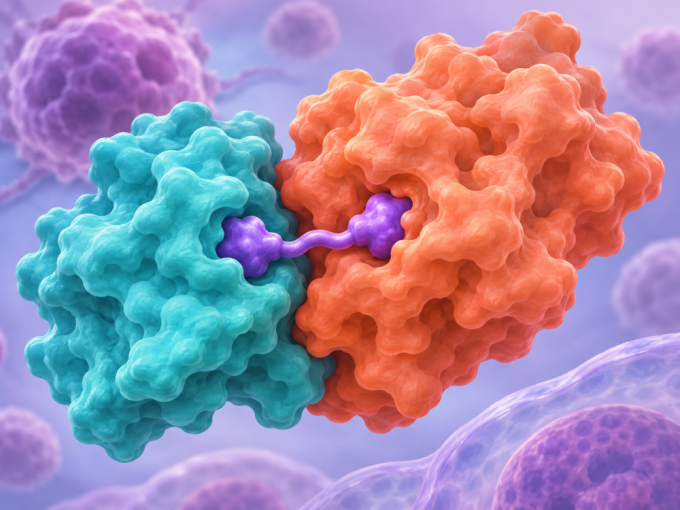
Our molecule acts like a molecular brace, connecting these two cancer-driving proteins in an abnormal configuration that traps them in an inactive state.
Arul M. Chinnaiyan, M.D., Ph.D., Director of the Michigan Center for Translational Pathology and S.P. Hicks Professor of Pathology at Michigan Medicine
The project combined the biology laboratory of Arul M. Chinnaiyan with a drug discovery team led by Shaomeng Wang, Ph.D., director of the Michigan Center for Therapeutic Innovation. The team engineered the molecules by joining two inhibitors with a short linker. The study was co-led by co-first authors Jie Luo and Jianzhang Yang.

Additional authors contributing to the work include Jean Ching-Yi Tien, Mi Wang, Sumit Das, Xiaoju Wang, Eleanor Young, Jelena Tosovic, Rahul Mannan, Weiguo Xiang, Xia Jiang, Jocelyn Cai, Yihan Liu, Kenneth Gu, Somnath Mahapatra, Shiting Li, Yitong Yin, Sanjana Eyunni, and Abigail J.
Our optimized molecule is approximately 1,000 times more potent in tumor cells than the combination of inhibitors targeting these proteins separately, while sparing normal cells that lack these interactions. We also optimized the molecules for oral bioavailability, a key step toward developing a pill for patients.
Shaomeng Wang, Ph.D., Warner-Lambert/Parke-Davis Professor in Medicine, Professor of Internal Medicine, Pharmacology and Medicinal Chemistry, and Director of the Michigan Center for Therapeutic Innovation
The research team evaluated the DALTAC molecules across multiple laboratory systems, including cultured prostate cancer cell lines, three-dimensional organoids derived from human tissues, and mouse models. The approach demonstrated strong selectivity for malignant tissue over healthy cells and maintained efficacy against tumors that had become resistant to standard treatments.
These are remarkable preclinical results. The durable responses suggest an opportunity to develop a more effective treatment for advanced prostate cancer, including castration-resistant prostate cancer, if these findings translate to patients.
Arul M. Chinnaiyan, M.D., Ph.D., S.P. Hicks Professor of Pathology
“Our teams are working closely to identify a drug candidate suitable for testing in human clinical trials,” Shaomeng Wang, Ph.D., director of the Michigan Center for Therapeutic Innovation, said.