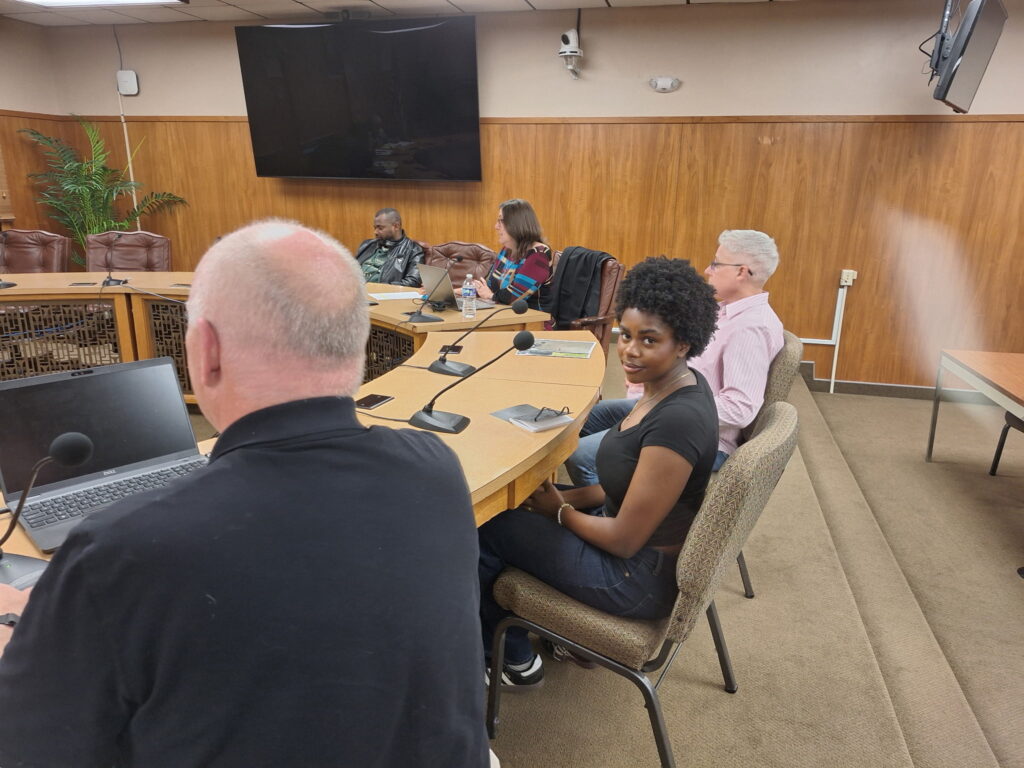
When a teenager stands before a city committee, the stakes are rarely just about trash. For Esther, a student at Concord High School, the removal of two waste barrels from Keach Park transformed a simple maintenance decision into a pointed inquiry about equity, neglect, and the civic dignity of the Heights neighborhood. Her advocacy, which recently drew the attention of the local board, highlights a growing tension in municipal management: the friction between “carry in, carry out” environmental policies and the practical realities of community space usage.
Budget Cuts Trigger Park Trash Removal Policy
The conflict traces back to a broader administrative pivot by the Concord Parks and Recreation Department. Faced with budget constraints that led to the loss of seven staff members, the city found itself unable to maintain waste collection across its 21 public parks. To adapt, the department moved toward a “carry in, carry out” model, an initiative designed to reduce the labor burden on a thinned workforce. This policy resulted in the removal of the only two trash barrels at Keach Park.
For Esther, who served as a summer camp counselor at the park, the change was not merely an inconvenience; it was a visible indicator of disinvestment. She argued that the park had long struggled with a negative stigma, often viewed as a dumping ground rather than a community asset. By removing the bins, she contended, the city was signaling that the space was not worth the effort of maintenance, a sentiment that resonates with residents who feel their neighborhood has been historically sidelined. The irony was not lost on her: while the city had recently celebrated the completion of a $345,000 project to install lights at Keach Park—a project championed by Fisto Ndayishimiye of Change for Concord after seven years of advocacy—the lack of basic sanitation seemed to undermine the progress made toward the park’s revitalization.

Poorly Placed Signs Alienate Park Visitors
Esther’s critique extended beyond the physical absence of barrels to the nature of the city’s communication. The park featured multilingual signage instructing visitors to take their trash with them if the bins were full, but the signs were placed high on posts, effectively rendering them invisible and, in her view, patronizing. During her presentation to the mayor, the director of Parks and Recreation, and the Diversity, Equity and Inclusion (DEI) committee, she pointedly noted that the youth who frequent the park are fully capable of understanding English, framing the signs as a symbolic failure rather than a practical solution.
The director of Parks and Recreation acknowledged the difficulty of the situation, explaining that the department is currently stretched thin. He expressed a willingness to engage directly with Project S.T.O.R.Y—the youth empowerment program that helped facilitate Esther’s advocacy—to find a middle ground. The discussion, which spanned an hour, ended with the committee taking the matter under advisement for further review.
As Esther spoke on behalf of all children of Keach Park, she argued that if you have a clean environment you feel cared for, capturing the core of her argument that municipal maintenance is an extension of how a city values its residents.
The Path Forward for Concord’s Green Spaces
The impact of this advocacy reached beyond the immediate debate over waste management. Esther’s eloquence earned her an invitation to join the Recreation and Parks Advisory Committee (RPAC) as a student member, a role pending formal approval through a city ordinance.
The next steps in this process are set for November 19, when the committee will revisit the issue of the park barrels. Meanwhile, the collaboration between the Clean River Project and Project S.T.O.R.Y is set to continue, with plans already in motion for a joint cleanup of the Merrimack River shoreline next spring. While the debate over the specific placement of trash barrels remains unresolved, the dialogue between the city and its younger constituents has already produced a tangible shift in how local concerns are brought to the table.



