State Lawmakers Demand Faster Action on Los Alamos Chromium Plume
Decades after the dawn of the atomic age left a legacy of radioactive and hazardous waste lingering in and around Los Alamos National Laboratory, New Mexico officials are pressing federal authorities to accelerate cleanup efforts.
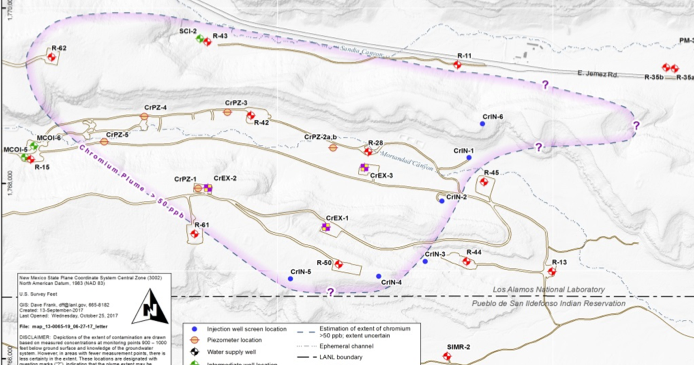
The contamination traces back to operations between 1956 and 1972, when workers at a gas-fired power plant at the facility periodically flushed chromium-contaminated water from cooling towers into Sandia Canyon. While federal officials maintain that the underground pollutant at present does not pose a danger to public health, the physical spread of the plume toward tribal lands and the Rio Grande has intensified pressure from state lawmakers.
Settlement Stalls While Lawmakers Weigh Legislation
During the committee hearing, Sen. Jeff Steinborn, chair of the committee, questioned Stanley Pyram, the acting manager of the Los Alamos Field Office within the U.S. Department of Energy’s Office of Environmental Management, regarding the spreading chromium plume. Steinborn expressed surprise, mentioning he believed a cleanup settlement for the plume had been finalized nine weeks prior among the U.S. government, the New Mexico Environment Department, and San Ildefonso Pueblo, only to discover the documentation was left unsigned.
Whenever we finally sign it, we’re still going to need a technical solution to fix it,
Pyram told lawmakers during the hearing.
Annoyed by the bureaucratic delay, Steinborn indicated he is contemplating a measure that would institute a state mandate requiring the U.S. to remediate the plume within a specified deadline should the involved parties fail to reach a settlement agreement.
We have this chromium plume that’s literally migrated to one of our tribes, and we have counties, we have the Rio Grande—we’ve got a lot of exposure,
Steinborn said during the proceedings, urging federal representatives to push their teams toward a resolution.
Contractors Increase Legacy Waste Shipments by 107 Percent
While the chromium plume remains a point of contention, federal contractors reported progress on other fronts at the facility. Brad Smith, president and general manager of Newport News Nuclear BWXT-Los Alamos, told the committee that shipments of legacy transuranic waste—including tools, clothing, and other manmade materials contaminated by radiation—increased by 107% compared to last year. According to Smith, the company delivered 89 shipments comprising 403 cubic meters of waste to the Waste Isolation Pilot Plant near Carlsbad, marking the transfer of more than 90% of the above-ground transuranic waste inventory at Los Alamos.
We are getting work done—and we are safe,
Smith told lawmakers, emphasizing that his team’s safety record is better than the industry’s at large.
That assessment drew immediate pushback from Steinborn, who pointed to several fires inside Los Alamos facilities in the past year and criticized the federal administration’s overall environmental approach. In response, Pyram defended operational oversight, asserting that any unsafe site is going to get shut down.
As state officials weigh potential legislative penalties against federal delays, the timeline for finalizing the cleanup agreement and implementing a permanent technical fix for the Sandia Canyon plume remains open.