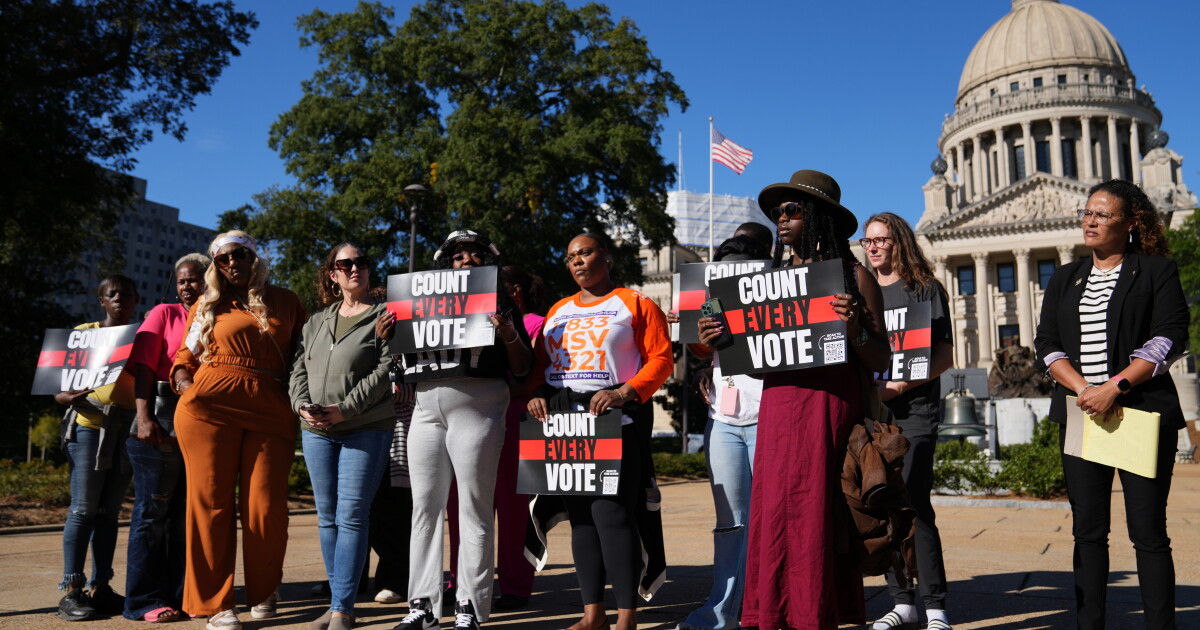
Mississippi Voters Discover Inactive Status as Ballot Counting Continues
“It was very disheartening to be labeled inactive,” Kevin Green, a Mississippi voter, told Scripps News this week. “And there was no real rationale behind it.” As election officials across the state labor through the final stages of the vote count in the tight senate race between Democrat Scott Colom and Republican incumbent Cindy Hyde-Smith, voters like Green are speaking out about a process that left them sidelined at the polls.
The delay in finalizing election results is tied directly to the high volume of affidavit ballots—a process used when a voter’s eligibility or registration status is in question at the polling place. For many, the first sign of trouble came when they arrived to cast their vote and were informed their registration had been marked inactive. This administrative hurdle forced thousands to complete the affidavit process, a secondary step that requires additional verification to ensure the vote is ultimately counted.
The Role of Consumer Data in Voter Rolls
Election experts suggest the surge in inactive voters this election in Mississippi may be due in part to the state’s reliance on consumer data provided by Experian to maintain its voter rolls. The state used the data to check voter addresses, but experts said the data may have contained errors affecting thousands of voters.

“Everything we’ve heard from the Secretary of State’s office is that this was a good faith effort to keep the voter rolls accurate,” said Daniel Griffith, the senior director of policy at Secure Democracy. “Because it wasn’t based on the best practices, and because the credit agency data is not reliable, it has had an unfortunate outcome for a lot of individuals.”
Thomas Minor told Scripps News that he encountered such an error when he attempted to vote in the primary election earlier this year. He told Scripps News the clerk told him his registration was inactivated because Experian data said he lived in another city. However, he told Scripps News, he has not moved for a decade. He was able to fix the error and vote normally during the general election on Tuesday but was dismayed to see so many other voters encounter the same problem he had months ago.
Corporate Clarification on Data Usage
In response to inquiries regarding the use of its data, an Experian spokesperson stated that the company has not provided services to the state since 2025. Scott Anderson, vice president of corporate communications for Experian, emphasized that the data provided was never intended for voter verification.
“The solution provided at that time consisted of supplemental address information and was not designed or intended to validate voter records,” said Scott Anderson, vice president of corporate communications for Experian, in a statement sent Friday to Scripps News. “Decisions regarding voter registration policies, procedures and record updates are made solely by election officials in accordance with applicable local, state and federal laws.”

Despite these clarifications, the human impact remains significant. Ralph Sandidge, another voter, said he was disappointed to find out he had been purged from the voter rolls when he arrived to cast his ballot this year. Sandidge said he was told he was no longer registered to vote because he had not voted in several elections.
The Path Forward for Affidavit Ballots
The legal framework for processing these votes is clear: voters who provided identification and voted by affidavit do not need to take any further action for their votes to be counted. Those who did not have ID with them have until Tuesday to rectify their affidavits. To assist with transparency, the Mississippi Secretary of State’s office posted a tracker online for voters who voted absentee or by affidavit to ensure their ballot is being counted.
Thessalia Merivaki, a distinguished professor of government at Washington State University, noted that while the situation is alarming for the affected voters, it does not necessarily imply intentional suppression. “We have no evidence that there is something sinister (happening), and election officials are very, very careful and very committed to protect elections and not disenfranchise voters,” Merivaki explained. “Sometimes your data are bad, and this is what happens.”
As the final tallies are determined, the episode has sparked discussion about the policies governing voter list maintenance. For voters like Kevin Green, the experience serves as a call for systemic reform. While he is relieved that his vote will be counted, he believes the state must revisit its reliance on external data providers to ensure that future elections are not marred by administrative errors that cast doubt on the democratic process.