Federal Law Bars Armed Agents at Polling Places Ahead of Midterm Elections
During the presidential election of 1863, at the height of the Civil War, federal troops reportedly descended on polling places in Delaware, Kentucky, Maryland, and Missouri and prevented people they deemed disloyal from voting. That intervention prompted a fierce national debate that culminated in Congress passing an 1865 law barring federal “troops or armed men” from “any place” where an election is being held. The central goal of this law, according to its proponents, was “to prevent the president and his officers from interfering in elections,” which are run by the states. Keeping armed federal officers away from the polls, they argued, was necessary to preserve democracy, even in the midst of civil war.
For over a century, this has been the clear law, and the respected policy of every presidential administration. Ahead of Tuesday’s midterm election, however, top Trump Administration officials have publicly refused to rule out the possibility of sending federal agents to the polls. In September, Department of Homeland Security Secretary Markwayne Mullin claimed that immigration officers could be sent to polling places to “serve a warrant” as part of immigration enforcement operations or if “there is a threat” to those polling places, adding “we’ll be where we need to be.”
“ICE isn’t there to patrol the polling places,” hedged Mullin. “We’re there to enforce specific threats.” Federal Bureau of Investigation Director Kash Patel similarly said, “If there’s a reason to go there because there’s been a violation, we will, otherwise we won’t.”
Federal Laws Bar Armed Agents at Polling Sites
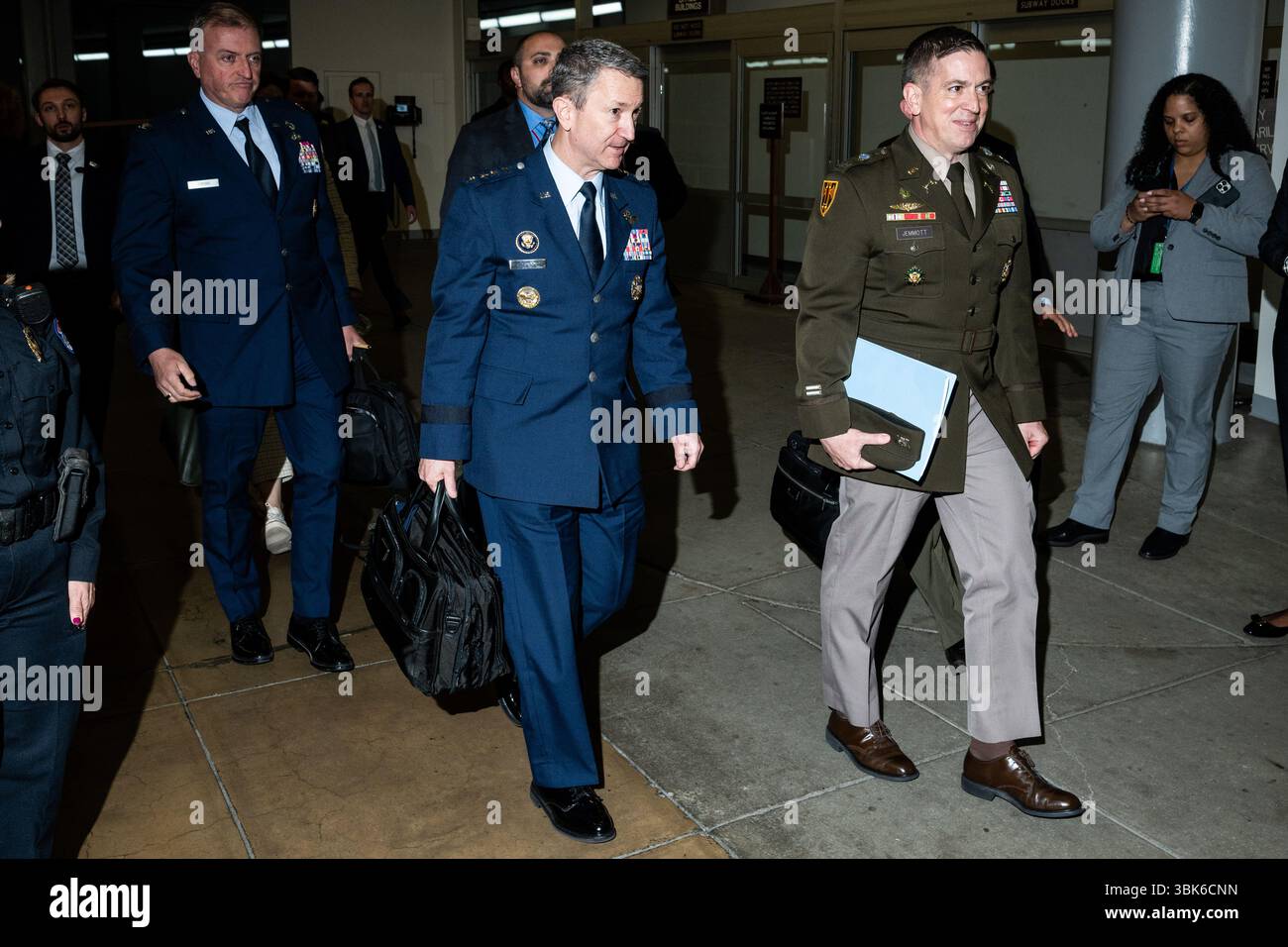
It is clear to legal experts that barring extreme circumstances, sending ICE or FBI agents to the polls for Tuesday’s midterm election would be flatly illegal under the 1865 law, and several others. As Daniel Caine, chair of the Joint Chiefs of Staff, pointedly said this August, any request to send military troops to election sites would be an “unlawful order.” The same holds true for any other armed federal agents.
The only exception to the prohibition is to “repel armed enemies of the United States.” The Congress of 1865 originally included a second exception, allowing armed federal agents to “keep the peace at the polls.” But Congress repealed that exception in 1909 because lawmakers feared that federal authorities could point to any kind of disturbance as a pretext to deploy federal forces.
In other words, unless a hostile foreign power attacks voting sites using weapons, it is a crime for any armed federal agents to go to those sites, even to quell a disruption. And they are certainly not allowed to show up for routine policing or immigration actions.
Administration Targets Noncitizen Voters Despite Existing Bans
Despite all the administration’s threats, the federal government has been conducting indiscriminate and often violent immigration enforcement actions in communities across the country. At the same time, the administration has been peddling conspiracy theories about widespread illegal voting, often targeting communities of color.
The administration has redirected thousands of homeland security agents away from critical transnational security threats to hunt for elusive noncitizen voters. Federal and state laws already bar noncitizens from voting in federal and state elections, and our election system does a terrific job of ensuring that only eligible citizens vote, with vanishingly rare exception as dozens of studies, election reviews and painstaking investigations have already confirmed.
This intimidation campaign is taking a toll. According to a University of California, San Diego poll conducted last month, a staggering 40% of voting-age American citizens expect ICE agents to be at the polls this November. Black, Hispanic and Asian American voters are three to four times more likely than white voters to worry that they will be questioned by ICE at polls or that members of their racial or ethnic groups will face intimidation at the polls.
Civil Rights Groups File Lawsuits Against Intimidation
A broad array of civil rights groups and labor unions have already filed lawsuits to hold the federal government accountable for its intimidation effort – including The Brennan Center, where Wendy Weiser and Jasleen Singh work. Other lawyers across the country are poised to run to court to protect elections if federal agents do unlawfully show up to polls.
Outside court, election officials, state government officials, law enforcement and voter protection organizations are prepared to respond to any instance of voter intimidation. That includes de-escalation and backup plans, including changing voting sites if needed, to ensure that all Americans can continue to vote safely.
Voters are determined and undeterred, as millions so far have already cast their ballot voting early and by mail. In addition to voting at the polls on election day, they can vote early in person or vote by mail ballot, dropping it off in secure ballot drop boxes, at an election office or by mail. In Mississippi, people 65 and over, the disabled and those who will be away from home on election day, can vote until noon Saturday at the circuit clerk’s office or by mail, but the ballot must be postmarked by election day on Tuesday.