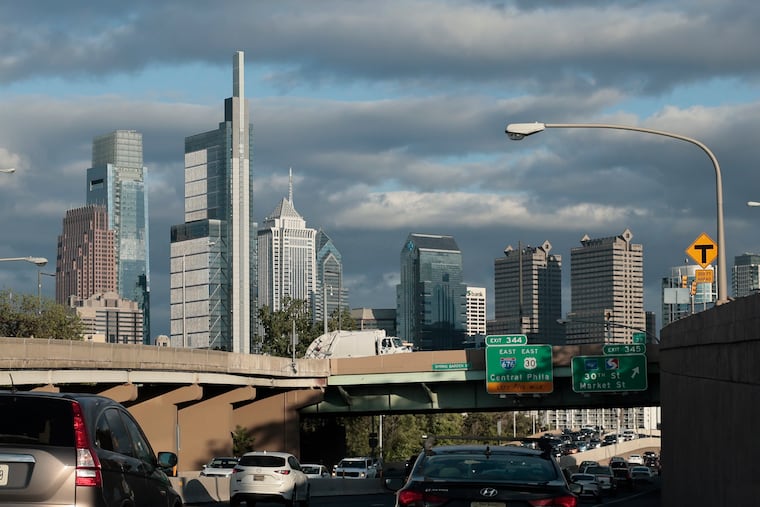
Philadelphia Claims Unwanted Title as Poorest Among Major U.S. Cities
The new figures show that 20.4% of Philadelphians lived in poverty in 2025. This uptick reverses a brief milestone achieved a year prior, when the city’s poverty rate dipped below 20% for the first time since at least 1979.
The latest American Community Survey paints a challenging picture for local households. Philadelphia’s 20.4% rate stands just ahead of major urban centers like New York and Houston, which each recorded a 17.7% poverty rate. For Philadelphia, this marks the first time the poverty rate has ticked upward since 2011, when it peaked at 28.4%.
The Math Behind the Threshold
The Census Bureau determines poverty status by evaluating whether an individual or household income falls below a designated baseline needed to cover basic living costs. That monetary threshold scales with household size. For a standard family of four in 2025, the official poverty line stood at an income of roughly $32,750. Census figures indicate that the median income in Philadelphia last year reached $67,400.
The year-to-year shifts require careful reading. In 2024, Houston led the nation’s major cities with a 21.2% poverty rate, narrowly outpacing Philadelphia’s 19.7%. However, that prior gap fell within the survey’s margin of error. The 2025 data, by contrast, placed Philadelphia’s edge outside that statistical margin.

Poverty analysts point out that single-year fluctuations can stem from sampling complexities. Increased Immigration and Customs Enforcement activity and deportations may cause immigrant communities to hesitate when answering census surveys, potentially skewing sample representation. Yet analysts argue that focusing too heavily on fractional decimal changes misses the larger picture.
“Each tenth of a decimal point one way or another isn’t the thing that matters.”
After years of steady declines following its 2011 high, Philadelphia’s poverty rate has essentially stalled, hovering near the 20% mark since 2023.
Philadelphia Holds Middle Tier Among Regional Cities
When stacked against comparable Northeast and Mid-Atlantic neighbors, Philadelphia occupies a middle tier. Cities like Detroit and Cleveland saw significant poverty rate declines last year, yet their rates remained higher than Philadelphia’s at 30.4% and 24.1%, respectively. Meanwhile, Pittsburgh recorded a 19% rate, Baltimore sat at 20.9%, Boston registered 16.4%, and Washington, D.C., stood at 15.9%.

Elected officials acknowledge the immediate strain on residents. Mayor Cherelle L. Parker issued an emailed statement addressing the numbers directly.
“A rate of 20.4 percent is too high and unacceptable to me as mayor.”
Beyond raw poverty percentages, financial nonprofits warn that a broader affordability crisis is squeezing low-income residents. Emily Dowdall, president of policy solutions at the Reinvestment Fund in Philadelphia, points to converging financial pressures. She expresses deeper concern regarding past and future federal reductions to critical support programs.
Programs providing food stamps, Medicaid, and housing assistance serve as essential lifelines. When those federal supports face rollbacks simultaneously with rising prices for groceries and gasoline, low-income households absorb the shock.
State Takes Greater Share of Nutrition Funding
The city and state have been left to fill some of those funding gaps. To counter housing pressures, Mayor Parker advanced an $800 million H.O.M.E. initiative aimed at expanding municipal housing stock, though the rollout of its funding has been gradual. The city slated the launch of the One Philly Mortgage program for the end of the year to improve housing accessibility for first-time homebuyers with poor credit.
While reducing poverty remains a primary objective, analysts emphasize that stabilizing daily survival is equally pressing. Downward economic mobility accelerates when families cannot secure basic nutrition and shelter.
“Moving people out of poverty is an important policy goal.”