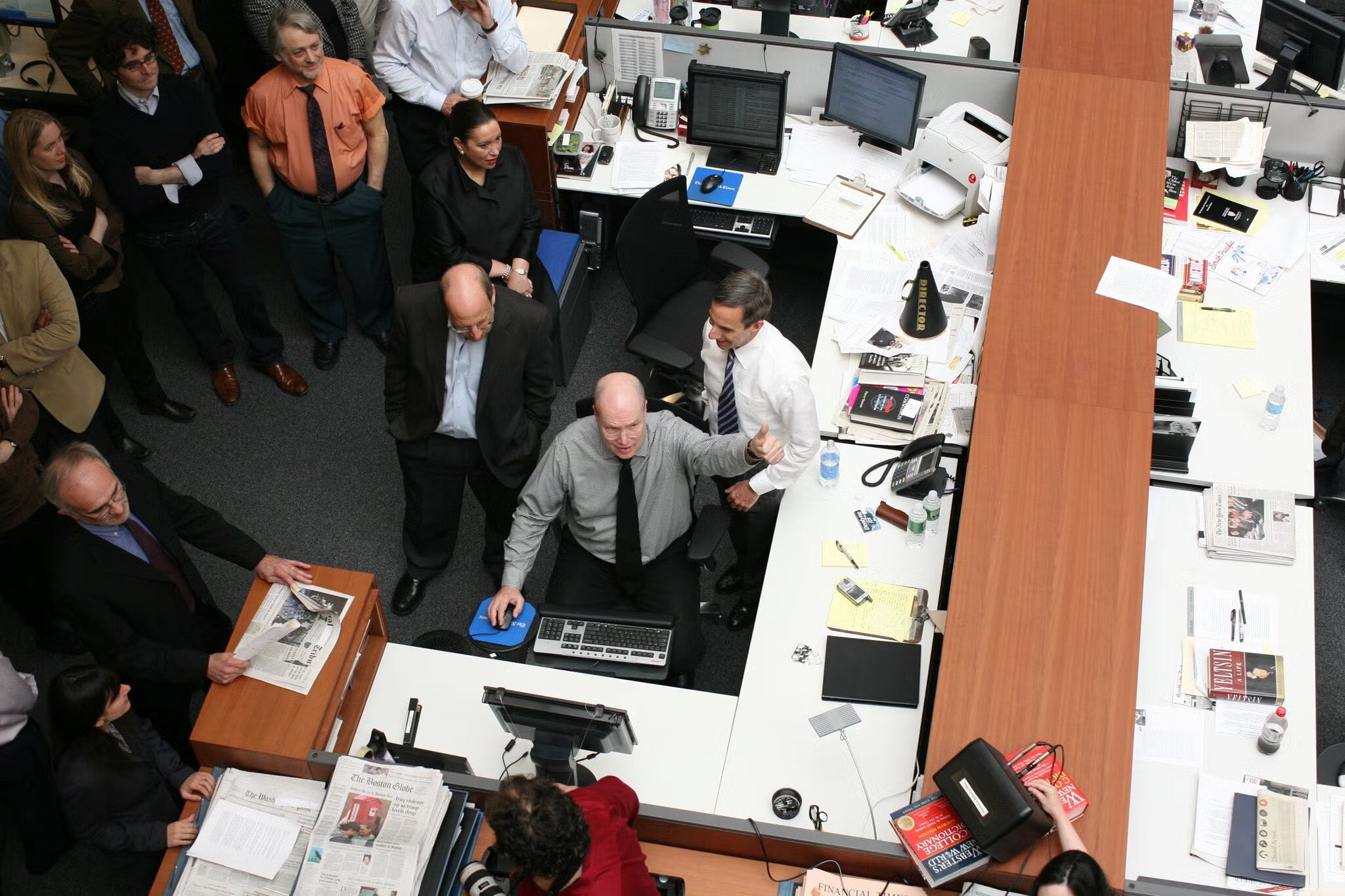
John Geddes ’74, an international journalist who rose from typing news copy on campus typewriters to helm the daily news operations of The New York Times during its digital transformation, died October 20, 2026, at a hospital in Manhattan following a brief illness. He was 74.
Born November 19, 1951, and raised in Providence, Rhode Island, Geddes built a four-decade career defined by calm leadership under pressure. Long before his byline and editorial decisions reached a global audience, he worked as a student electrician and served as co-news editor of The Good 5 Cent Cigar at the University of Rhode Island. Balancing campus funding battles and reporting duties, Geddes often joked with fellow student editor Larry Foster that electrical work would serve as his backup plan if journalism failed.
That backup plan stayed firmly in the rearview mirror after Geddes earned his master’s degree in business journalism from the University of Wisconsin-Madison in 1976. He started reporting for the Ansonia Evening Sentinel in Connecticut before covering business news for the Times from Germany in the late 1970s. Following a stint with the Associated Press-Dow Jones News Service, Geddes spent 13 years at The Wall Street Journal, where his roles included Bonn bureau chief, managing editor of The Wall Street Journal/Europe, national news editor, assistant managing editor, and senior editor.
Steadied the Times Newsroom Through a Crisis and a Digital Pivot
Geddes returned to The New York Times in 1994 as business editor, stepping into leadership just as the publication launched its website. By 1997, he was promoted to deputy managing editor. In the summer of 2003, following the Jayson Blair fabrication scandal that led to the resignations of executive editor Howell Raines and managing editor Gerald Boyd, incoming executive editor Bill Keller split the managing editor position, naming Geddes and Jill Abramson to share it. Operating under structural recommendations from a 28-member committee led by Allan Siegal, Abramson took charge of newsgathering while Geddes ran daily news operations, budgeting, and production.
For a decade, Geddes oversaw the newsroom machinery as the publication accumulated 40 Pulitzer Prizes and navigated declining print advertising alongside an urgent push toward digital sustainability. Former executive editor Jill Abramson noted in an interview with the Times that the newsroom desperately needed Geddes’s humor and strength during a bumpy transition that involved painful layoffs before a paid subscription plan was introduced in 2011.
“John was a steady leader of that passage, which involved painful layoffs and other cuts before the paid subscription plan saved us,” Jill Abramson said.
Carol Cioe Klyman, a URI classmate and former journalist, remembered Geddes for maintaining total control over chaotic environments without raising his voice. Larry Foster recalled that Geddes learned German after taking the Bonn bureau assignment, embodying a work ethic where he never did anything halfway.
Geddes Joins Bloomberg After Harvard Fellowship
Geddes announced his departure from the Times masthead in January 2013, accepting a buyout during newsroom reductions. He did not remain away from the industry for long. In 2014, he served as a Shorenstein Fellow at Harvard’s Kennedy School, studying the intersection of journalism and digital innovation. The following year, he joined Bloomberg to help oversee political coverage ahead of the 2016 presidential election, working across the New York and Washington offices.